Most houses in this service area went up between 1938 and 1994, with a median build year of 1957, and F2 tells us the stock across the 95 named areas we cover skews even older than that median suggests. A garage built in the Truman or Eisenhower years was not wired with a dedicated opener circuit in mind. Openers got added later, often on a shared circuit with a freezer or a string of shop lights, and that setup is still sitting in a lot of these garages today.
The cold band this region sits in matters here too. Severe cold means bigger swings between a heated house and an unheated attached garage, and that swing is hard on the capacitors inside an opener's motor housing. A unit that's fine in October can start tripping or humming in January simply because the ambient temperature in the garage dropped forty degrees. None of this is dramatic. It's slow wear that shows up as an opener that used to be reliable and now isn't.
What Is Going On
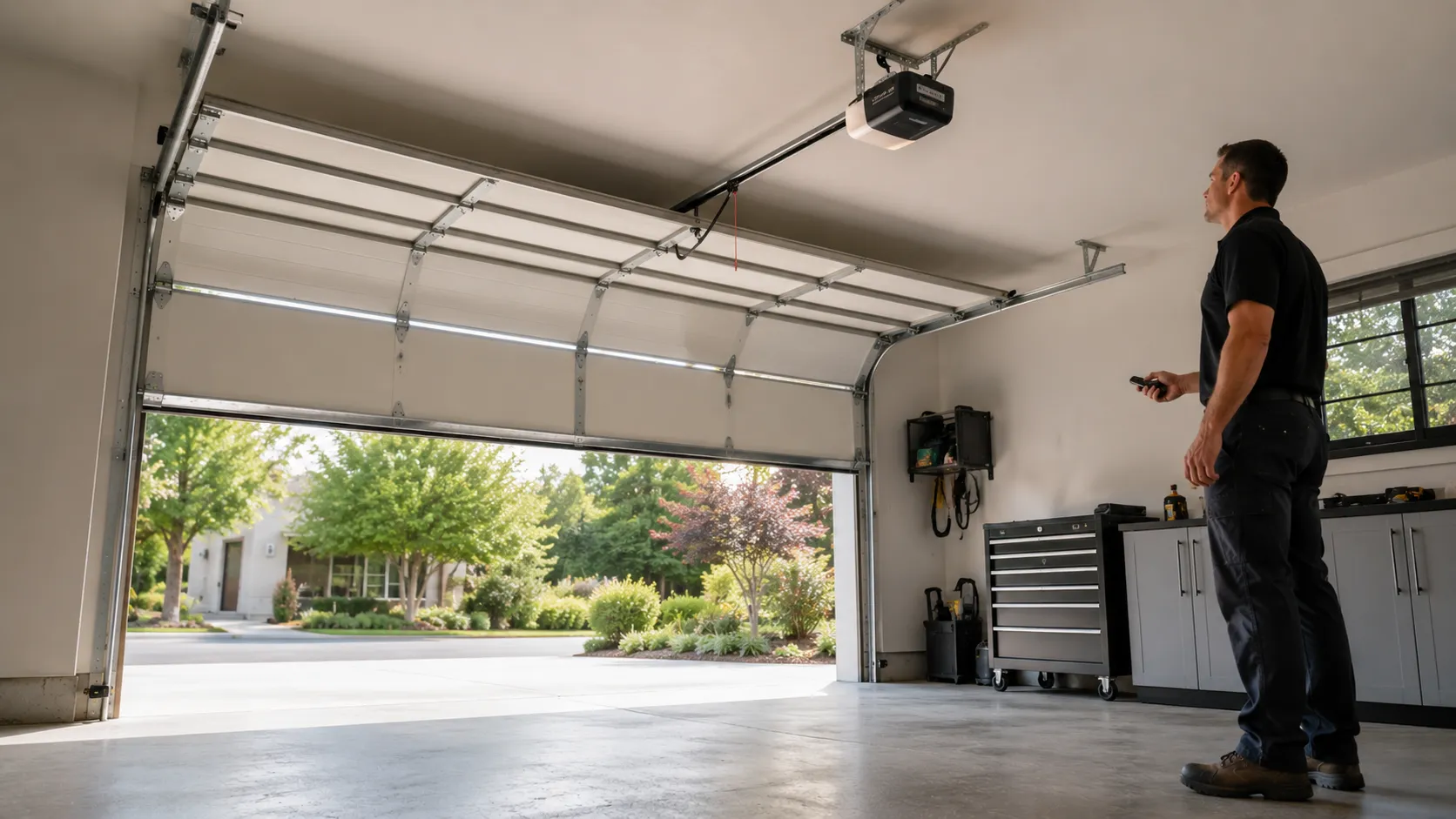
When the power cuts on an older circuit like the ones common in this pre-1960 housing, the opener doesn't always come back cleanly. Some units reset to a default position and lose their travel limits. Others just sit dead until you cycle the breaker. If the outage happened during a cold snap, you may also be dealing with a chain or belt that's gone stiff from the temperature, so the opener is trying to move a door that's already harder to lift than it was in summer.
In homes with an attached garage under living space - common in the older blocks in and around - the opener circuit sometimes shares a breaker with something inside the house. A power cut that trips that breaker takes out the opener along with a hallway outlet or a bedroom light, and people don't always connect the two until they're standing in the garage wondering why nothing works.
What Most People Get Wrong
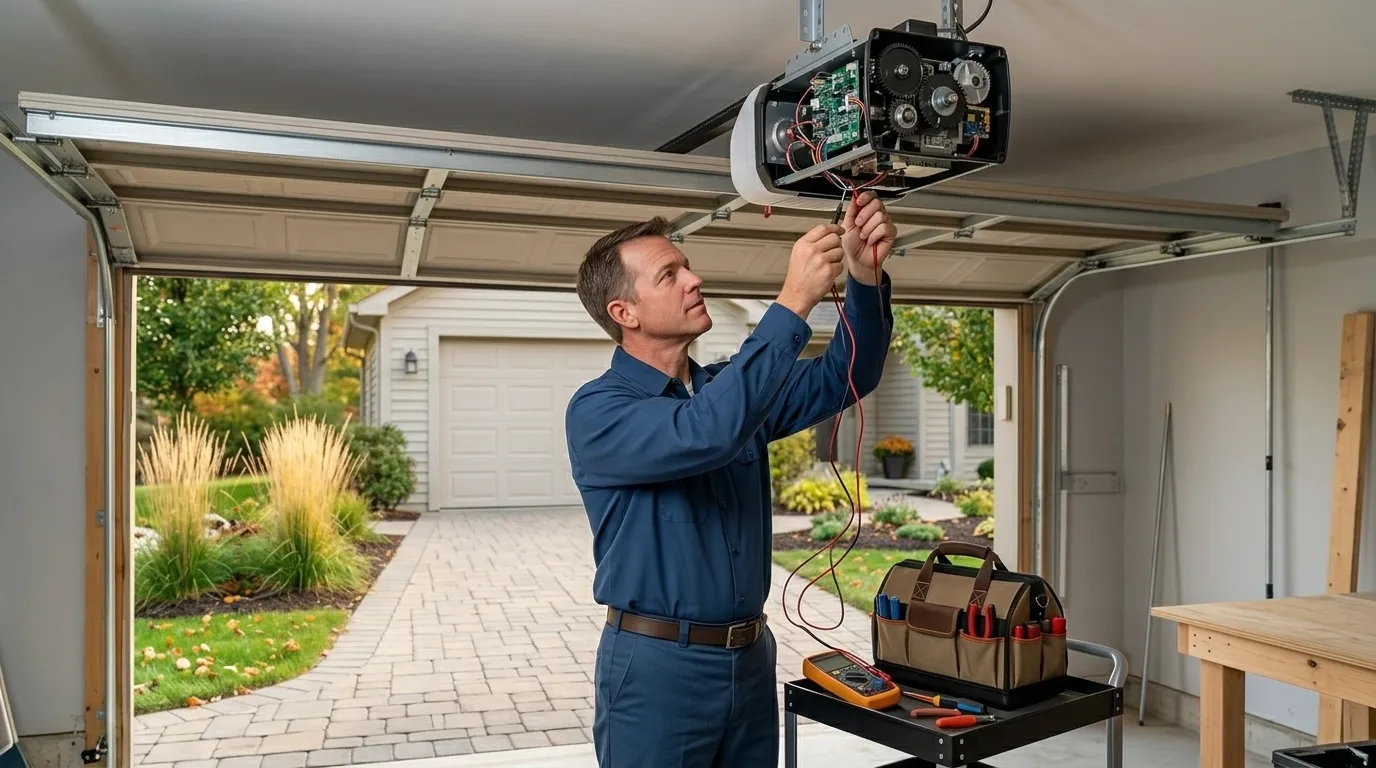
The common mistake is treating a dead opener after a power cut as a broken opener. Most of the time it isn't broken - it's unpowered, or it's lost its limit settings, or the safety sensors got knocked out of alignment when someone unplugged and replugged things in the dark. Reprogramming the travel limits fixes a good number of these calls, and that's a five-minute job, not a new motor.
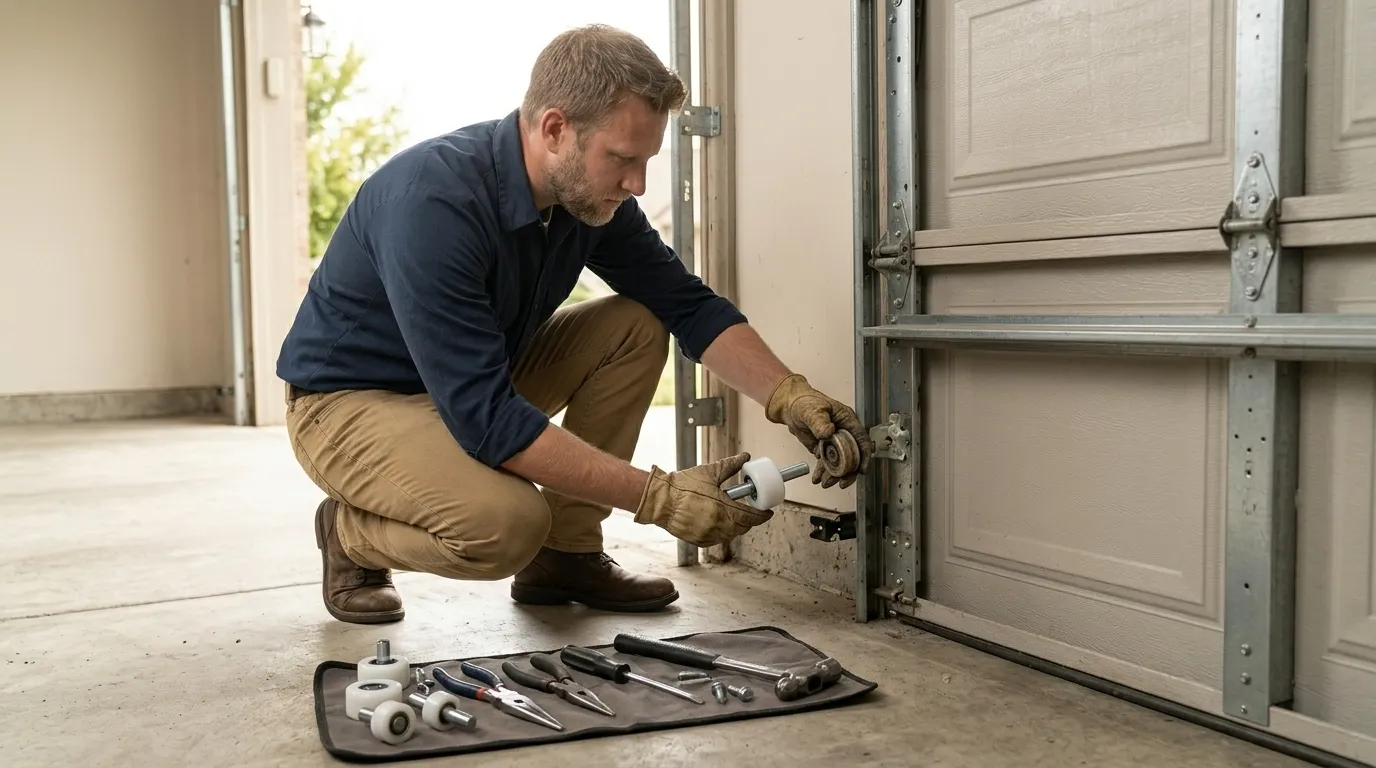
The other mistake is blaming the opener for a door that's actually just cold and heavy. On the older torsion setups you find on houses from this 1938-1994 window, cold makes the grease in the bearings stiffen, and the opener has to work harder to do the same lift it did in July. People replace the opener when what actually needed attention was the spring tension or the track lubrication. We check both before we tell anyone they need a new motor.
Leaving It Alone
If your opener trips a breaker once during a storm and comes back fine after you reset it, that's not something to chase. It's normal for a shared circuit in an older house to do that once in a while, and there's no reason to rewire a garage over a single nuisance trip. Where it's worth a call is if the opener loses its limits every time the power blinks, or if it's tripping the same breaker repeatedly - that points to a wiring issue or a motor drawing more current than it should, and it's worth having someone look at the panel and the opener together rather than guessing.
One honest limit here: we don't do electrical panel work. If the root cause turns out to be the breaker itself rather than the opener or the door, that's a call for a licensed electrician, and we'll tell you that straight rather than trying to patch around it.
How it works
From “it’s stuck” to “it’s fixed”
01
Tell us what’s wrong
Describe the symptom - won’t open, loud bang, opener runs but the door won’t move.
02
On-site diagnosis
A technician tests the door under power and by hand and finds what actually failed.
03
Clear, up-front plan
You get the fix that’s needed and what drives the cost - before any work starts.
04
Repaired & tested
The repair is done, the door is set true and tested, and the work area left clean.
Serving Philadelphia, PA - tell us what your door’s doing and we’ll take it from there.
Why does my garage door opener stop working every time the power goes out?
On a lot of the older houses in this area, the opener shares a circuit with something else in the house, so a power cut trips a breaker that isn't dedicated to the garage. When power comes back, some openers also lose their programmed travel limits and need to be reset before they'll run correctly again.
Is a stiff garage door in winter an opener problem?
Usually not. In houses built in the 1938-1994 range common around here, cold weather stiffens the grease in the torsion spring bearings, which makes the door heavier to lift. The opener just has to work harder for the same result - it's rarely the actual cause.
Should I add a battery backup to my opener?
That's a reasonable question given how often older circuits in this area share a breaker with other household loads, but it depends on your specific wiring and panel setup, which is outside what we can assess without seeing it in person.
Ready to get your garage door sorted?
Tell us what it’s doing and where you are in Philadelphia - we’ll take it from there.