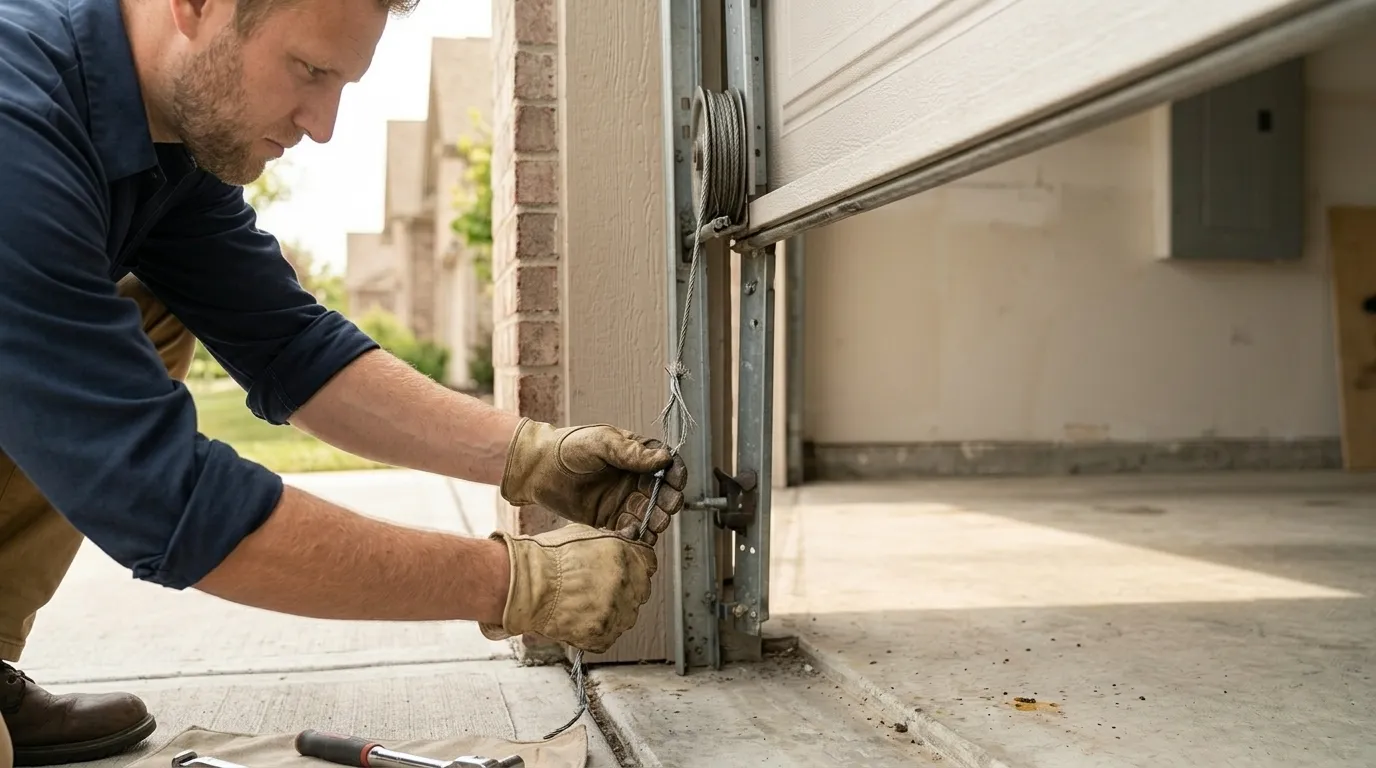
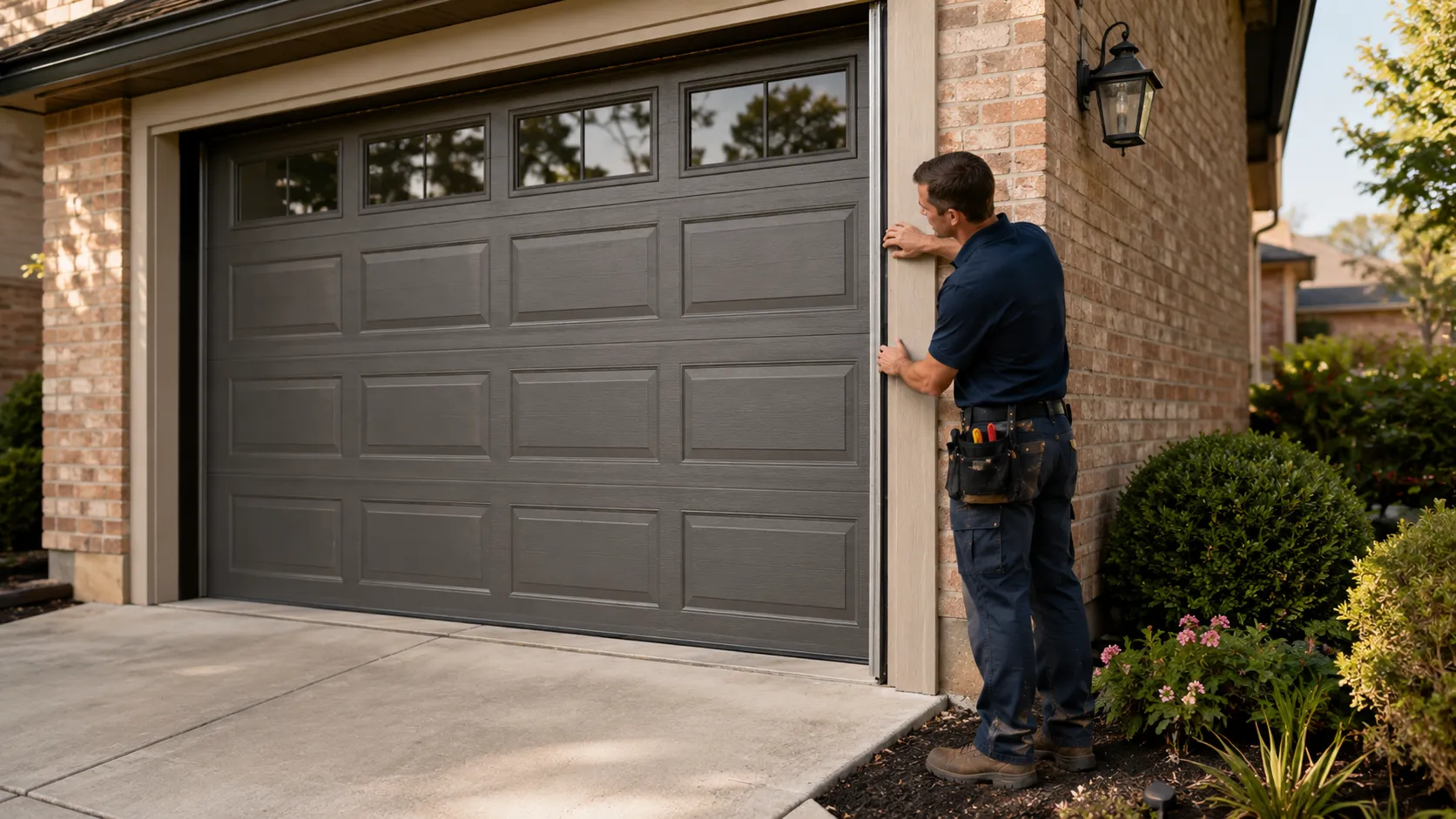
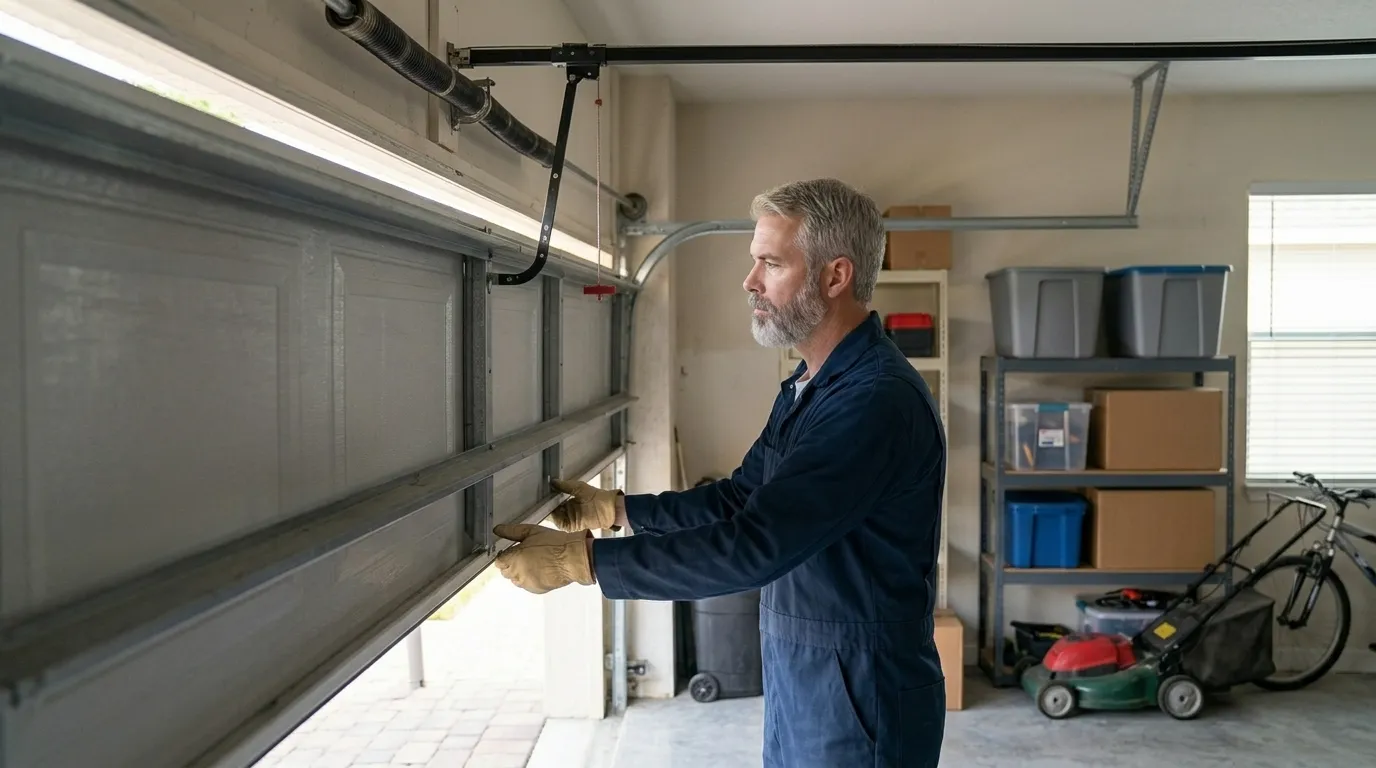
The call usually starts the same way: the door won't budge, or it slams down the last foot of travel instead of settling. On a lot of Philadelphia blocks, that's a torsion spring that finally let go after decades of cold winters stretching and shrinking the steel. Housing in this service area was mostly built between 1938 and 1994, with a median build year of 1957, and that means a huge share of the doors we see are original hardware bolted to garages that predate modern spring-cycle ratings. You'll also hear a door that groans and jerks partway up, which is usually a cable that's frayed off a worn drum, or rollers that have gone from steel-and-ball to just steel-on-rust. None of these are opener problems, though people usually blame the opener first because that's the part with the button. We check spring, cable, and track before we ever touch the motor unit, because on a house this age, the motor is rarely the actual failure.
Parts We Carry
We stock torsion springs sized for the single-car and narrow two-car openings common on the older row and twin housing across plus the wider residential doors you find further out. That covers.207.250 wire diameter springs, standard 2-inch and 3-inch drums, galvanized lift cable in the lengths those drum sizes need, and both nylon and steel rollers. We carry standard torsion hardware for houses built in the postwar boom years reflected in this area's 1957 median build date - the same-era brackets, end bearing plates, and center bearings that wear out together. What we don't stock on the truck is oddball custom-width doors or discontinued opener logic boards from the 1980s and earlier; those get special-ordered, and we'll tell you upfront if that's the situation rather than guess at a fix.
What the Fix Involves
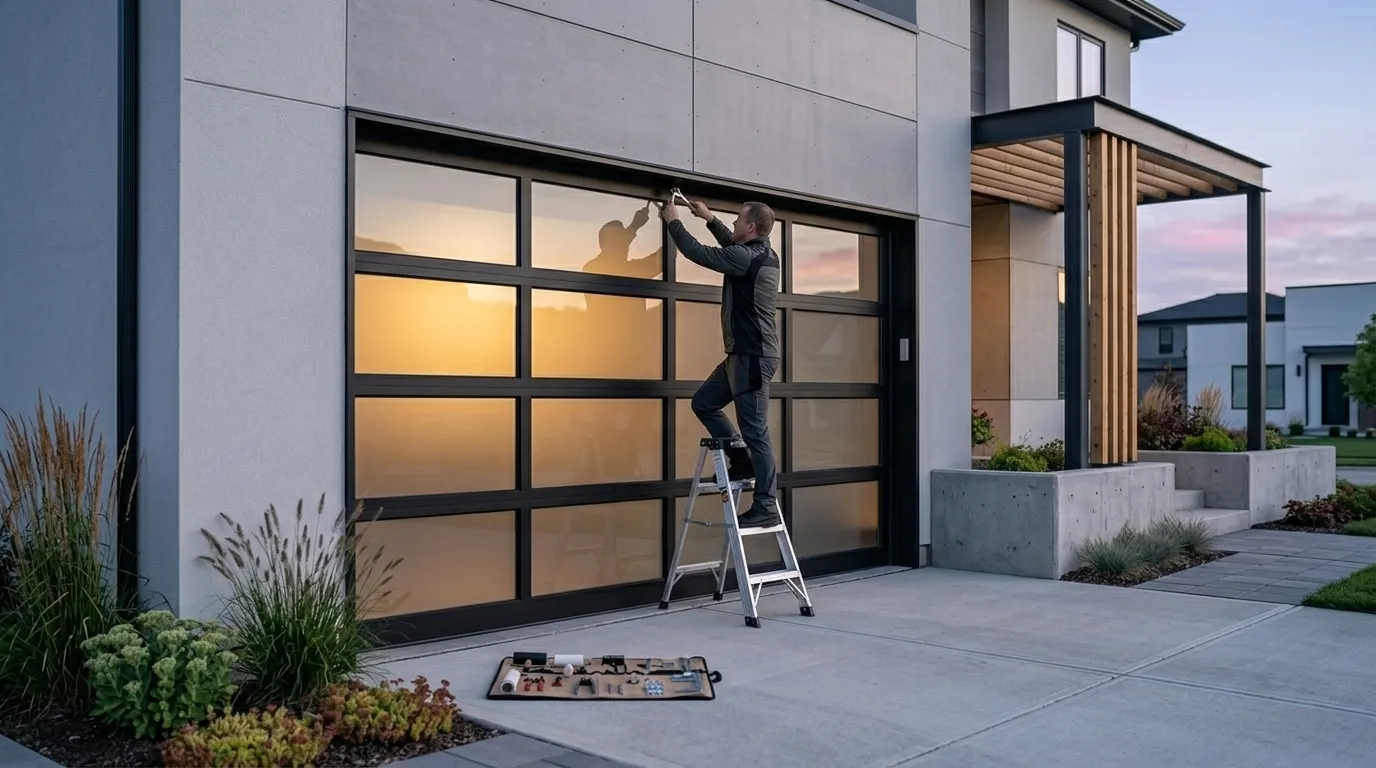
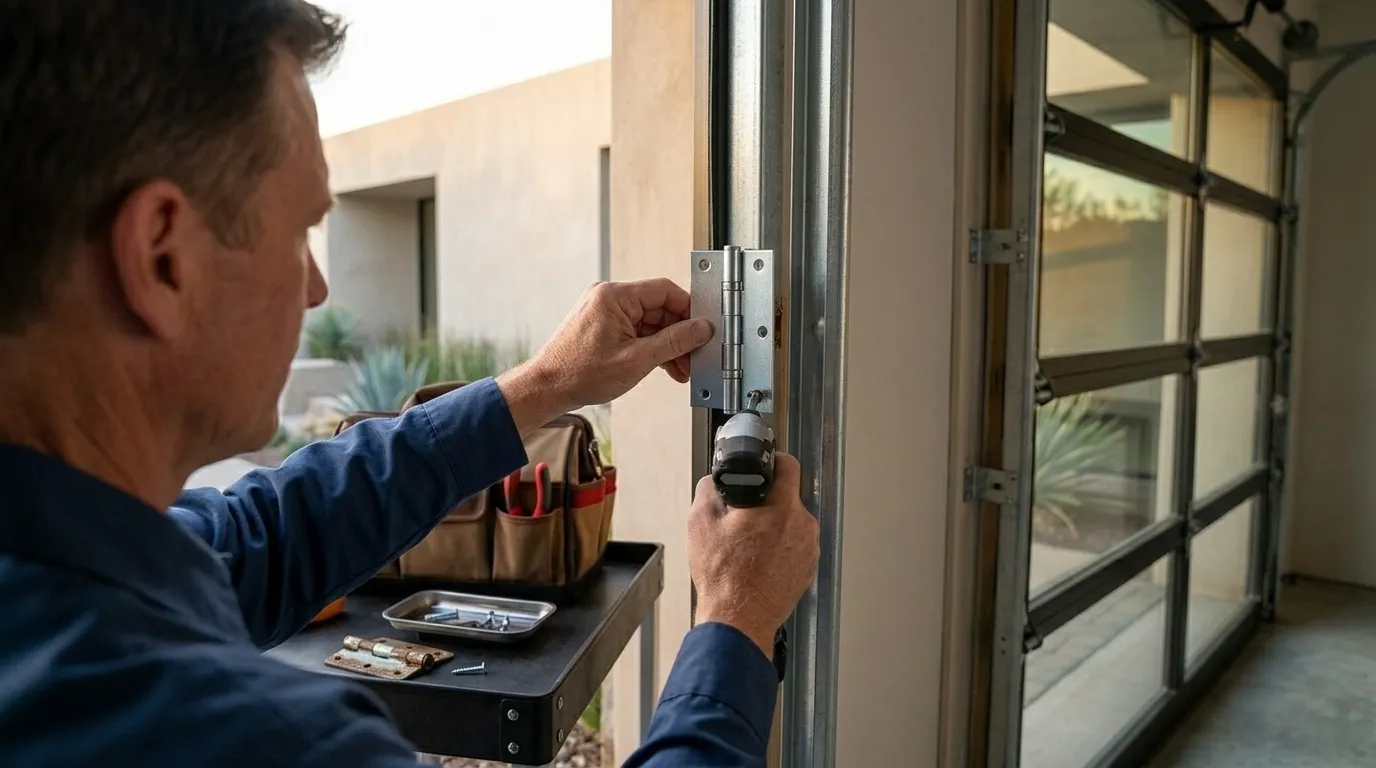
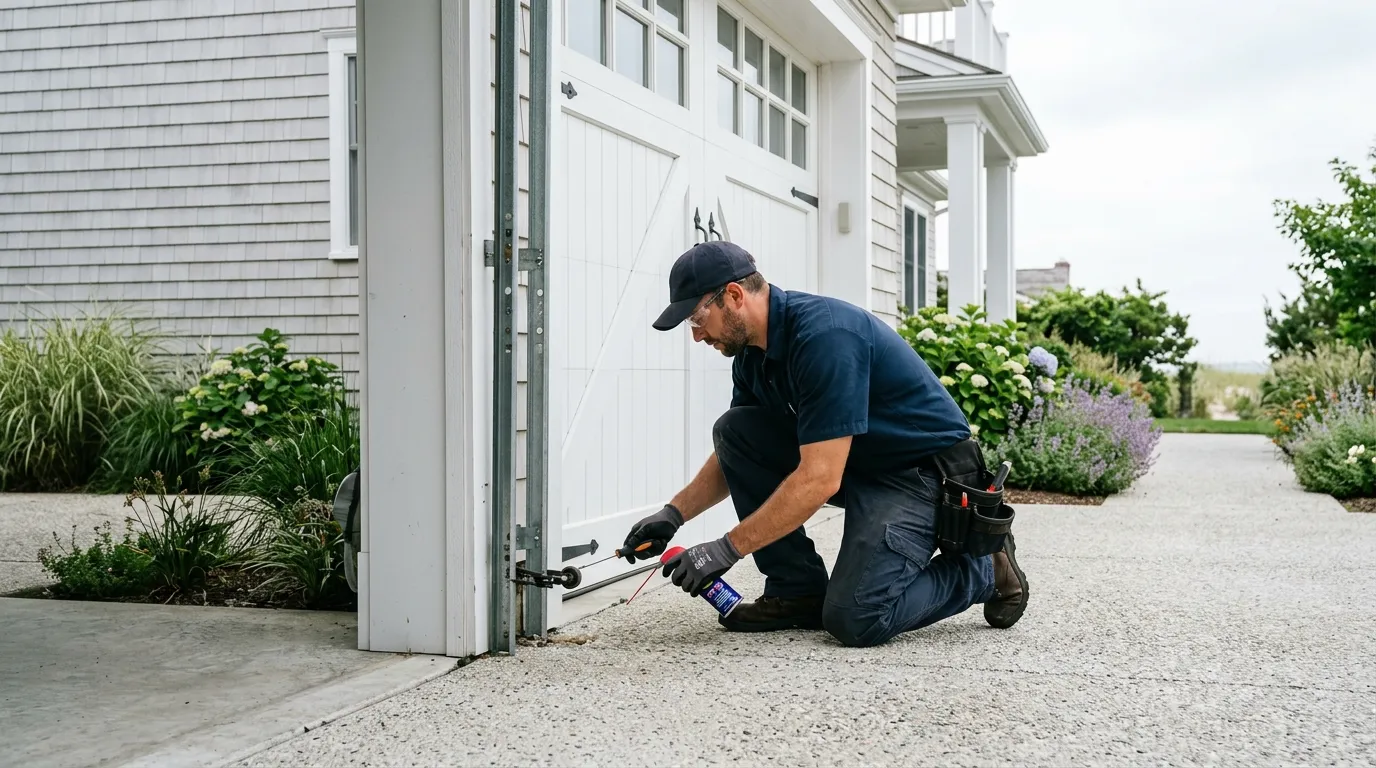
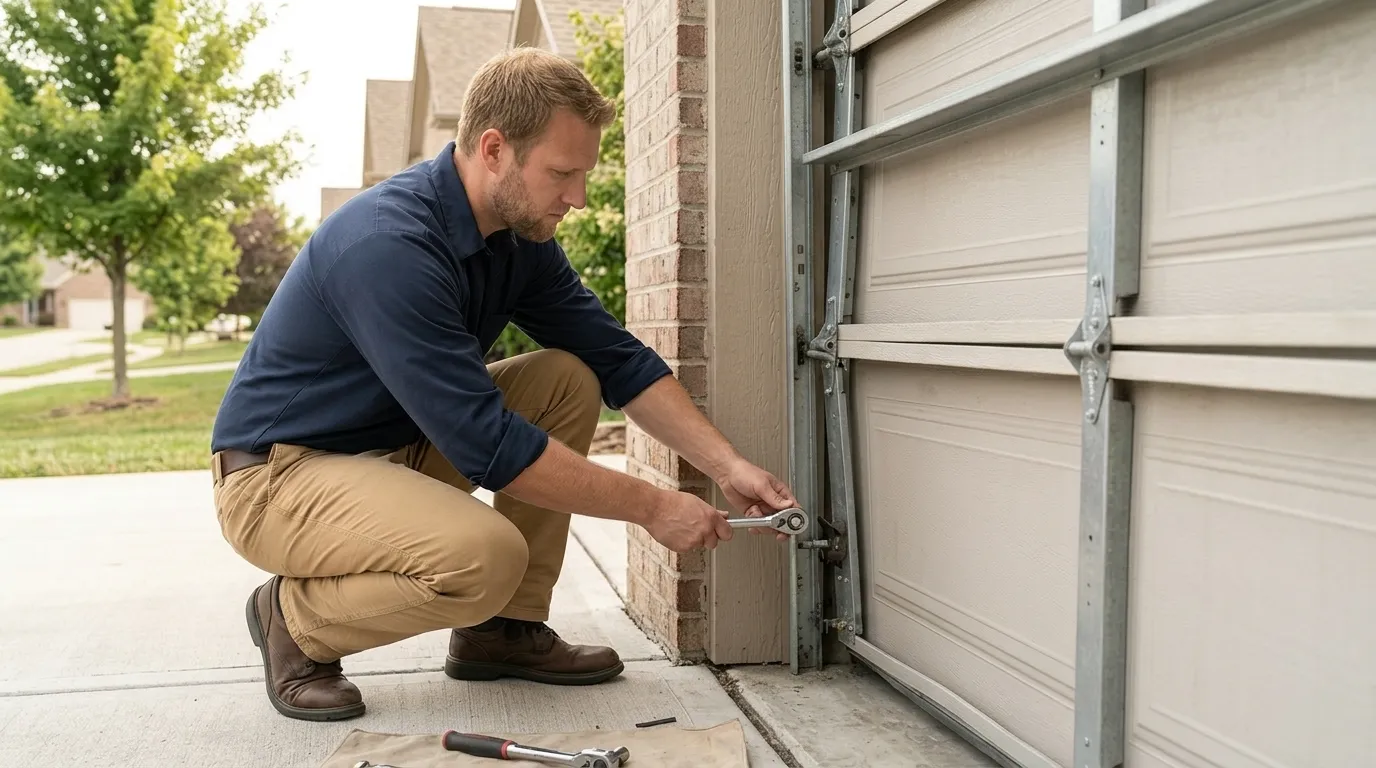
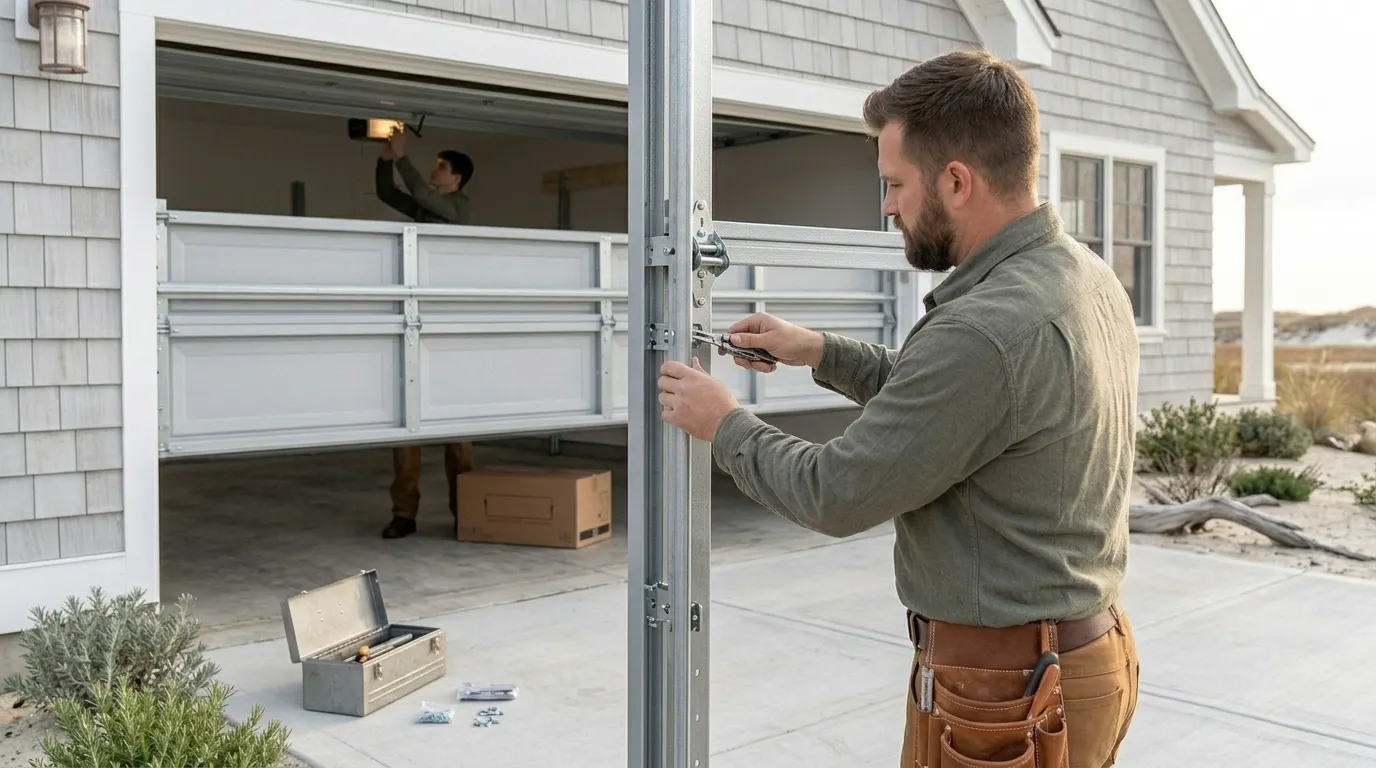
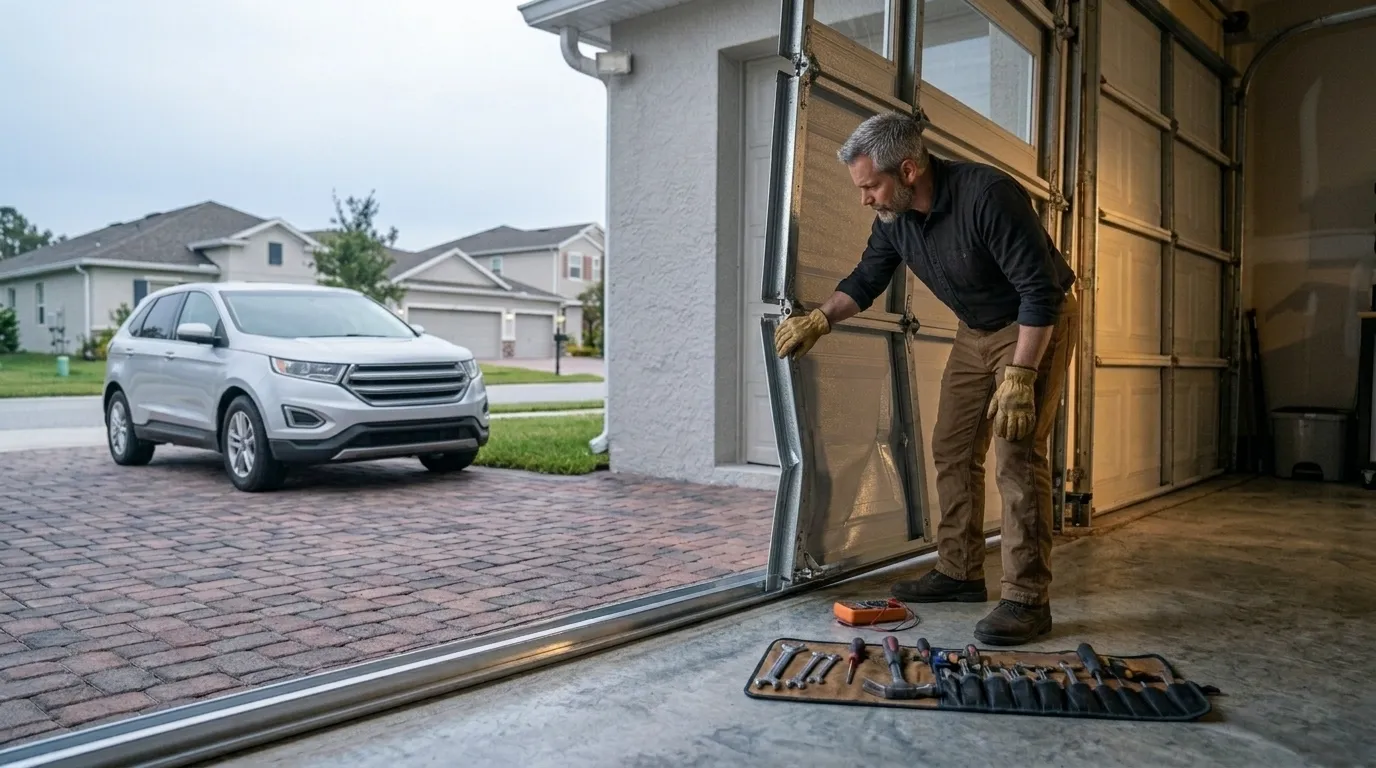
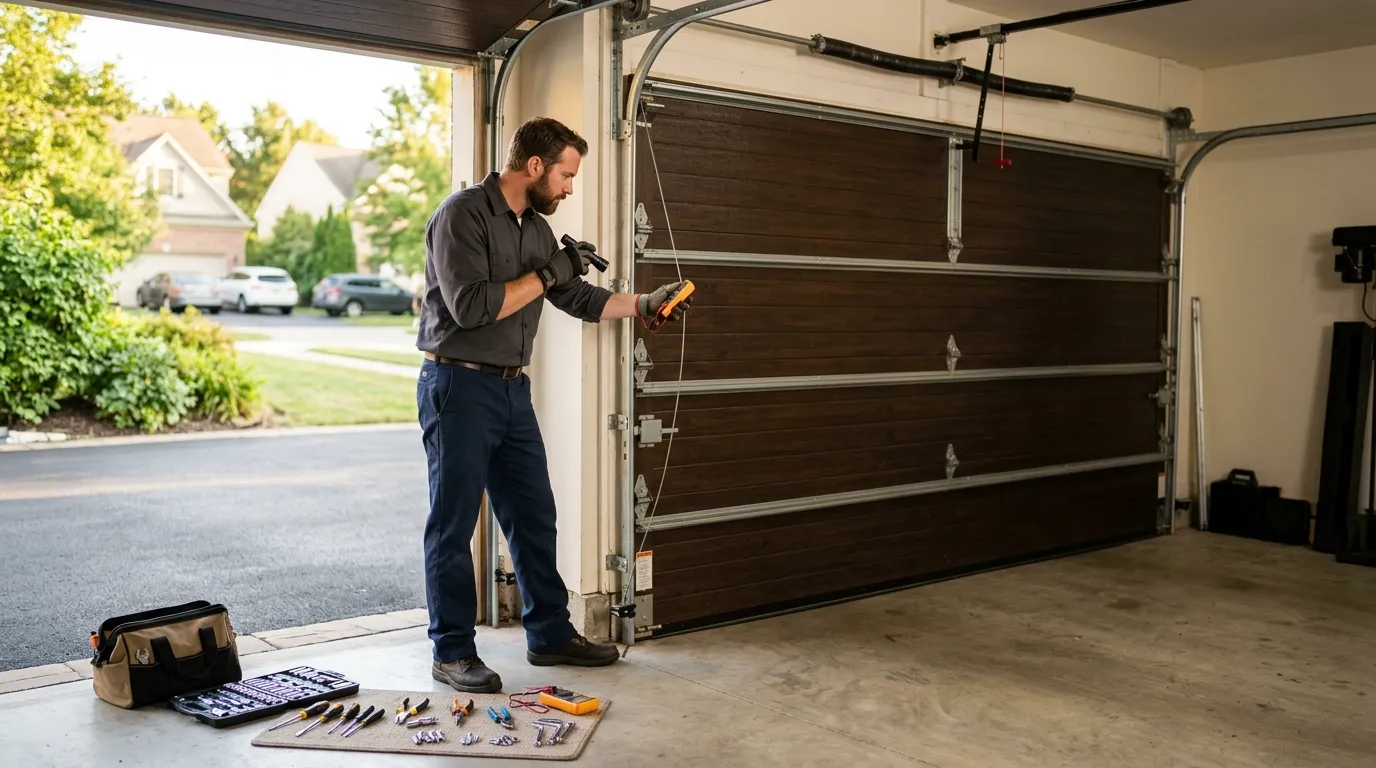
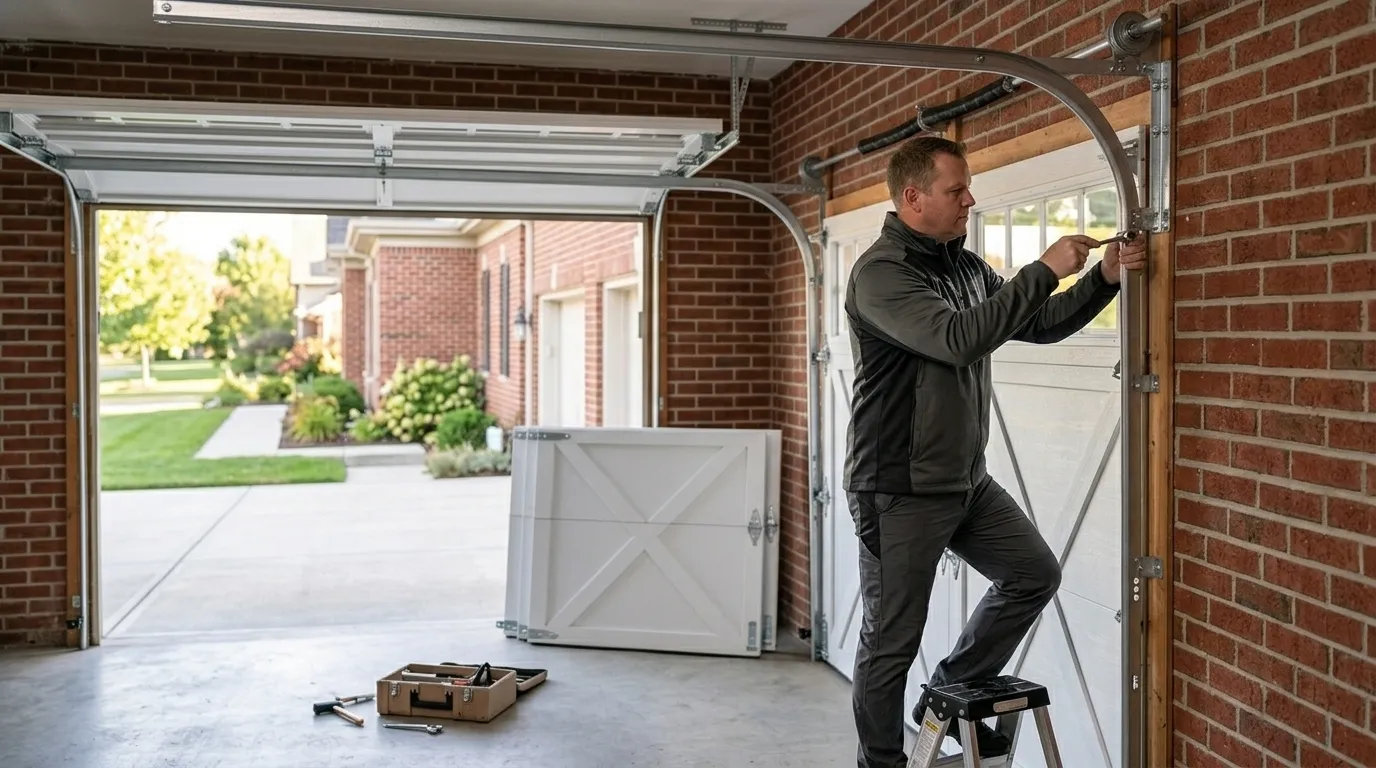
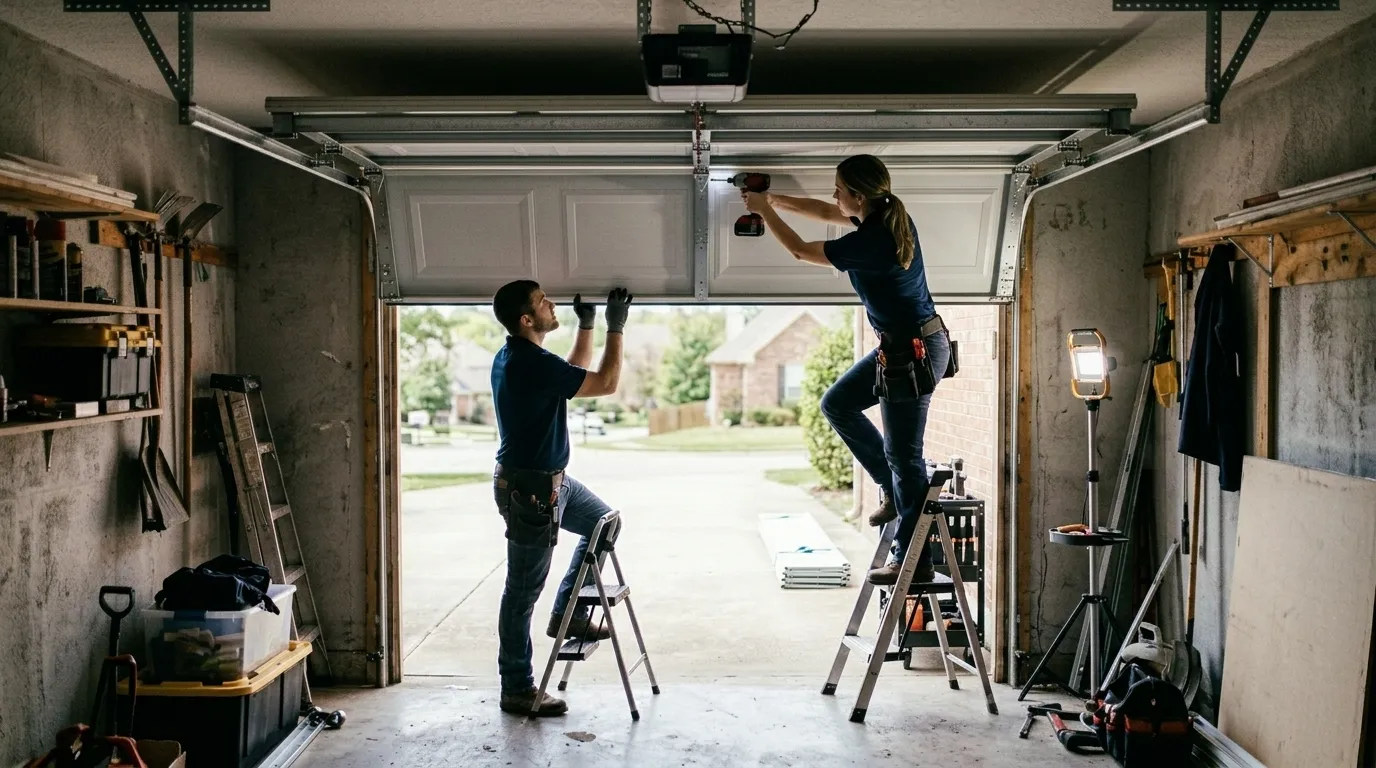
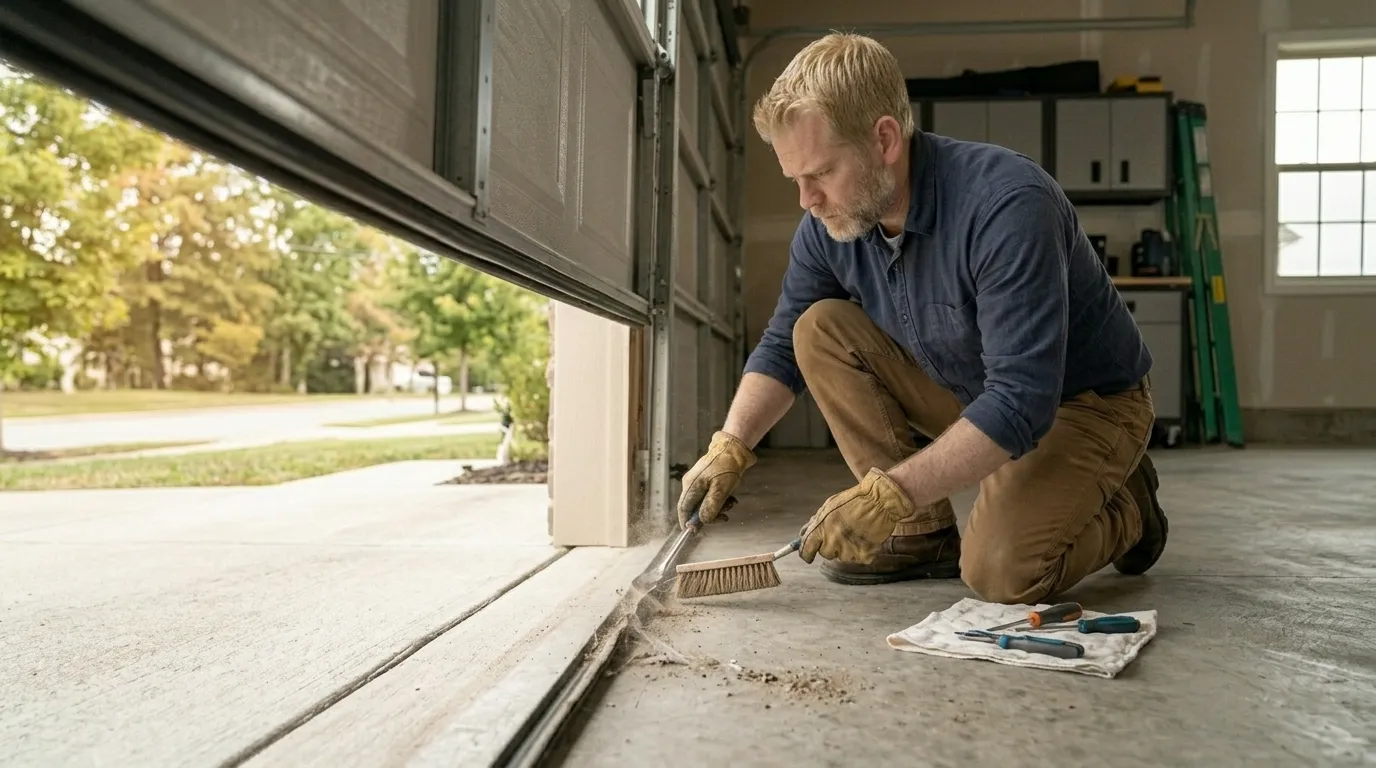
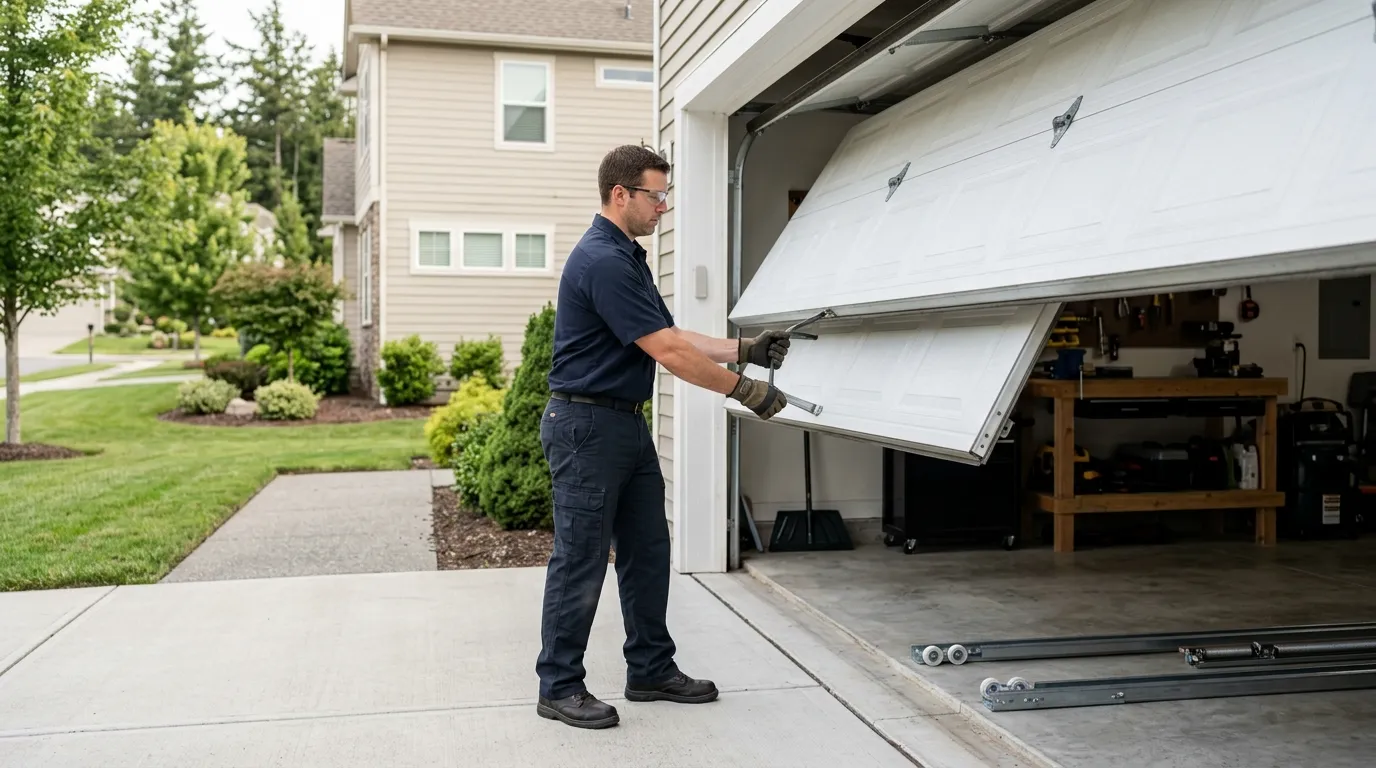
A torsion spring replacement means clamping the door down, releasing tension on the old spring with winding bars, swapping the spring on the shaft, and re-tensioning to match the door's weight and the drum size already on the shaft - guess wrong on turns and the door won't balance. If the cable's frayed, that comes off with the spring since both sides of the drum assembly get disturbed anyway, so we replace both while the tension's already off rather than send someone back out in a month. Track work is separate: bent track from a rushed backout gets straightened or swapped section by section, and we re-square it against the jamb before reinstalling rollers. On the older frame construction still standing in Philadelphia's early ACS-era housing, the jamb itself is sometimes out of square from decades of settling, which means the track alignment takes longer than it would on new construction. We test full cycles - up, down, auto-reverse - before calling the job done, and we won't leave a door that only works one direction.
Why It Happens Here
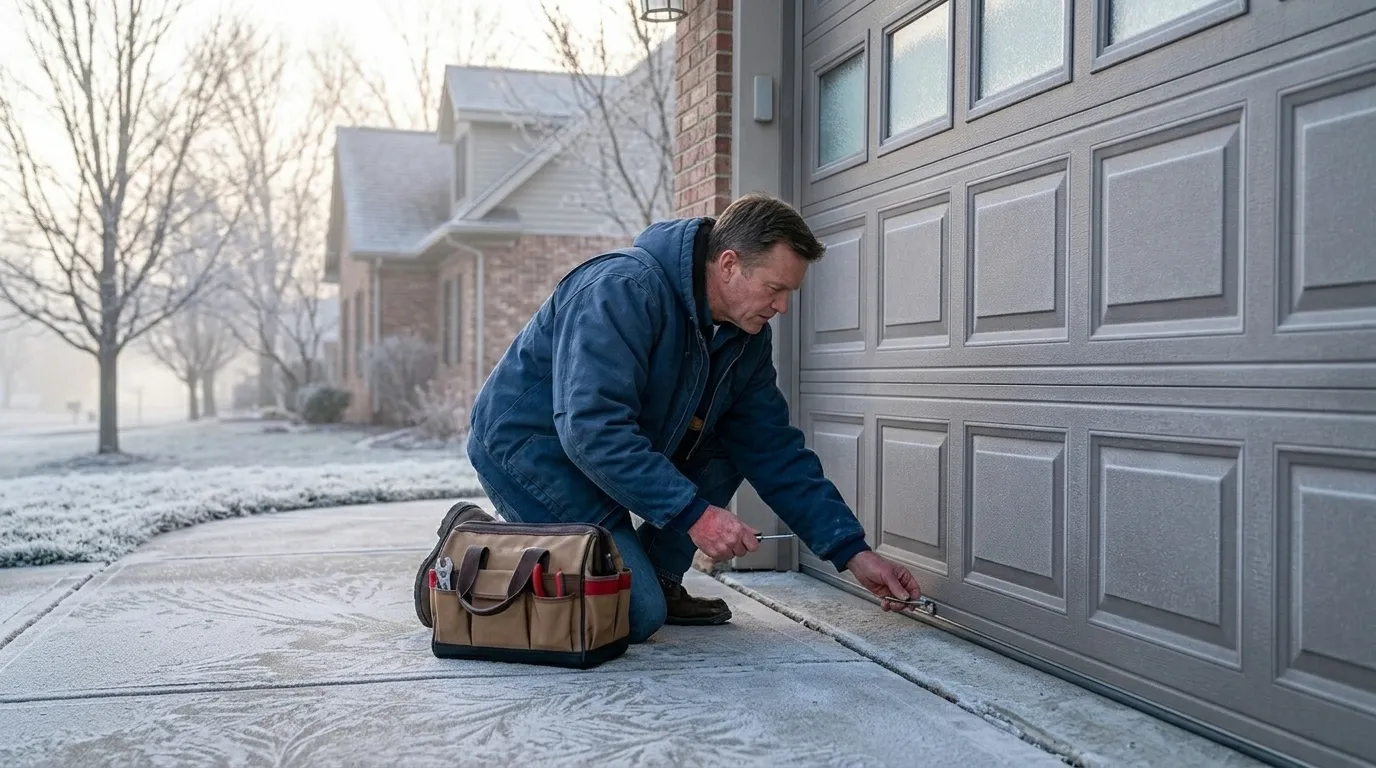
Philadelphia's climate band is classified cold and severe, and torsion springs are steel under constant load - temperature swings between a hard freeze and a summer heat wave fatigue the coil faster than they would in a milder region. Combine that with a housing stock where most of the 95 named areas in this service territory are still predominantly pre-1960 construction, and you get a lot of springs, cables, and drums that are simply old, not misused. With roughly 409,216 households and 160,961 owner-occupied houses across the area, and a median household income of $109,706, we see plenty of owners who'd rather fix the door correctly once than patch it twice - which is usually the right call once a spring's already fatigued, since a second spring on the same shaft will fail on its own schedule anyway. One honest limitation: if the opener itself is a discontinued unit from a house this old, we may need to order a logic board rather than have it on hand, and that can add a day or two to the timeline.
How it works
From “it’s stuck” to “it’s fixed”
01
Tell us what’s wrong
Describe the symptom - won’t open, loud bang, opener runs but the door won’t move.
02
On-site diagnosis
A technician tests the door under power and by hand and finds what actually failed.
03
Clear, up-front plan
You get the fix that’s needed and what drives the cost - before any work starts.
04
Repaired & tested
The repair is done, the door is set true and tested, and the work area left clean.
Serving Philadelphia, PA - tell us what your door’s doing and we’ll take it from there.
Why did my garage door spring break in the winter?
Steel torsion springs lose flexibility as temperatures drop, and Philadelphia's climate band is classified cold and severe. A spring that's already near the end of its cycle life is more likely to snap during a hard freeze than in mild weather, which is why we get more spring calls in winter than any other season.
Is my door's hardware original to the house?
On a lot of blocks, yes. Housing in this area was mostly built between 1938 and 1994 with a median build year of 1957, so original torsion hardware from that era is still common. We carry standard springs, drums, and cable sized for that generation of door.
Do you work outside Philadelphia proper?
We cover the surrounding communities within the service radius, including Bala Cynwyd, along with the nearer Philadelphia neighborhoods.
Can you fix a bent track instead of replacing the whole door?
Usually yes. We straighten or swap individual track sections and re-square them against the jamb. Full replacement only makes sense if the track is crushed in multiple spots or the door panel itself is damaged beyond a section swap.
Ready to get your garage door sorted?
Tell us what it’s doing and where you are in Philadelphia - we’ll take it from there.