What Is Going On
Here's the mechanism: a wide door acts like a sail when it's fully lowered and sealed. Wind loads it from the outside, and unless the door has internal bracing or wind-rated struts, the panel flexes inward and outward with every gust. On a house from this area's median build era - 1957 - that bracing usually isn't there, because it wasn't a code requirement when the garage was built.
Cold makes it worse. Steel panels contract in low temperatures, which tightens tolerances at the track and can turn a door that flexed fine in October into one that binds or pops a roller in January. Wood panels, common in the older stock across this area, absorb moisture in freeze-thaw cycles and swell slightly, then dry and shrink. That repeated cycle loosens the fasteners holding hinges and track brackets to the jamb - the same fasteners that are supposed to keep the door anchored when wind pushes on it.
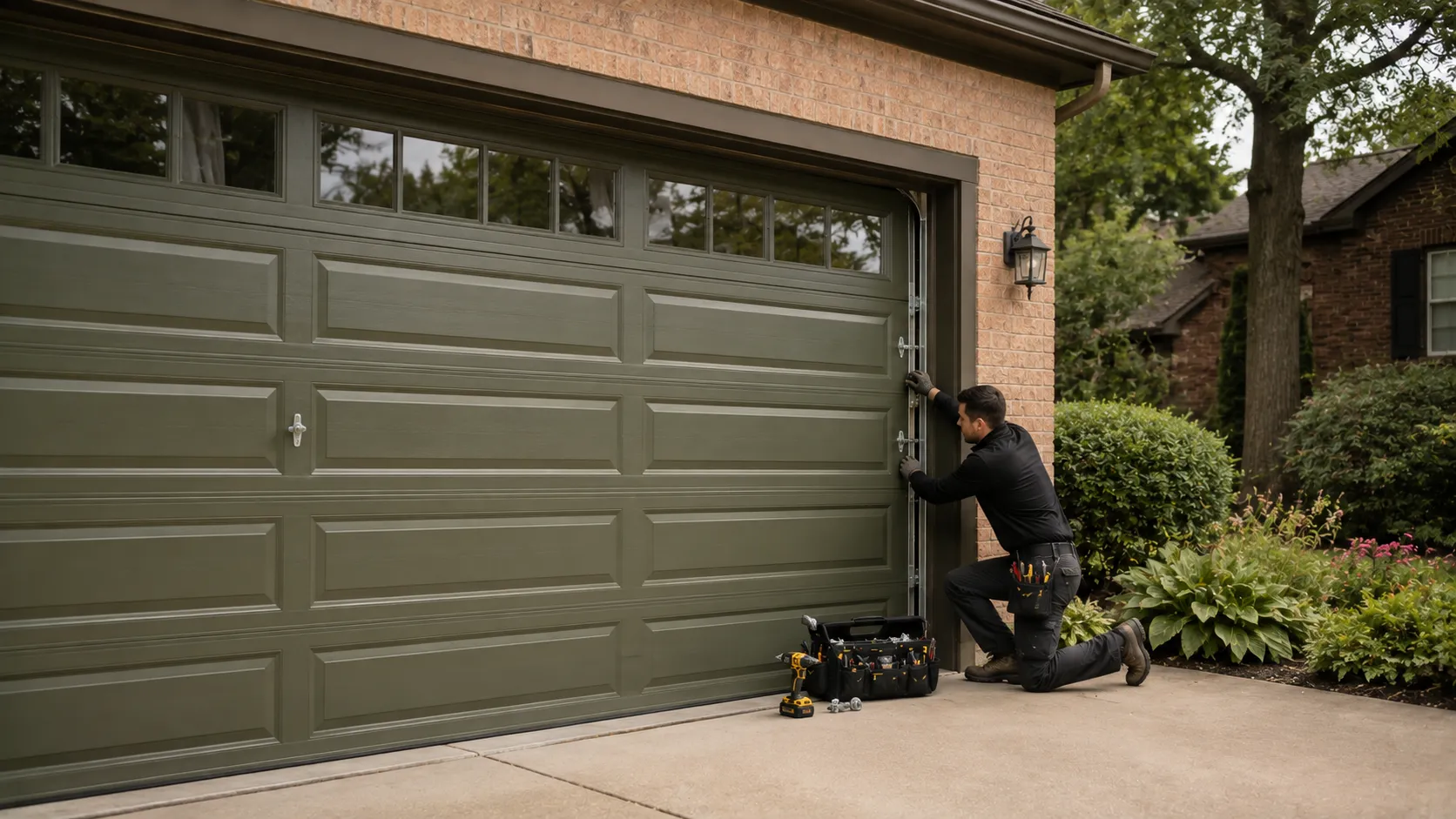
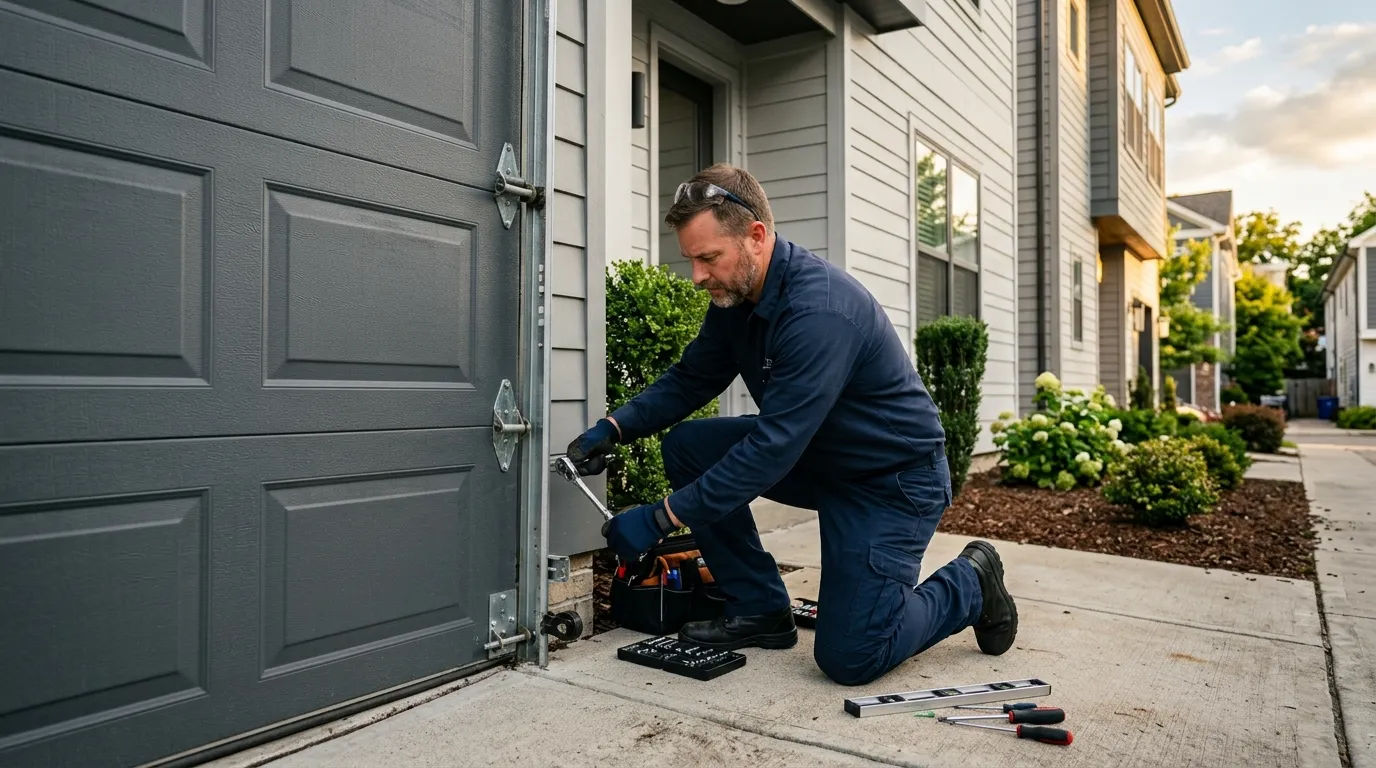
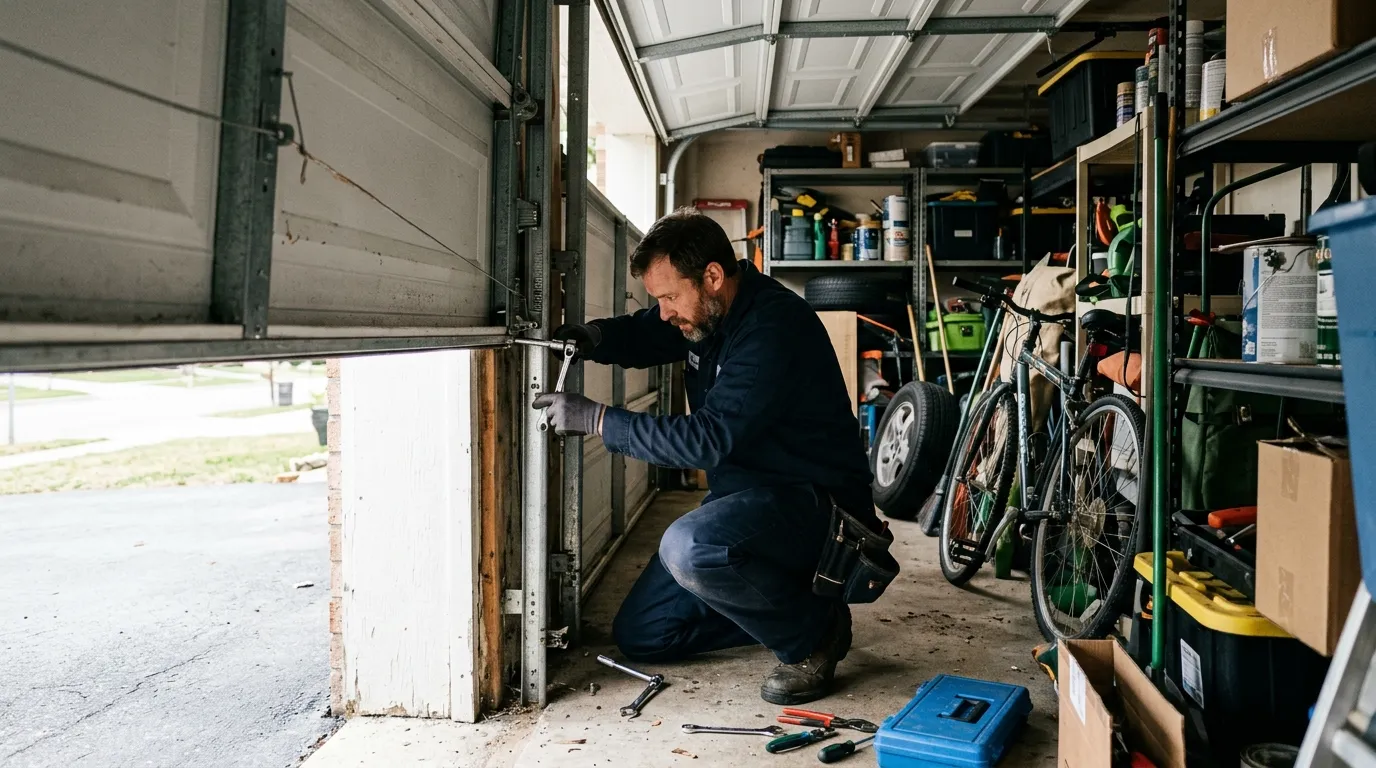
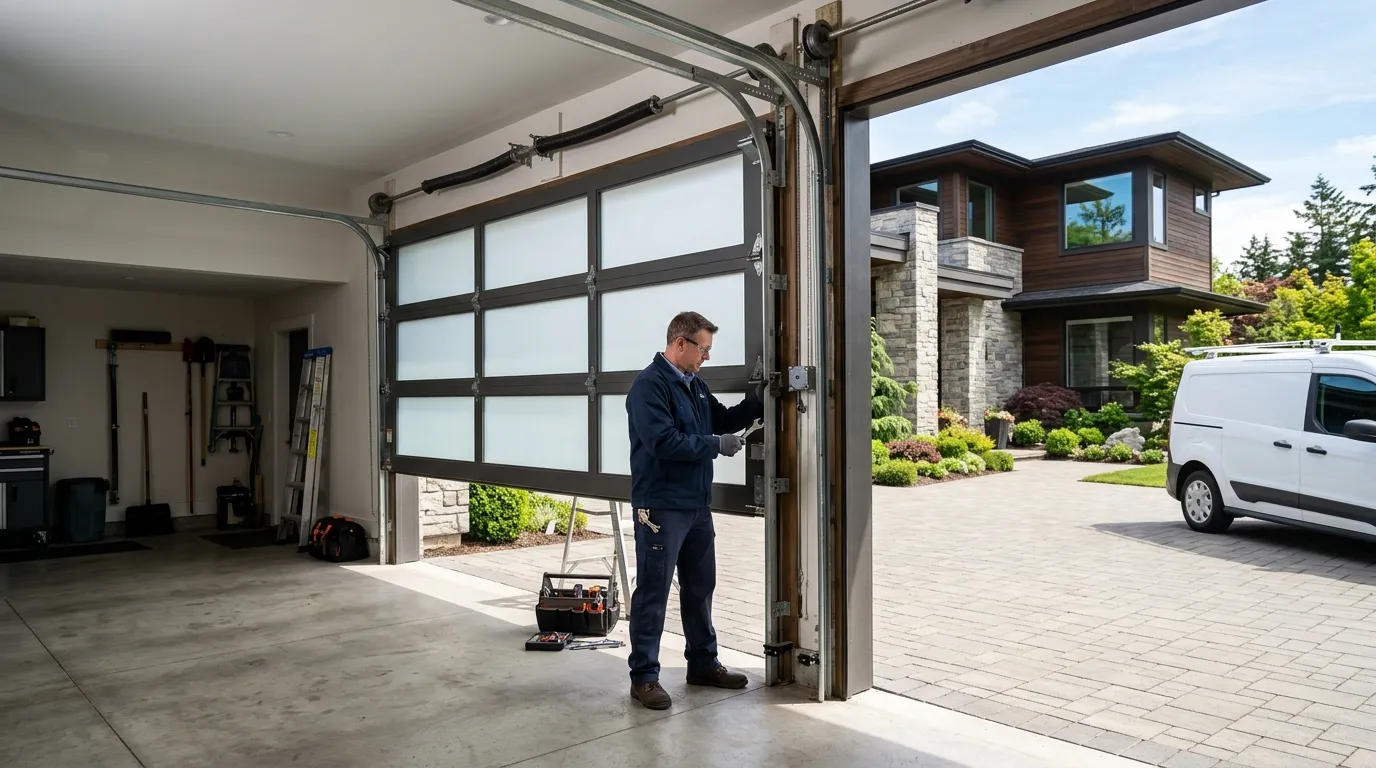
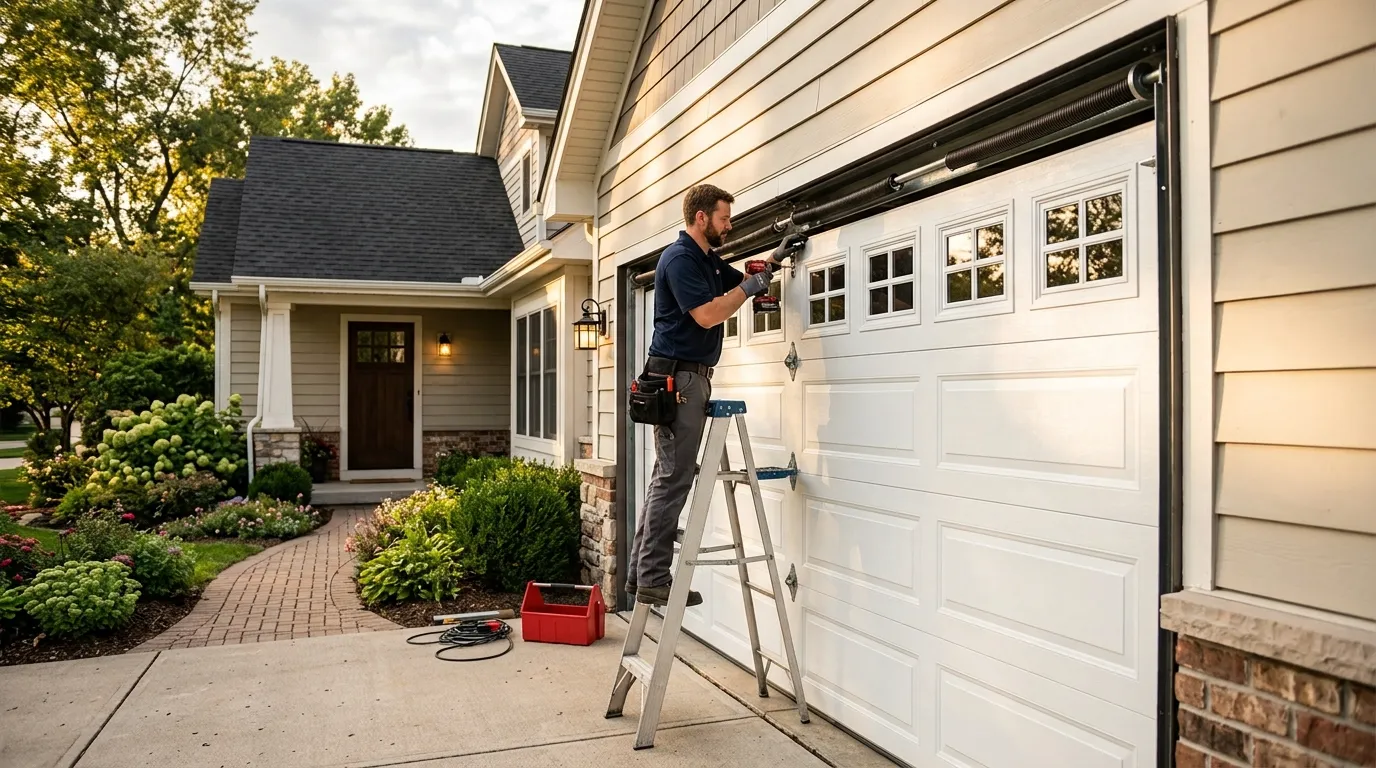
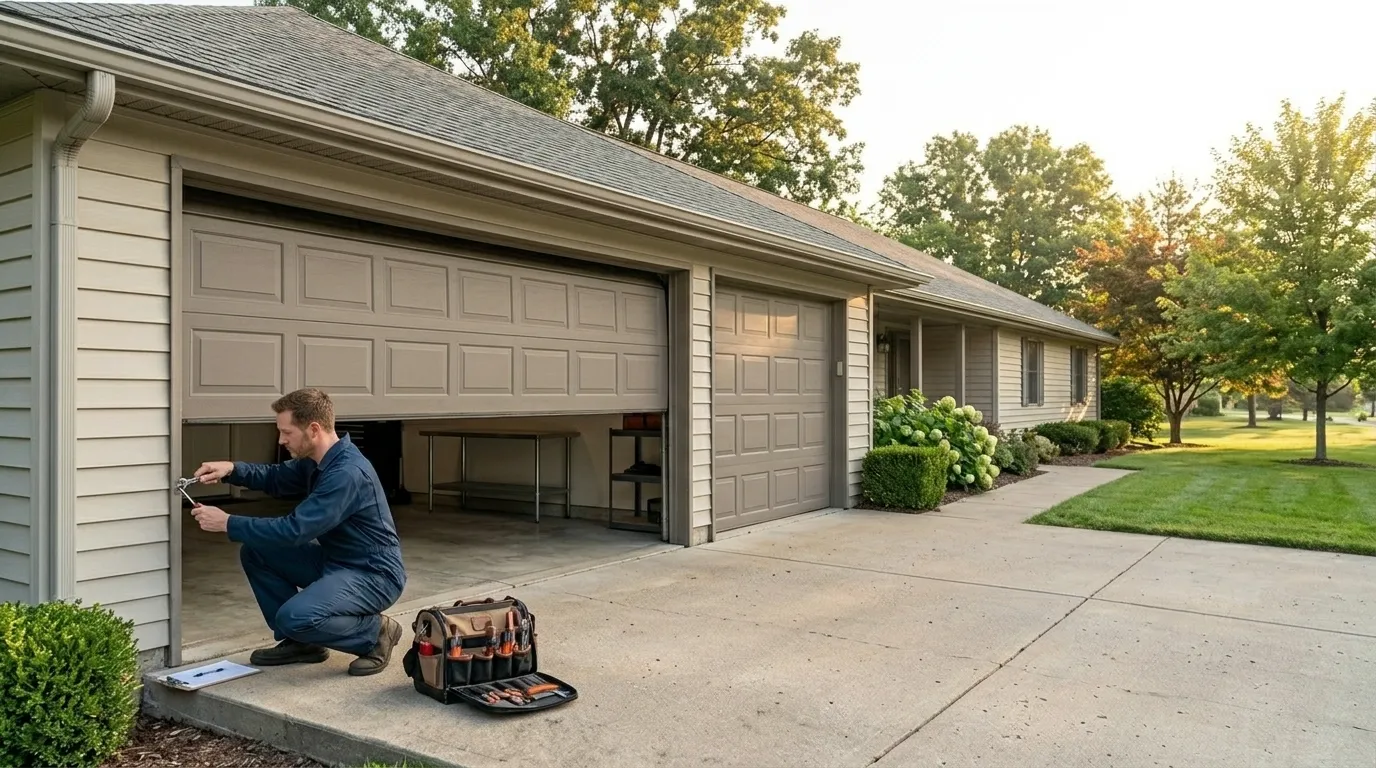
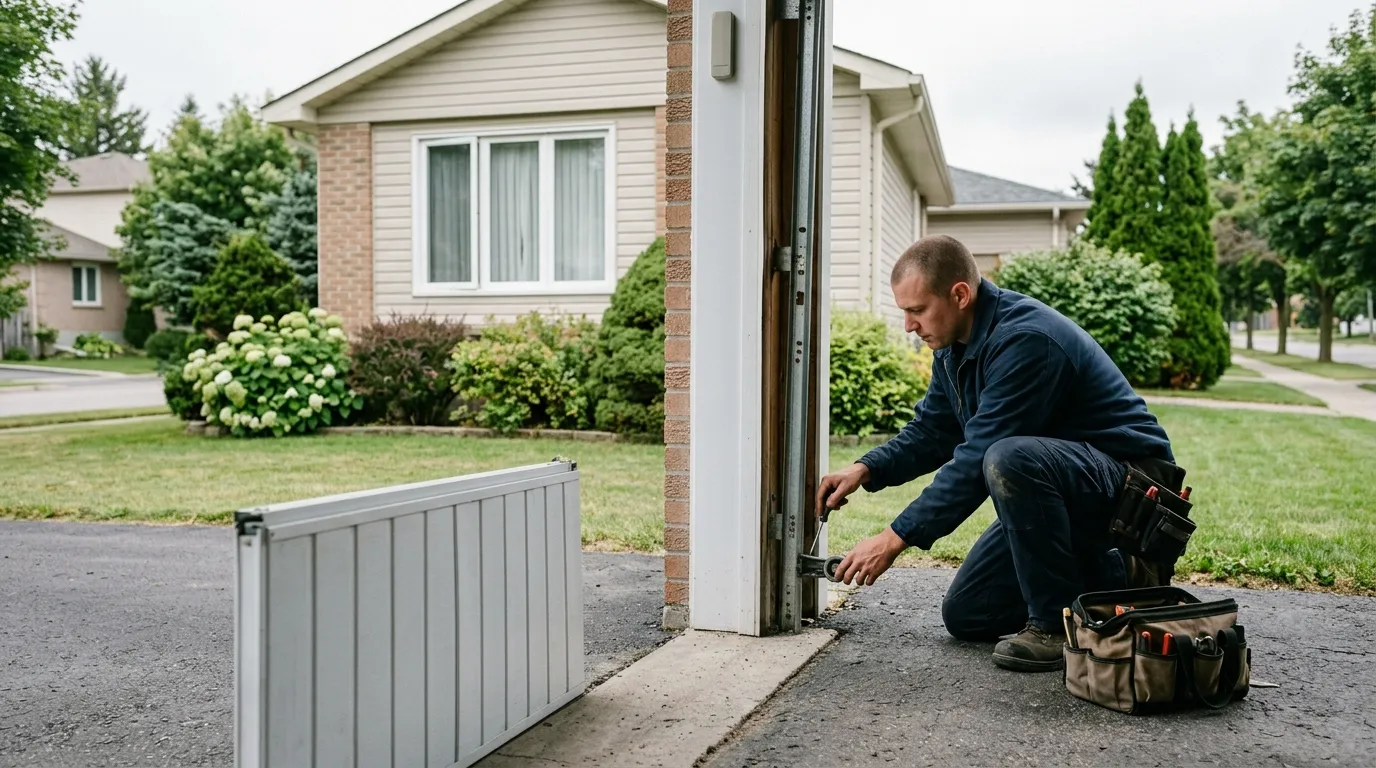
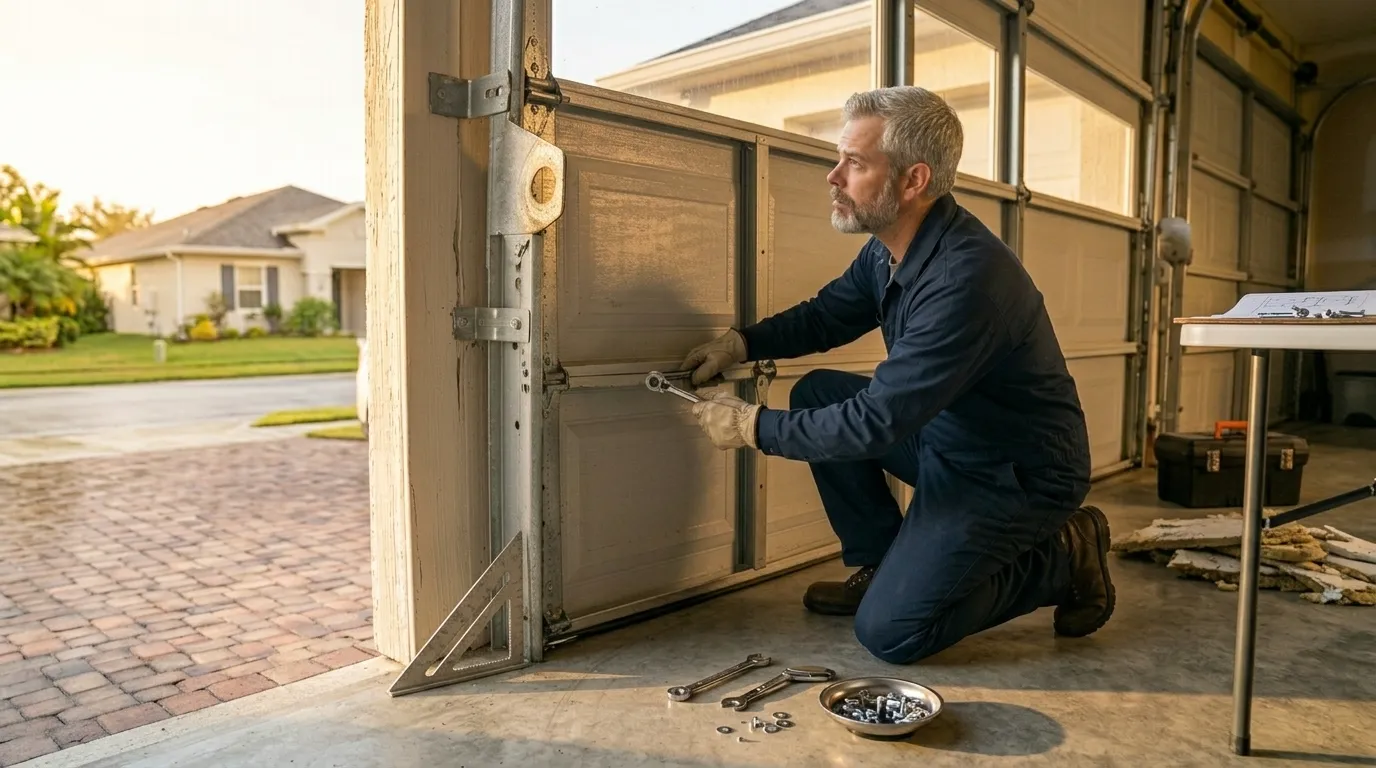
The result on a lot of these older, wide doors is a slow loosening: a track bracket that's pulled a quarter inch from the frame, a top panel with a hairline bow, hinges that have worked themselves loose. None of it looks urgent day to day. It becomes urgent during a hard gust.
What Most People Get Wrong
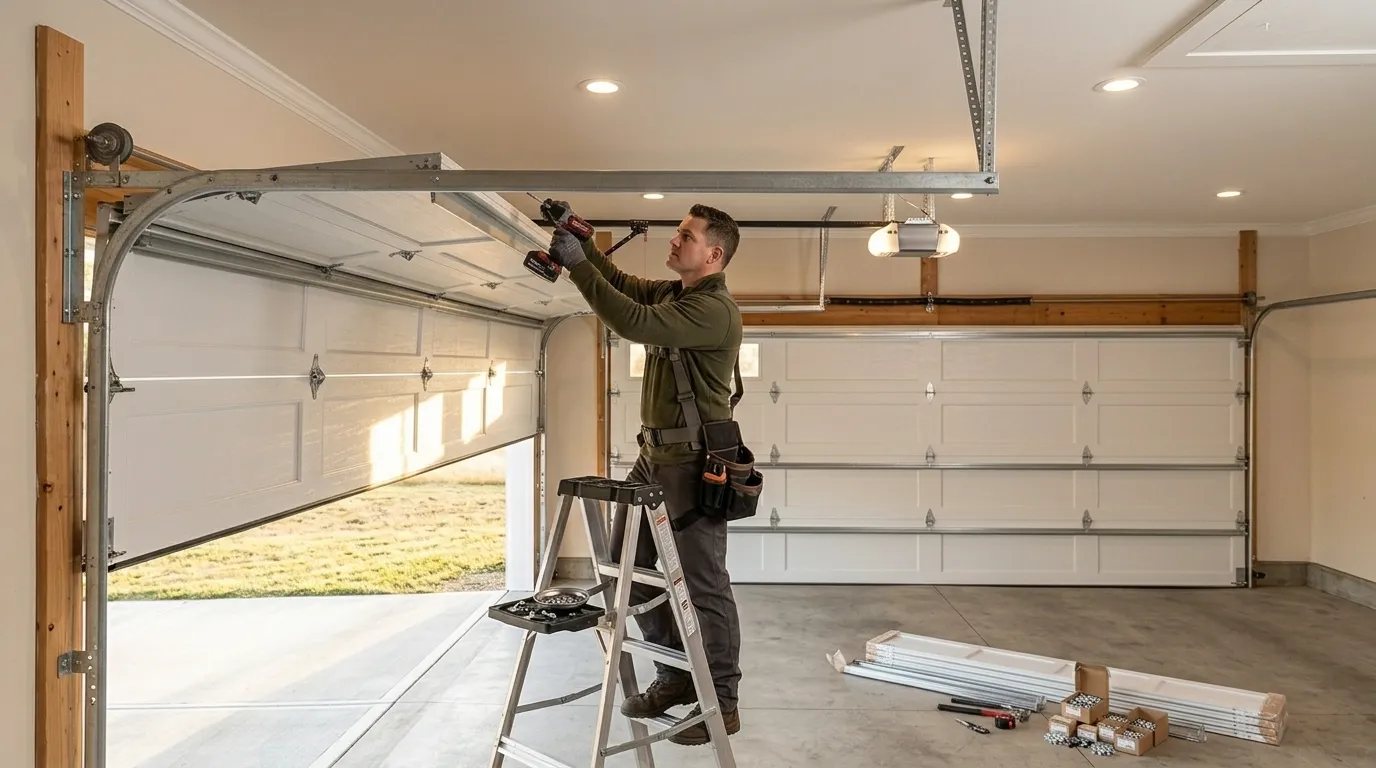
The common mistake is treating a wide door like it needs the same maintenance as a single-car door, just twice as much. It doesn't. A wide door needs bracing and anchoring that a narrow one doesn't, because the physics of wind load scale with surface area, not linearly with width - a door twice as wide takes more than twice the stress at its weak points.
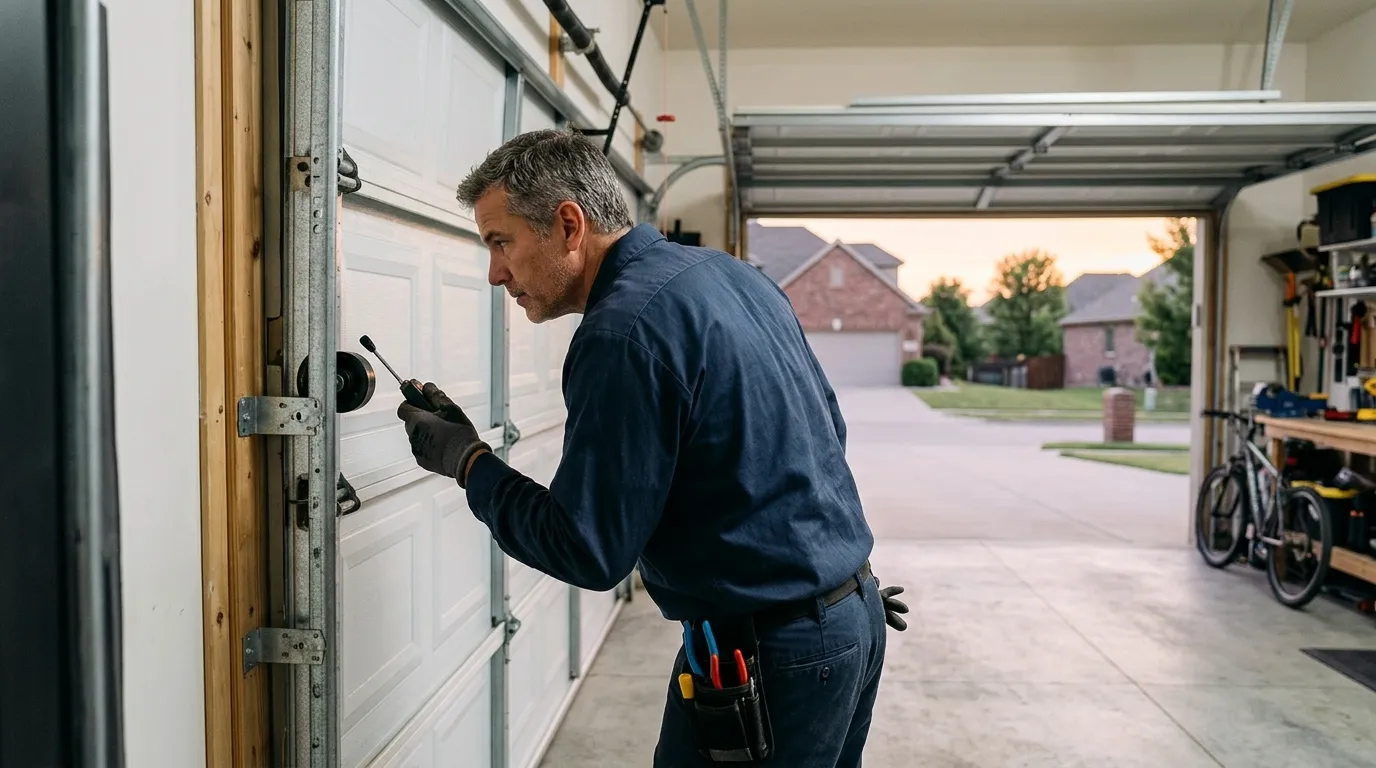
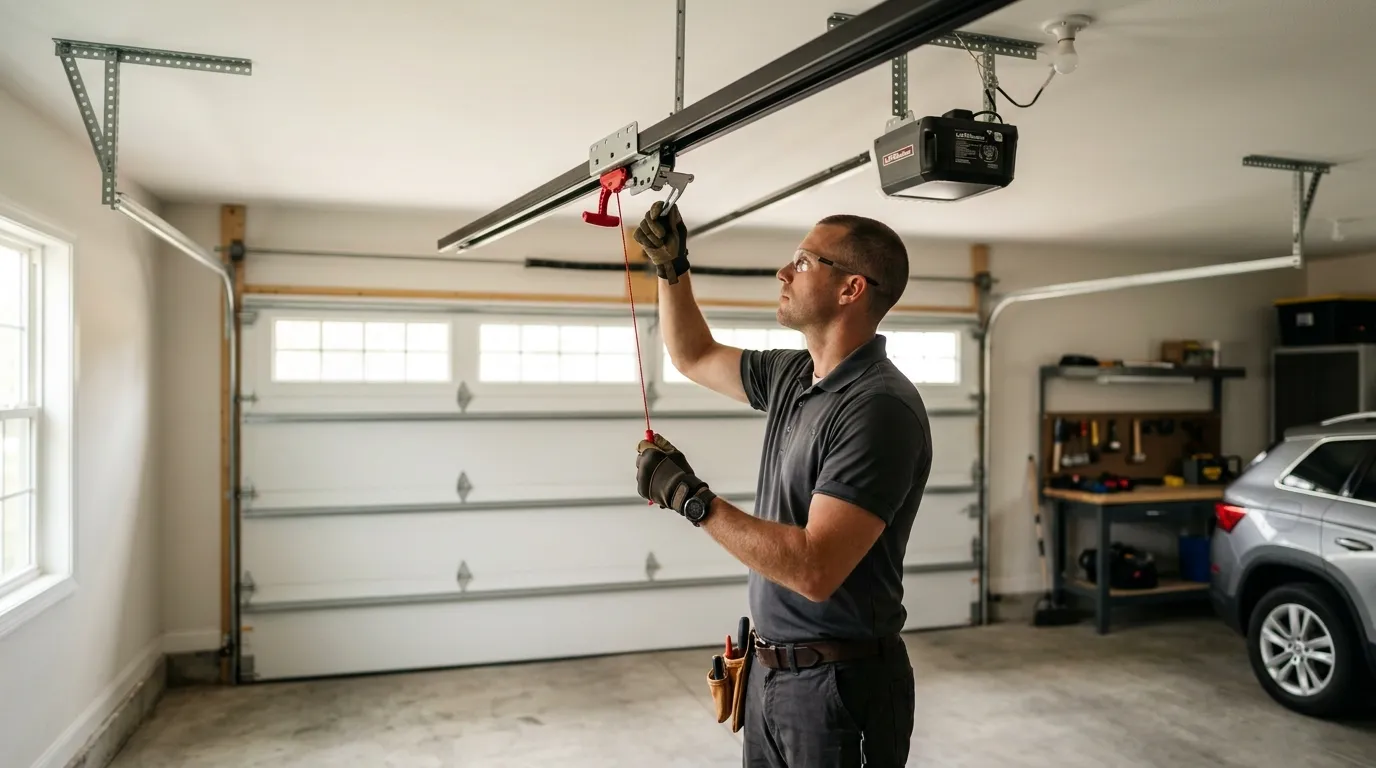
The other mistake is assuming a door that closes smoothly is structurally sound. On houses built in this area's typical range - the 1940s through the 1970s - a door can operate fine on the opener side while the track brackets on the wall have already worked loose from years of freeze-thaw cycling. You won't feel that from inside pushing the wall button. You'd only catch it by looking at the brackets themselves, and most people never do until something gives.
We also see homeowners assume a bowed panel is cosmetic. On an older wide door, a bow at the top means the panel has already flexed past what the steel or wood can take without fatiguing. It's not going to relax back into shape at 15 degrees on a February night.