Why Philadelphia's Old Housing Stock Makes Winter Spring Failure Worse
Philadelphia's pre-1960 housing stock and severe cold winters put real strain on torsion springs. Here's what actually happens and what to do about it.
Most of the housing stock in this service area went up between 1938 and 1994, with a median build year of 1957, and a lot of it - across neighborhoods like - is pre-1960. That matters here specifically because the garages built in that stretch were framed for the doors of their era: single-layer wood or early steel, torsion springs sized for lighter panels, and hardware that was never built with today's insulated doors in mind. Philadelphia sits in a severe cold climate band, and steel spring wire loses temper and flexibility as it gets cold. On a house built in 1955 with original or first-replacement hardware, that spring has already done seventy winters of expansion and contraction before this one even starts. Newer suburbs with 1990s-and-later construction don't carry that same load of old, brittle wire still in service. Here, the combination of an aging spring population and a real winter climate means the failure point isn't hypothetical - it's baked into the age of the neighborhood.
What Is Going On
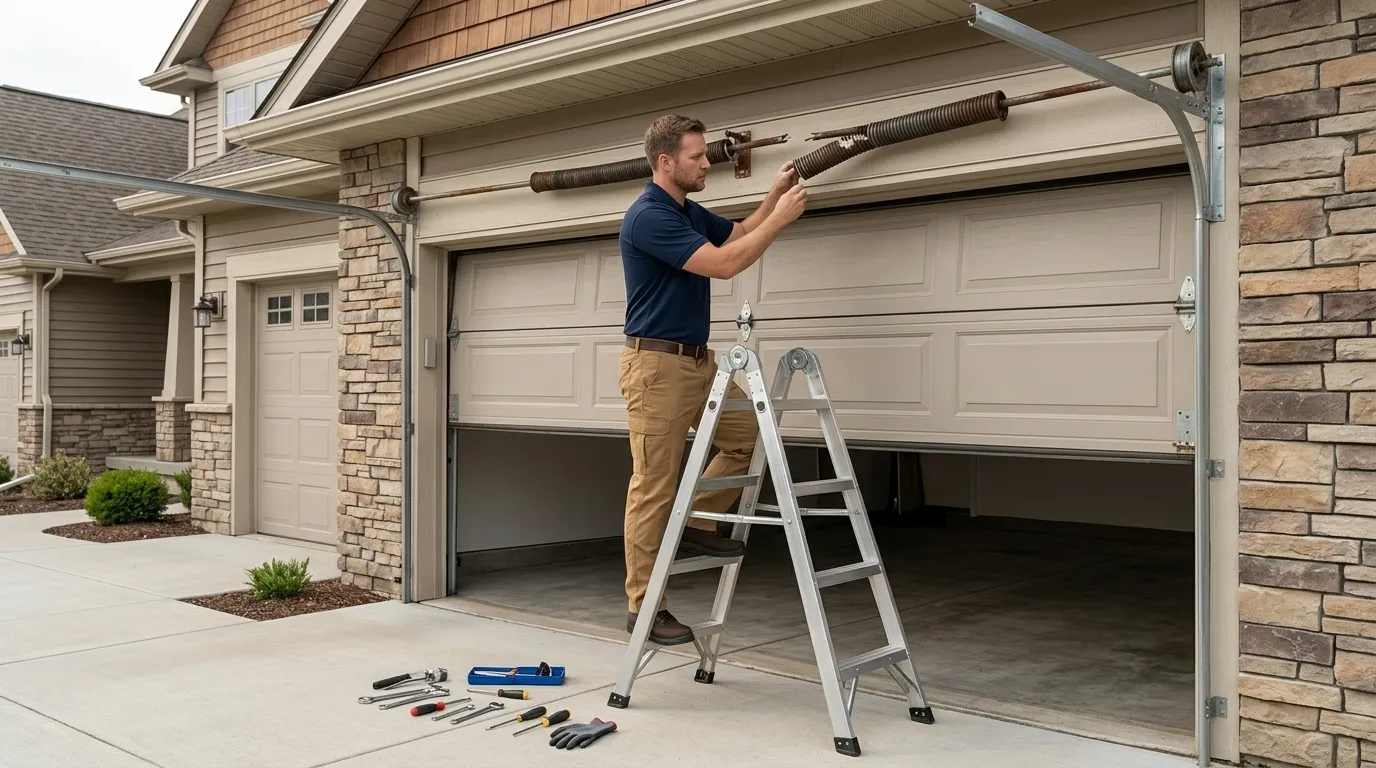
When a spring goes in cold weather, it almost always breaks at full extension - the door is down, the spring is stretched, and the cold steel snaps rather than bends. In a pre-1960 Philadelphia garage, this is compounded by torsion bars and end bearings that have been sitting in an unheated, uninsulated bay for decades. Cold makes the metal contract and become less forgiving right when the door is doing the most work of the day, that first cold-morning lift. We see this pattern concentrated in the older, closer-in blocks - the kind of construction common from down through - where the garage was built as an afterthought to the house, not engineered with it. The spring isn't failing because someone did anything wrong. It's failing because 1950s-era steel wire under Philadelphia winter loads has a finite fatigue life, and a lot of doors in this area are well past it.
What Most People Get Wrong
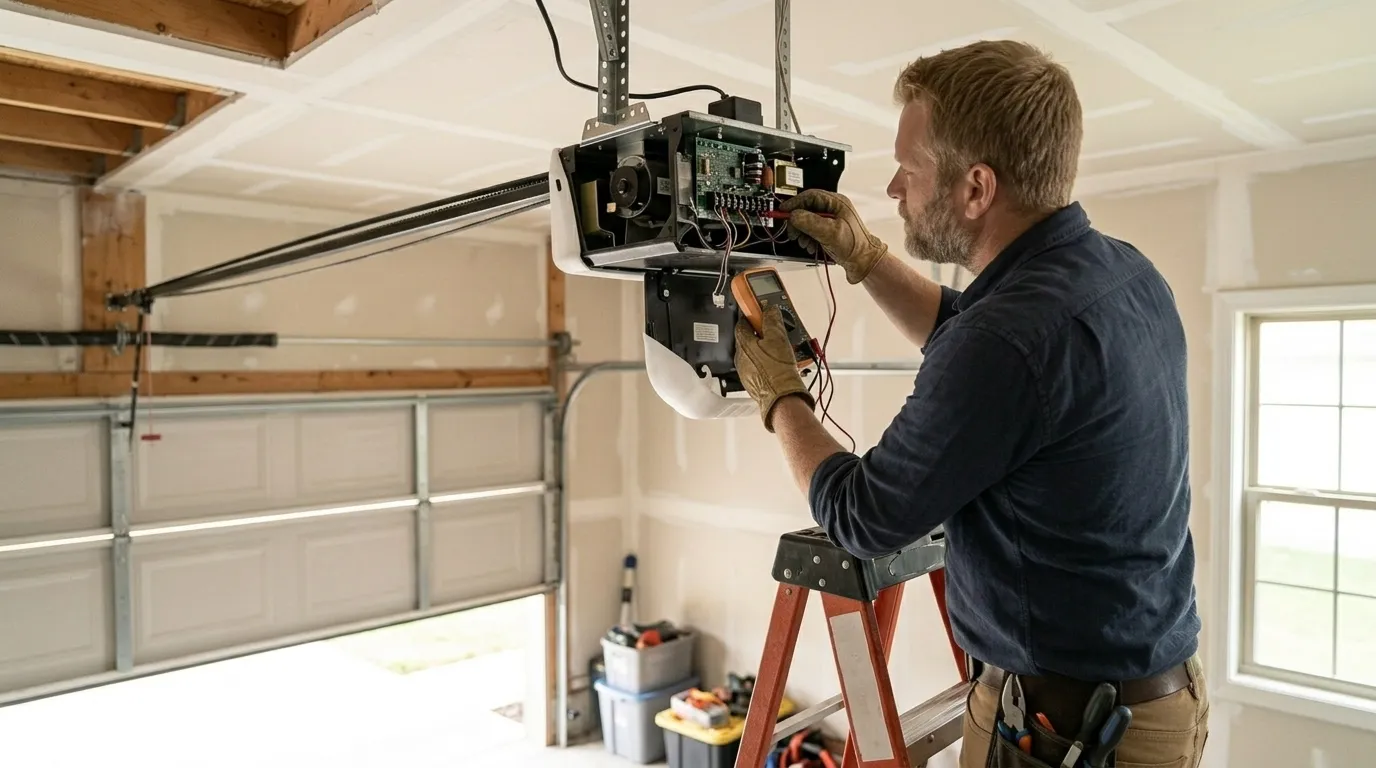
The common mistake is treating a stiff, slow-moving door in January as an opener problem. People replace the opener, or add oil to a rusted track, and the door still won't lift right, because the spring itself has lost tension from repeated cold cycling - it doesn't have to snap to fail you. On original hardware from the 1938-1994 build window, springs were sized to the doors of that period, which were lighter than the insulated steel doors many homeowners have since installed. A heavier door on an old, cold-fatigued spring is a mismatch that shows up as a hard-to-lift door long before the cable actually breaks. The fix isn't always a new opener. Often it's replacing the spring itself, sized correctly for the current door, not the one that came with the house in 1957.
Leaving It Alone
We won't tell you every stiff door needs an immediate spring swap - sometimes a slow winter door is just cold grease in an old track, and that's a five-minute fix, not a parts order. But a torsion spring that's original to a house built in the 1940s or 50s, sitting through severe Philadelphia winters year after year, is not a wait-and-see item once it starts showing uneven tension or visible gaps in the coil. The honest limitation here: we can't tell you the exact age of your spring without looking at it, and if it was replaced at some point without records, neither can you. What we can tell you is that in this climate, on housing this old, waiting until it snaps usually means it happens on the coldest morning of the year, with the door stuck down.
How it works
From “it’s stuck” to “it’s fixed”
01
Tell us what’s wrong
Describe the symptom - won’t open, loud bang, opener runs but the door won’t move.
02
On-site diagnosis
A technician tests the door under power and by hand and finds what actually failed.
03
Clear, up-front plan
You get the fix that’s needed and what drives the cost - before any work starts.
04
Repaired & tested
The repair is done, the door is set true and tested, and the work area left clean.
Serving Philadelphia, PA - tell us what your door’s doing and we’ll take it from there.
Why do garage door springs break more in winter here?
Steel spring wire gets less flexible as it gets cold, and Philadelphia sits in a severe cold climate band. A spring at full stretch on a cold morning is more likely to snap than the same spring on a mild day. Combine that with decades-old wire common in this area's housing stock, and cold mornings are when failures cluster.
My house was built in the 1950s. Is the spring original?
It's possible, though most springs get replaced at least once over that many decades. Given the median build year of 1957 in this area, original hardware is old enough that fatigue is a real concern regardless of exact replacement history. Visible gaps in the coil or a door that's hard to lift are signs worth checking, not waiting on.
Can I just add a stronger opener instead of fixing the spring?
No. The opener isn't designed to lift the door's full weight on its own - the spring does that work, and the opener just moves it. A stronger opener on a worn-out spring puts more strain on the opener's gears and doesn't fix the underlying tension problem.
Ready to get your garage door sorted?
Tell us what it’s doing and where you are in Philadelphia - we’ll take it from there.