Why Safety Sensors Drift Out of Alignment on Philadelphia Garage Doors
Philadelphia's pre-1960 housing stock and severe cold winters push safety sensor brackets out of alignment more than newer construction. Here's what's actually happening.
Most of the garages behind Philadelphia rowhomes and twins went up between 1938 and 1994, with a median build year of 1957. That means the concrete slab under your door, and often the wood or masonry framing around the opening, has had sixty-plus years to settle. Settling isn't dramatic - it's a fraction of an inch here, a slight lean there - but the photo-eye brackets bolted to the track or the wall on either side of the door are not forgiving. A quarter-inch of shift on one side and the beam that's supposed to cross the opening no longer lines up with the receiver on the other.
On top of that, this area sits in a severe cold climate band. Freeze-thaw cycles move concrete and masonry every winter, not once but repeatedly, as the ground heaves and settles with each cold snap and thaw. A garage attached to a house built in the 1940s or 50s has been through decades of that cycling. The slab under one sensor bracket can sit at a slightly different level than the slab under the other, and that gap changes a little every winter. None of this is a defect in the door or the opener - it's what happens to old concrete and old framing in a place that freezes hard and thaws often.
What Is Going On
When the two photo eyes stop lining up exactly, the opener doesn't fail outright - it gets twitchy. The door reverses for no visible reason, or it won't close at all and just blinks the light on the wall control. Homeowners often assume the opener itself is bad, or that the door has a broken spring, when the real issue is a beam that's off by a degree or two.
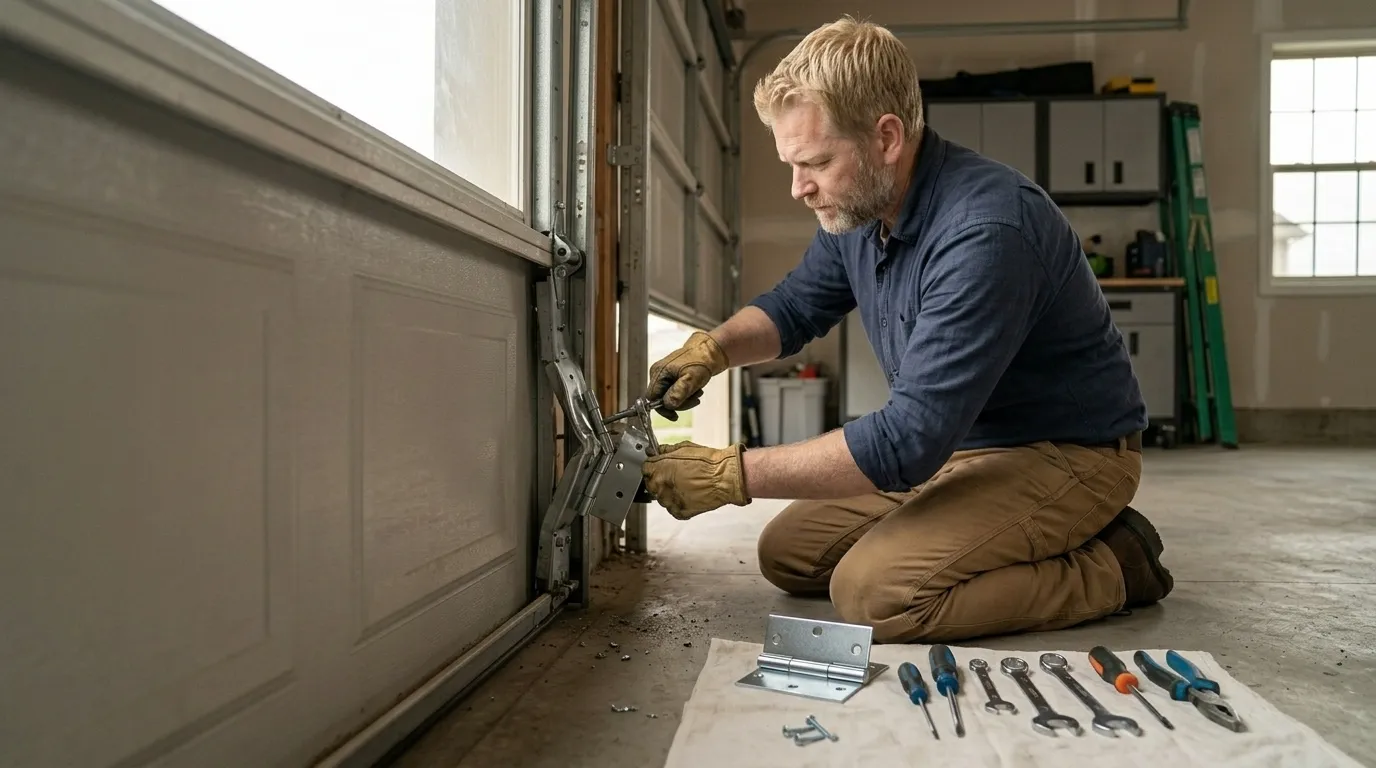
In a lot of the older housing stock in this part of the city and in the surrounding boroughs and townships out to that misalignment shows up gradually. It's rarely a single event. A brutal cold week in January nudges the slab a hair, and by February the sensors that worked fine in the fall are throwing false readings. The bracket itself is usually fine - it's the surface it's mounted to that moved. That's the piece that gets missed.
What Most People Get Wrong
The common move is to nudge the sensor by eye until the light on the receiver stops blinking, call it fixed, and walk away. That works for a week or two. Then the next freeze cycle moves the slab again and the door starts acting up in the same spot.
The other mistake is replacing the sensors themselves. In a house built in the 1940s or 50s with a slab that's still settling, a brand-new sensor bolted to the same shifting bracket will drift again on the same schedule as the old one. The part wasn't broken - the mounting point moved under it. Swapping components without checking whether the bracket and slab are actually level relative to each other just delays the same call by a season.
We also see people over-tighten the bracket screws thinking a firmer mount will hold alignment. It doesn't fix a slab that's shifted a quarter-inch - it just makes the bracket harder to re-adjust the next time it needs it, which, given how this area's foundations move through winter, is usually sooner than people expect.
Leaving It Alone
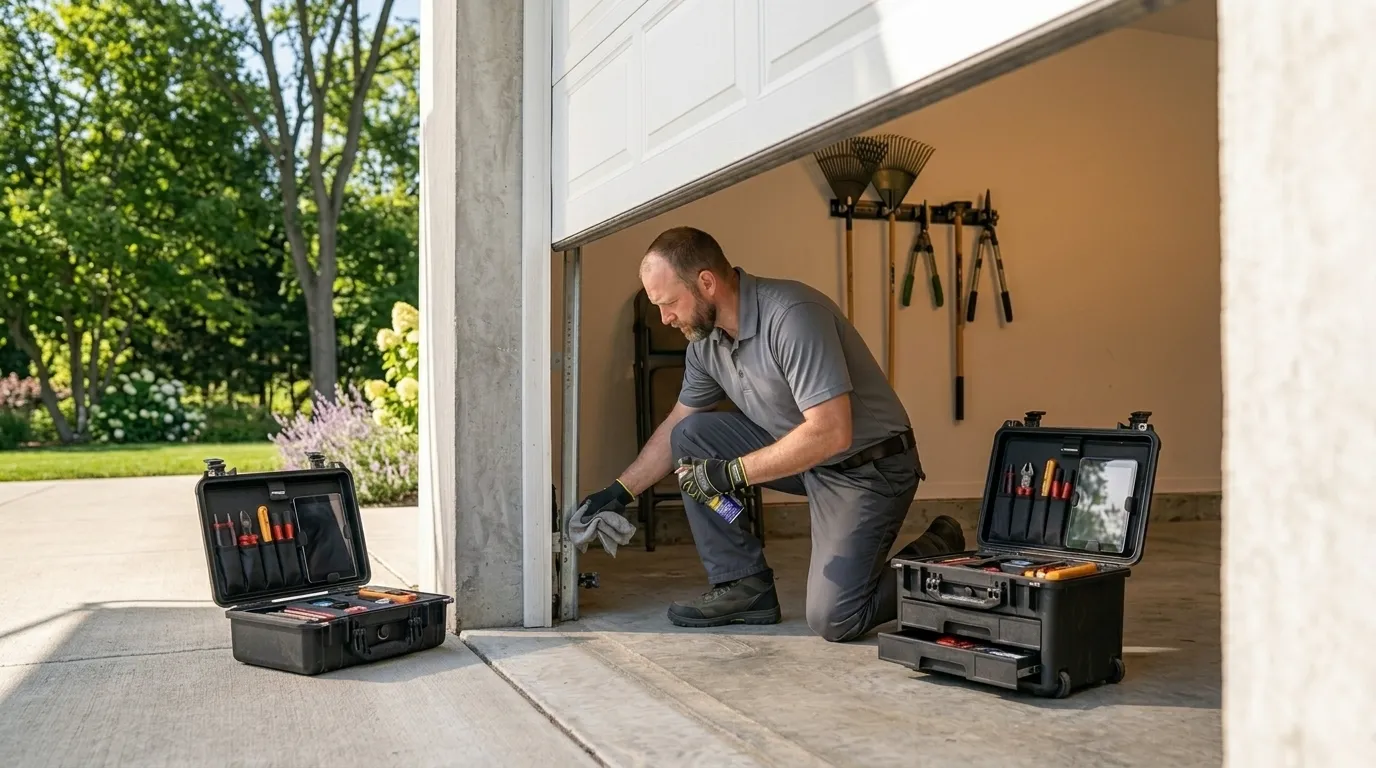
Not every misalignment needs a service call. If your door still closes normally and the sensors haven't started throwing false reversals, a once-a-season check - wipe the lenses, confirm both lights are solid, look for any visible gap change at the base of the brackets - is enough for most of the older garages in this area. We won't tell you to schedule a visit for a sensor pair that's working fine just because the house is old.
Where it's worth a call is when the reversals become frequent, especially right after a hard freeze or a fast thaw, since that's exactly when a settled slab shows its movement. At that point realigning without addressing why the bracket keeps moving is a short-term fix, and we'll say so rather than just re-aiming the beam and sending you an invoice.
How it works
From “it’s stuck” to “it’s fixed”
01
Tell us what’s wrong
Describe the symptom - won’t open, loud bang, opener runs but the door won’t move.
02
On-site diagnosis
A technician tests the door under power and by hand and finds what actually failed.
03
Clear, up-front plan
You get the fix that’s needed and what drives the cost - before any work starts.
04
Repaired & tested
The repair is done, the door is set true and tested, and the work area left clean.
Serving Philadelphia, PA - tell us what your door’s doing and we’ll take it from there.
Why does my garage door sensor only act up in winter?
In this climate, freeze-thaw cycling moves concrete slabs and foundation footings repeatedly through the cold months. If your garage or house was built in the 1940s or 50s, as much of the housing here was, that slab has been shifting for decades, and each cycle can nudge a sensor bracket just enough to throw off the beam.
Can I fix sensor misalignment myself?
Often yes, for a temporary fix - loosen the bracket, re-aim until both lights are solid, and retighten. But if your slab is still settling, which is common in pre-1960 construction here, expect to redo it after the next hard freeze unless the underlying shift is addressed.
Is a new sensor better than realigning the old one?
Not usually. If the mounting surface itself has moved - which is the typical cause in older Philadelphia garages - a new sensor on the same bracket will drift on the same schedule as the old one. The part is rarely the problem.
Ready to get your garage door sorted?
Tell us what it’s doing and where you are in Philadelphia - we’ll take it from there.