Is Your Philadelphia Garage Door Worth Fixing, or Time to Replace
Philadelphia homes mostly date 1938-1994, median 1957, in a severe cold climate band. Here's how that shapes whether an old garage door is worth fixing.
Philadelphia's housing stock runs 1938 to 1994, with a median build year of 1957, and across the 95 named areas we cover, most of what's standing went up before 1960. That matters for garage doors because a door installed with a house built in the Truman or Eisenhower years was likely replaced once already, sometime in the 70s or 80s, on hardware sized for a lighter door than what's sold today. The severe cold climate band this region sits in adds a second variable: steel contracts hard in a January cold snap, and old torsion springs that were already fatigued from forty winters of temperature swings tend to let go right when you need the door most. We see this pairing constantly in rowhouse blocks and twin-home streets where the garage was added or converted decades after the house itself. The door and the opening don't always agree on age, and that mismatch is where most of the expensive surprises come from. None of this means every old door is a lost cause. It means the two questions worth asking are how old the house's garage opening actually is, and what winter has done to whatever's currently hanging in it.
What Is Going On
On a block built mid-century, a garage door failure usually traces to one of two things: springs sized for an original lightweight panel door now straining under a heavier steel replacement, or track and hardware that were never upgraded when the door was swapped decades back. Cold makes both worse. Metal fatigue that would take years to show up in a milder climate shows up in one hard winter here, because the severe cold band this area sits in means real freeze-thaw cycling, not just a few chilly weeks. A cable that's frayed but holding in October can snap in February once the steel it's wrapped around has contracted enough times. We also see openers original to a garage that predates the current door - a 1960s-era track carrying a load it wasn't drilled for. None of this is dramatic on its own. It's cumulative wear meeting a climate that doesn't let old fatigue sit quietly. That's the pattern across the older blocks in this service area, not a one-off house problem.
What Most People Get Wrong
The most common mistake is treating a noisy or slow door as a lubrication problem when it's actually a spring nearing the end of its cycle count. On houses from the 1938-1994 range, especially anything close to that 1957 median, springs are often original to a door replacement job nobody remembers scheduling, and cold has already done its damage before the noise starts. The second mistake is assuming a repair estimate close to a replacement estimate means the repair is the better deal. On an opening that predates the door on it, patching the current door with new hardware sometimes just moves the failure point to the track or the header, not the spring. We won't tell a homeowner to replace a door that's got real life left just because it's old - housing stock this age has plenty of doors still doing their job fine. But we also won't quote a spring swap on hardware that's fighting the door it's attached to and call it a fix.
Leaving It Alone
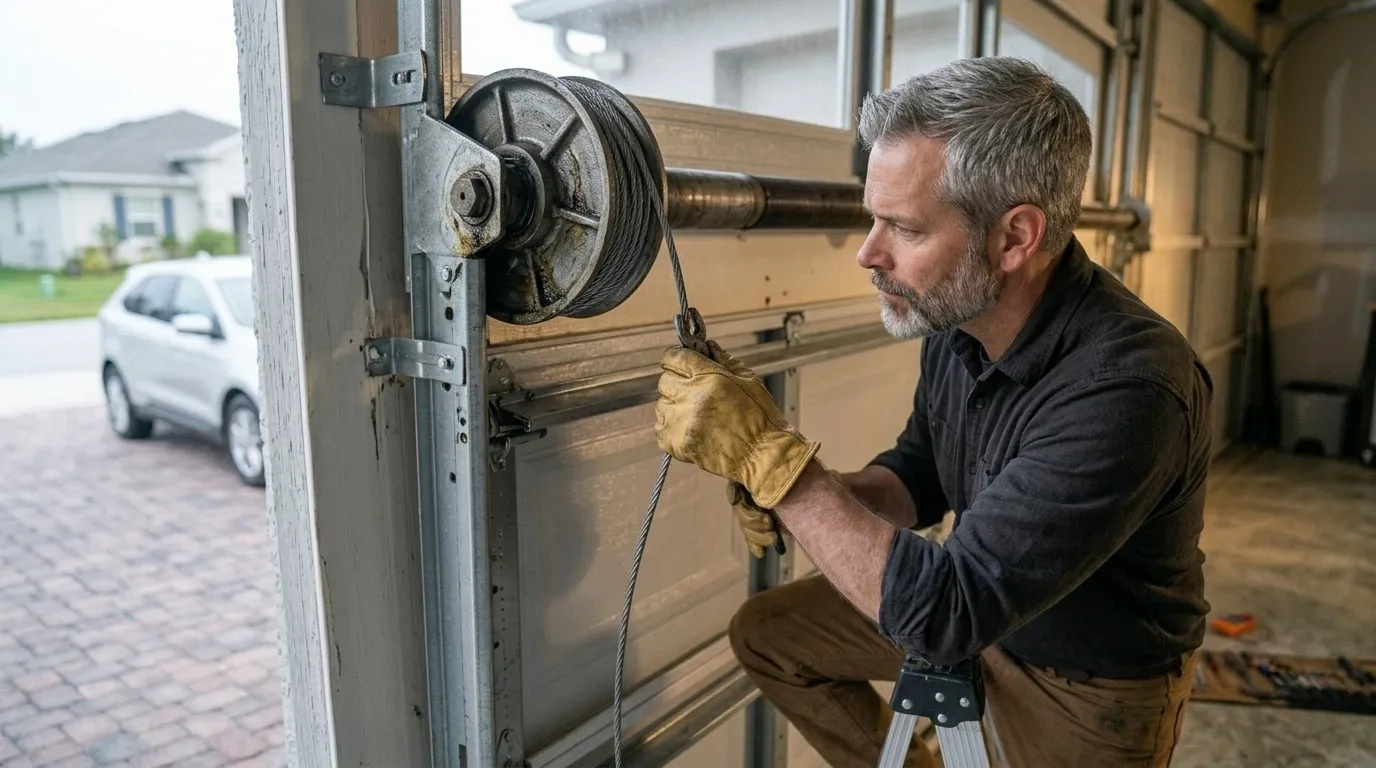
A door that's stiff in cold weather but otherwise tracking straight, closing flush, and not grinding at the rollers can usually wait. We don't push replacement on a door just because the house is old - plenty of homes built in that 1938-1994 range still have doors with sound panels and hardware that just needs adjustment for the cold, not a teardown. Where we draw the line is a cable showing wire strands, a spring with visible gap separation, or an opener straining audibly to lift - those don't improve with another winter, they fail in one. Our honest limitation: we can't always tell you the exact age of your specific door or opening from a phone call, because permit records for garage conversions on older Philadelphia blocks aren't consistent. That's a look-at-it-in-person answer, not a guess-over-the-phone one.
How it works
From “it’s stuck” to “it’s fixed”
01
Tell us what’s wrong
Describe the symptom - won’t open, loud bang, opener runs but the door won’t move.
02
On-site diagnosis
A technician tests the door under power and by hand and finds what actually failed.
03
Clear, up-front plan
You get the fix that’s needed and what drives the cost - before any work starts.
04
Repaired & tested
The repair is done, the door is set true and tested, and the work area left clean.
Serving Philadelphia, PA - tell us what your door’s doing and we’ll take it from there.
How do I know if my garage door is original to the house?
On houses in the 1938-1994 range that make up most of this area, it's unlikely - most original doors were replaced decades ago. Panel style, spring type, and hardware wear are better clues than the house's build year. We check this on site rather than guessing from age alone.
Does Philadelphia's winter really affect garage door springs that much?
Yes. This area sits in a severe cold climate band, and repeated freeze-thaw cycling fatigues torsion springs faster than a mild climate would. A spring that's marginal in October is often the one that snaps during a hard cold snap in January or February.
Is it worth fixing a door on an older house instead of replacing it?
Often, yes. Plenty of doors on houses from this area's 1938-1994 building era have solid panels and just need spring, cable, or track work suited to the cold. Replacement makes more sense when the opening's original hardware is undersized for the current door, not just because the house is old.
Ready to get your garage door sorted?
Tell us what it’s doing and where you are in Philadelphia - we’ll take it from there.