Why a Door Goes Off Track in a City Built Before 1960
Philadelphia's pre-1960 housing stock and cold winters push garage door tracks out of alignment in ways newer suburbs rarely see. Here's what's actually happening.
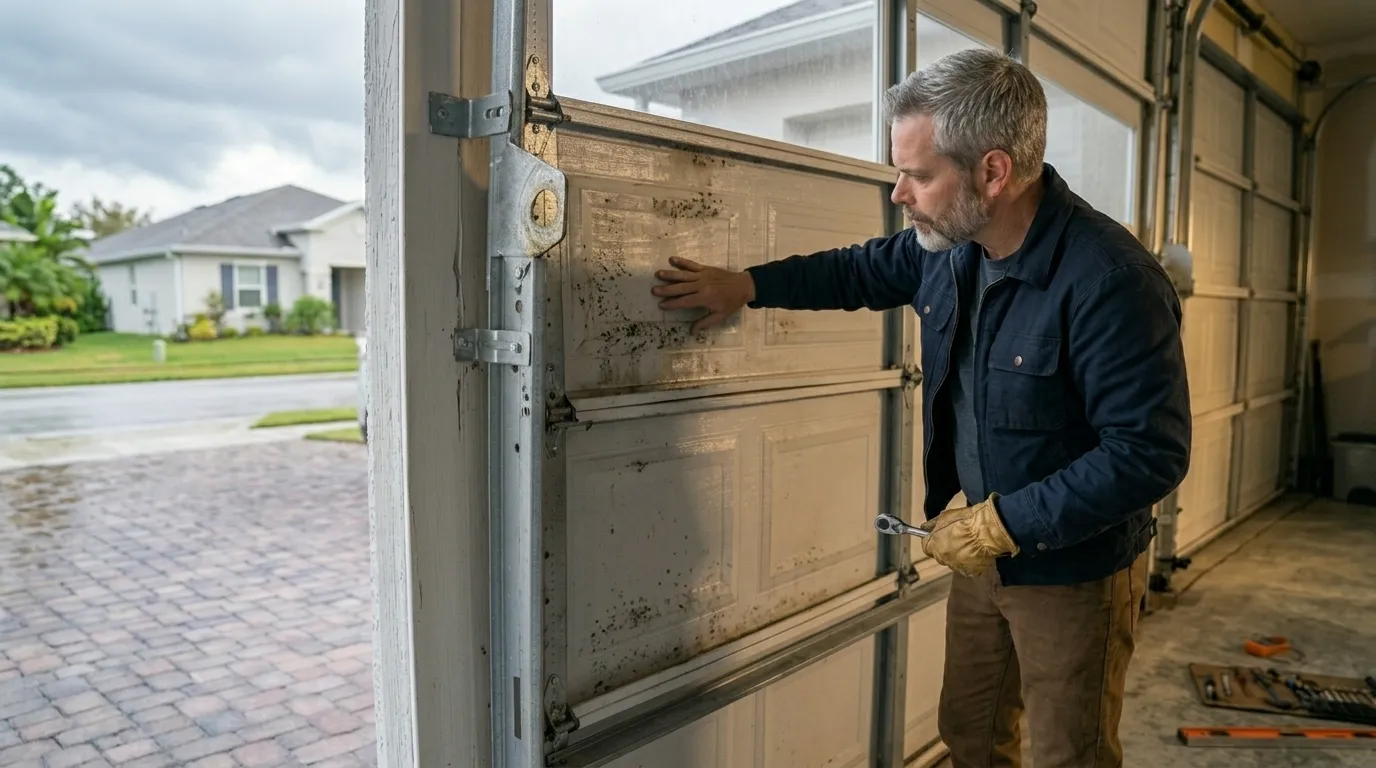
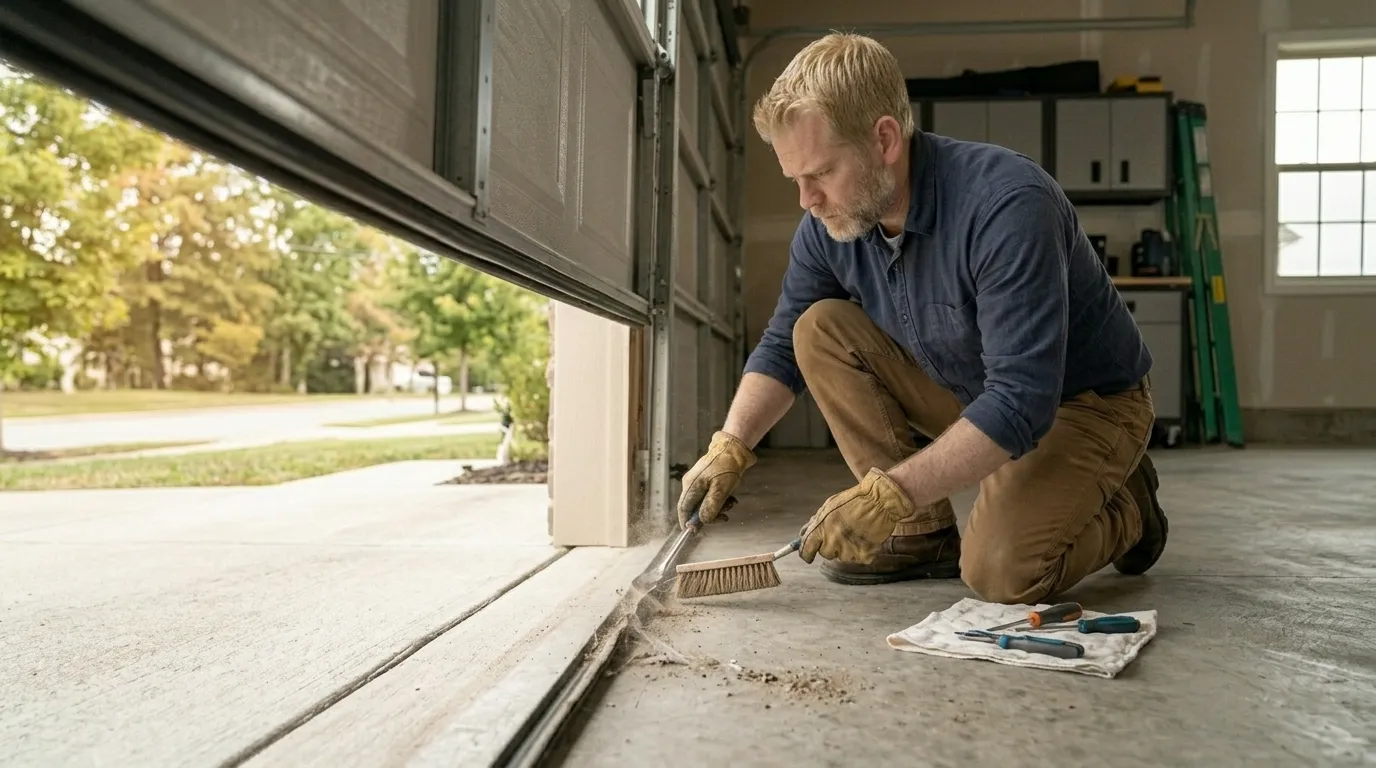
Most of the housing stock in this service area went up between 1938 and 1994, with the median build year sitting at 1957, and the majority of named neighborhoods here are pre-1960 construction. That matters for tracks more than almost any other part. A track is only as straight as the wall or jamb it's lagged into, and a brick rowhouse foundation that's been settling since the Truman administration has moved. Not dramatically, not all at once, but enough over sixty-plus years that the vertical track on one side of the opening is rarely still perfectly plumb to the other. Add a COLD-severe climate band, and steel track sections contract in January and expand back in July every single year. On a newer house with a poured, uncracked foundation and current framing tolerances, that cycle is a non-event. On a house from the 1950s where the track brackets were shimmed once in 1957 and never touched again, that cycle is how a bracket works itself loose a sixteenth of an inch at a time until the rollers start climbing the flange instead of riding inside it.
What Is Going On
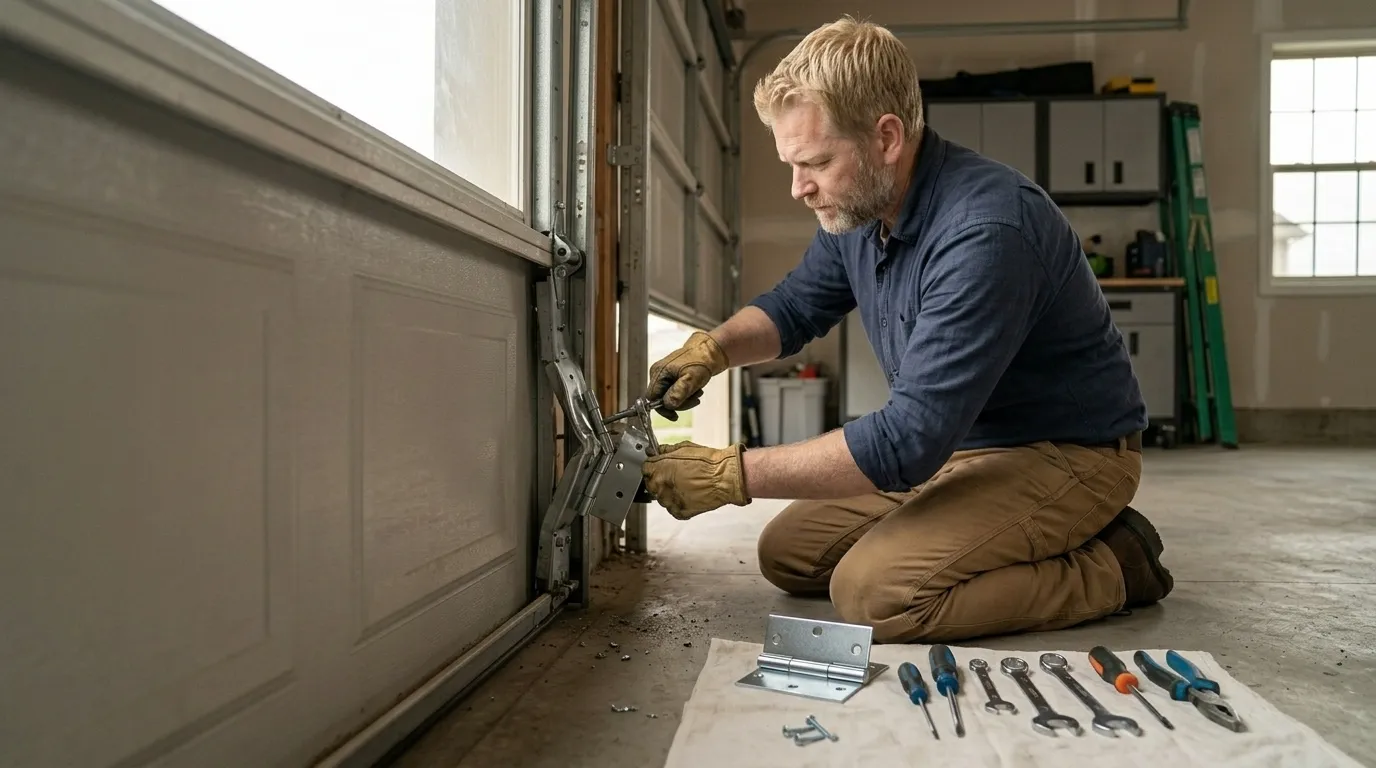
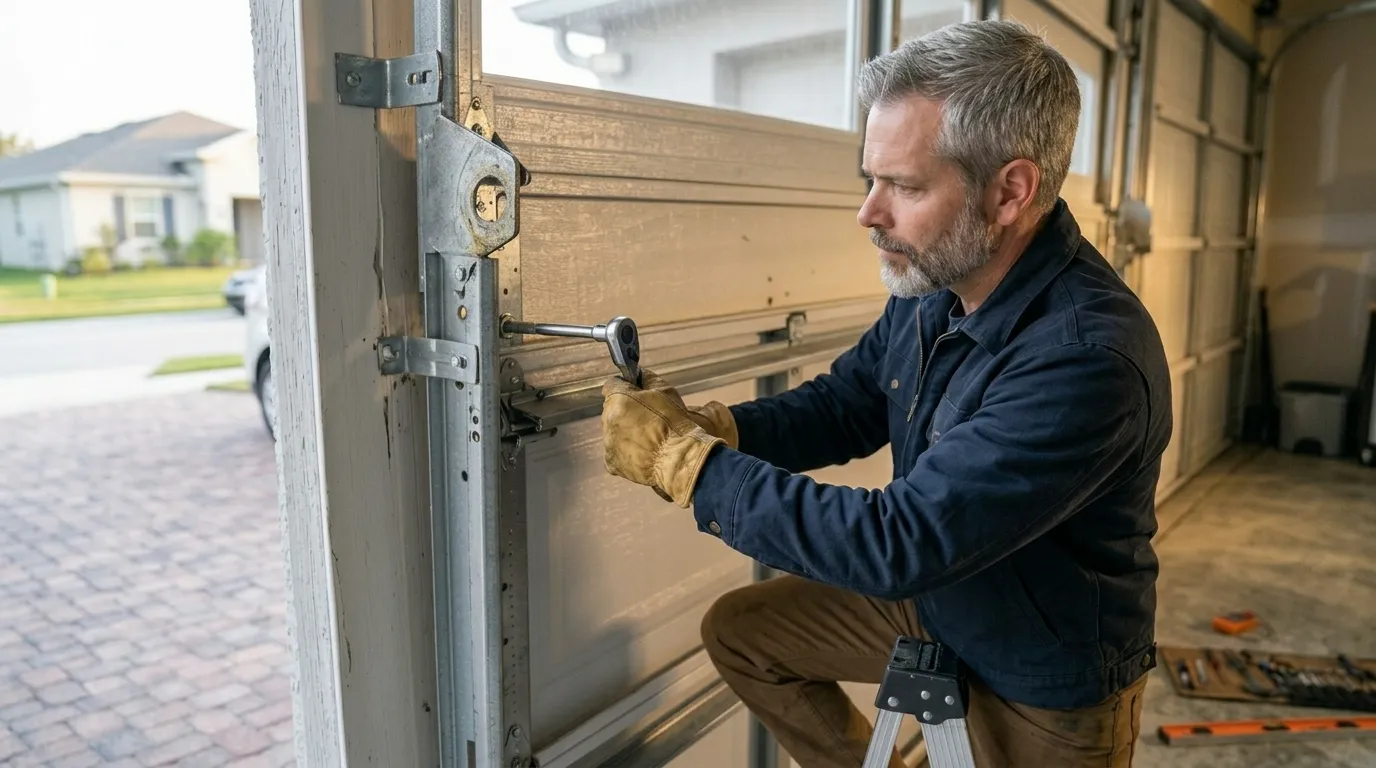
When a door goes off track in this city, it's rarely one dramatic event. It's usually the end of a slow drift. A bracket that's been loosening against settled masonry for years finally lets the track kick out a few degrees. Cold temperatures stiffen the lubricant in the rollers and increase resistance right as the opener is pulling against a track that's already slightly bowed, and that combination is what turns a minor misalignment into a roller jumping the track on a cold morning. In a pre-1960 house, the vertical tracks were often installed with hardware and shimming methods that don't match anything used today, which means a repair isn't always a straight bolt-in - sometimes the wall itself needs re-checked before the track goes back up true. That's a different job than swapping a track on a house built to current framing tolerances, and it takes longer for exactly that reason.
What Most People Get Wrong
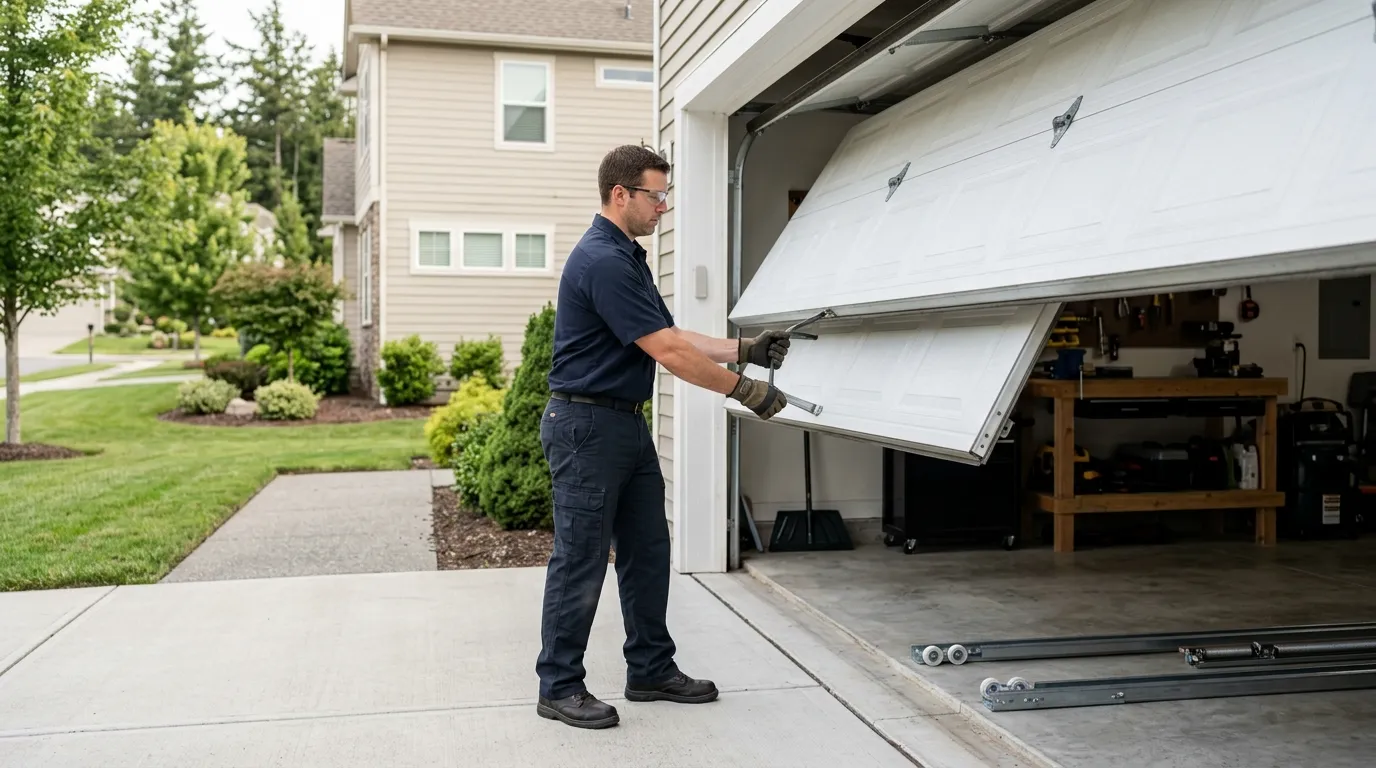
The common mistake is treating an off-track door as a track problem alone and forcing it back into the channel without checking why it moved. On a house from this era, if the bracket pulled loose because the masonry it's anchored to has shifted over decades, muscling the track back into place buys you a few weeks before it happens again. The other mistake is assuming a bent track can just be bent back. Steel that's been cycling through severe cold for that many winters gets brittle at the bend points, and re-bending it in the same spot is often where it cracks next. We'll straighten a track when it's a clean, minor bend. When the metal's fatigued or the bracket anchor point in old masonry won't hold a new lag bolt without repair to the wall itself, replacing the section is the honest call, even though it costs more than a quick bend-back would.
Leaving It Alone
A door that's slightly off track doesn't fix itself, and running it in that state wears the rollers and the opener motor faster than normal use would. In a house built before 1960, where the original hardware sizing and bracket spacing don't match what's sold today, letting a minor misalignment run also means the eventual repair may need custom-fit hardware rather than an off-the-shelf bracket - a longer job, not a bigger one. We won't tell you every off-track door is an emergency; plenty aren't, and a door that's binding but still closing can usually wait a few days for a scheduled visit rather than a rushed one. What it can't wait through is another full winter of contraction and expansion on a bracket that's already loose.
How it works
From “it’s stuck” to “it’s fixed”
01
Tell us what’s wrong
Describe the symptom - won’t open, loud bang, opener runs but the door won’t move.
02
On-site diagnosis
A technician tests the door under power and by hand and finds what actually failed.
03
Clear, up-front plan
You get the fix that’s needed and what drives the cost - before any work starts.
04
Repaired & tested
The repair is done, the door is set true and tested, and the work area left clean.
Serving Philadelphia, PA - tell us what your door’s doing and we’ll take it from there.
Why does my garage door only go off track in winter?
Cold temperatures stiffen the roller lubricant and cause the steel track to contract slightly. If the brackets holding that track are already a little loose from decades of house settling, that seasonal contraction is often enough to pull a roller out of the channel. It's rarely just the cold - it's the cold acting on a track that was already marginal.
Is a bent track something you can straighten instead of replace?
Sometimes. A clean, minor bend in track that hasn't been through years of repeated cold cycling can usually be straightened. Track that's older and has been flexing through severe winters for a long time tends to be more brittle at the bend point, and re-bending it there risks a crack. We look at the metal condition before deciding which way to go.
My house is from the 1950s - does that change the repair?
It can. Original bracket spacing and anchor points from that era don't always match current hardware, and masonry that's settled over sixty-plus years sometimes needs attention before a new track will hold true. It's usually not a bigger job, just a different one than a straight bolt-in on newer framing.
Ready to get your garage door sorted?
Tell us what it’s doing and where you are in Philadelphia - we’ll take it from there.