Broken torsion spring or snapped cable on your Philadelphia garage door? We repair springs on the pre-1960 housing stock common across the city's rowhomes and twins.
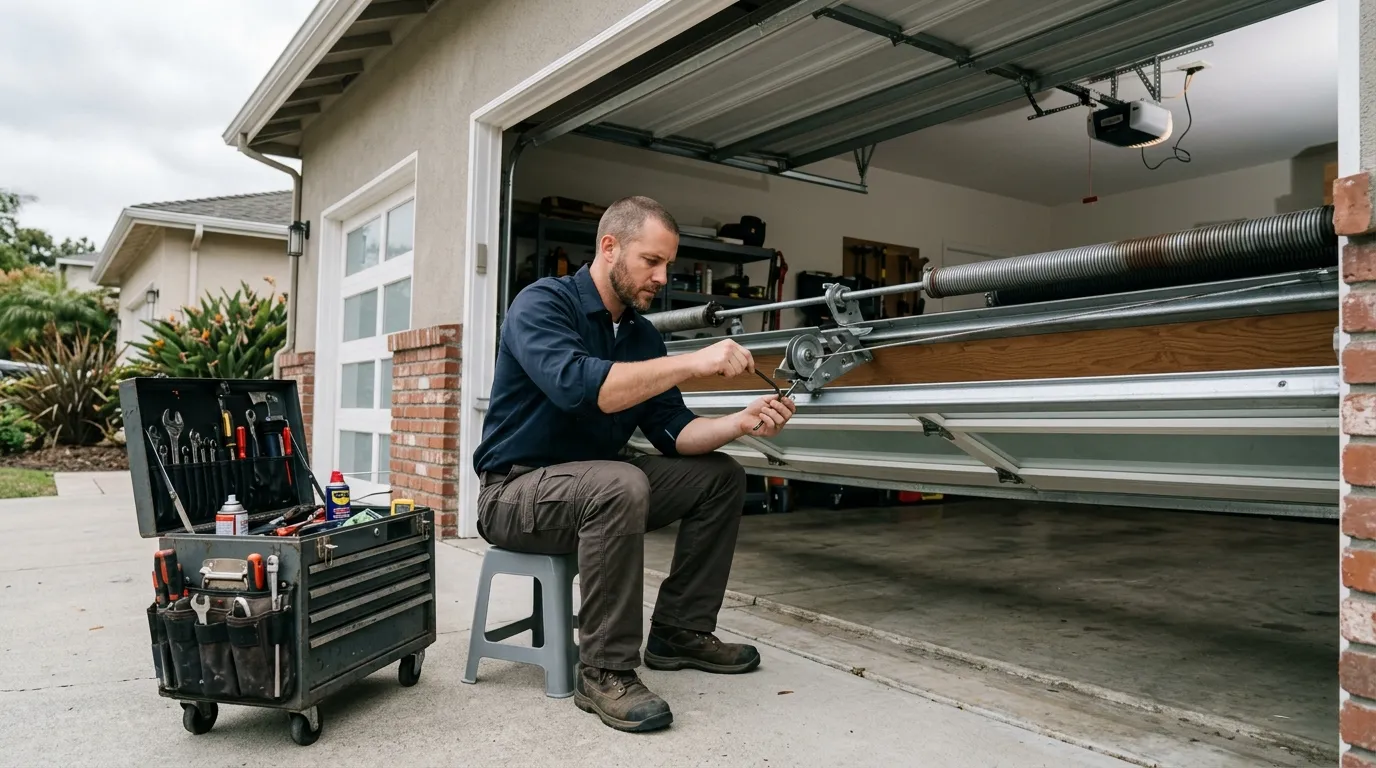
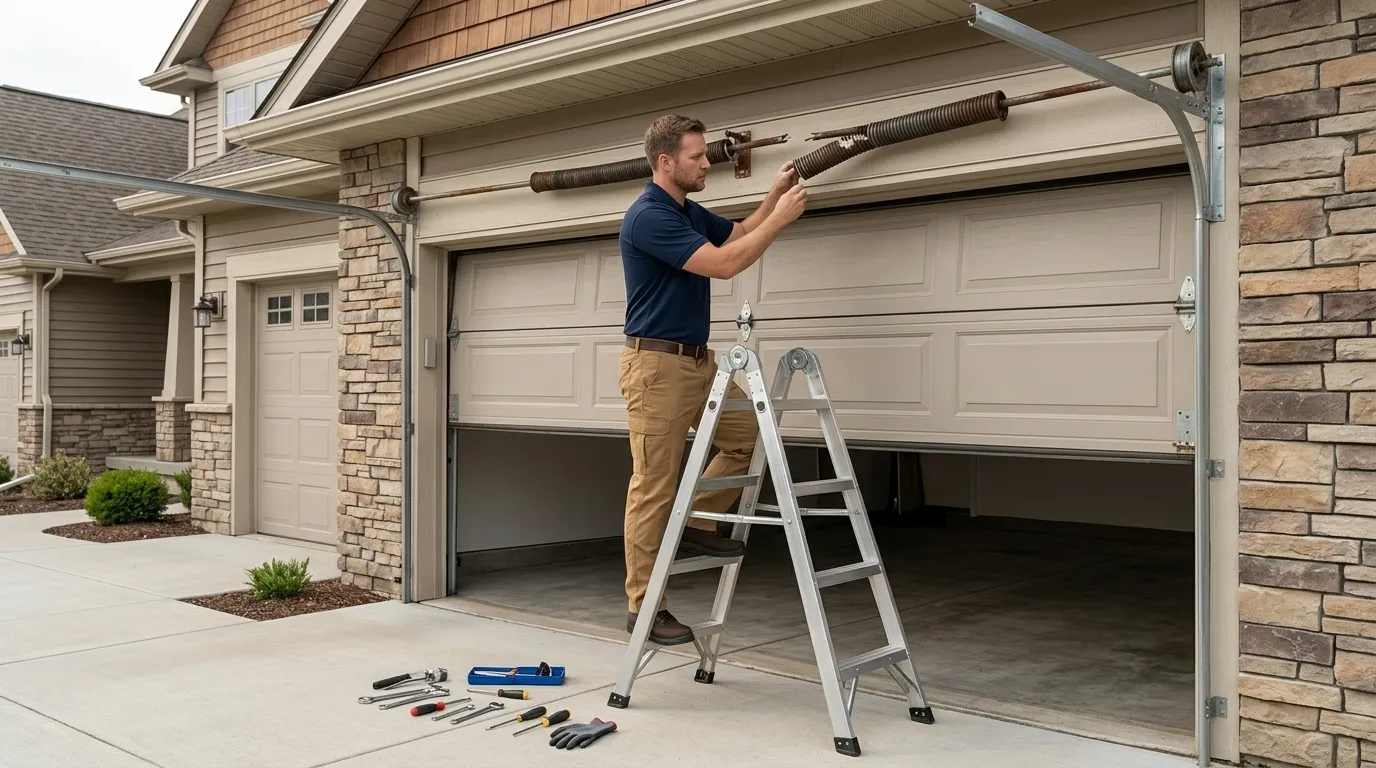
The door won't budge, or it moves a few inches and stops. Sometimes it's louder than that: a bang from the garage at 6 a.m., then the door won't lift at all. That's a torsion spring letting go. If the door feels heavy on one side, or the opener strains and reverses before it's fully open, one of a pair of springs has probably already failed and the other is carrying the whole load. On older detached garages you'll sometimes see extension springs instead of torsion springs, and those fail differently - a stretched or snapped side cable, the door dropping unevenly, one corner dragging on the track. Most of the city's rowhomes and twins went up between 1938 and 1994, with the typical block dating to around 1957, which means a lot of original torsion hardware is now past its rated cycle count. That's not a guess about your specific door - it's what the age of the housing stock tells us before we even get out of the truck. A spring doesn't announce itself with a slow leak. It holds, and then it doesn't. If your door is heavy to lift by hand with the opener disconnected, treat that as a spring problem, not an opener problem, and don't keep running the opener against it.
Parts We Carry
We stock torsion springs in the sizes that actually show up on Philadelphia doors - single-door and double-door wind, standard wire gauges for the door weights common on rowhome and twin garages built through the mid-20th century. We also carry extension springs, since a fair number of the older detached garages in this area were built with them and never converted. Along with springs we carry the cables, drums, end bearing plates, and center brackets that usually go bad around the same time a spring does, because those parts wear together. Here's the honest limit: not every legacy size is something we carry on the truck. A door on original 1940s or 1950s hardware occasionally needs a spring or a drum in a size that's been discontinued, and in that case we either find the closest safe match or tell you straight that replacement makes more sense than chasing an obsolete part. We won't put a mismatched spring on your door to close out a job faster - a wrong-rated spring is a safety problem, not a shortcut.
What the Fix Involves
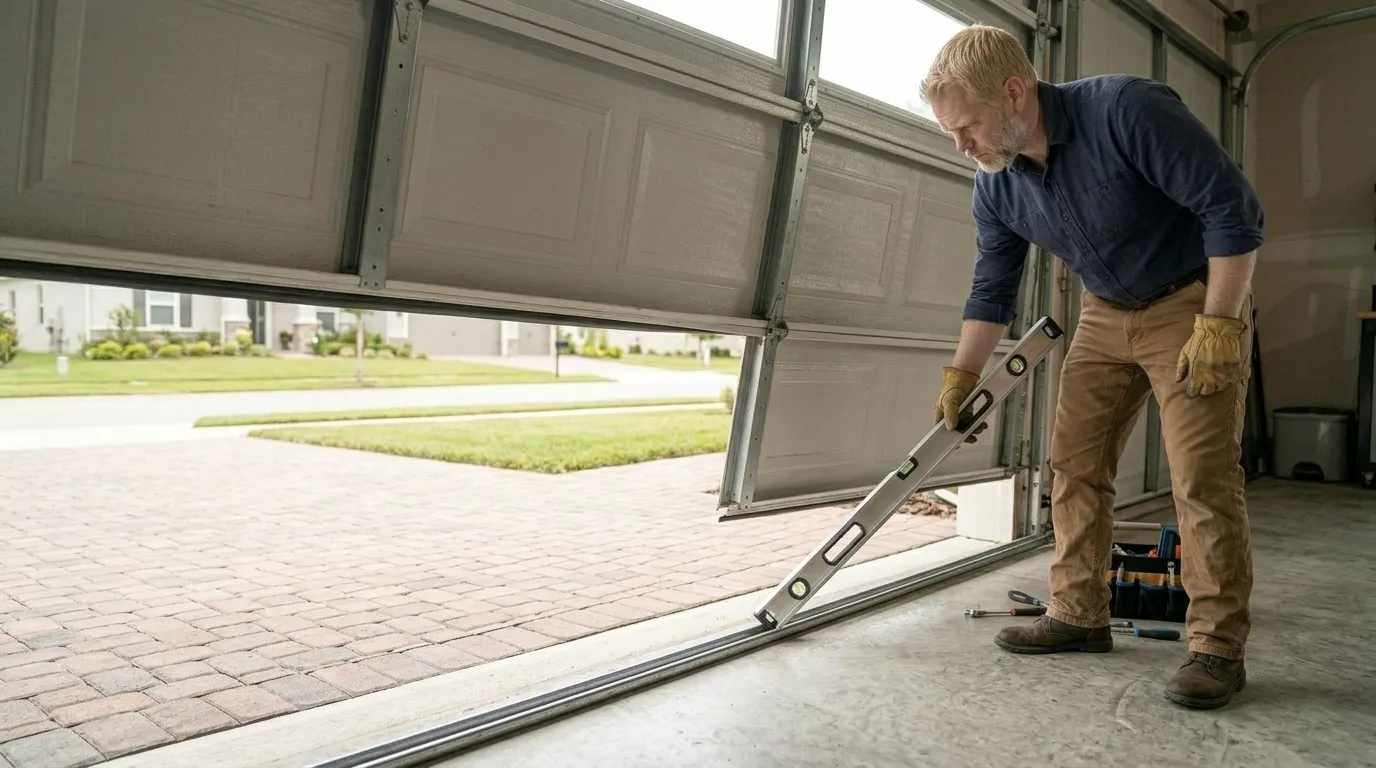
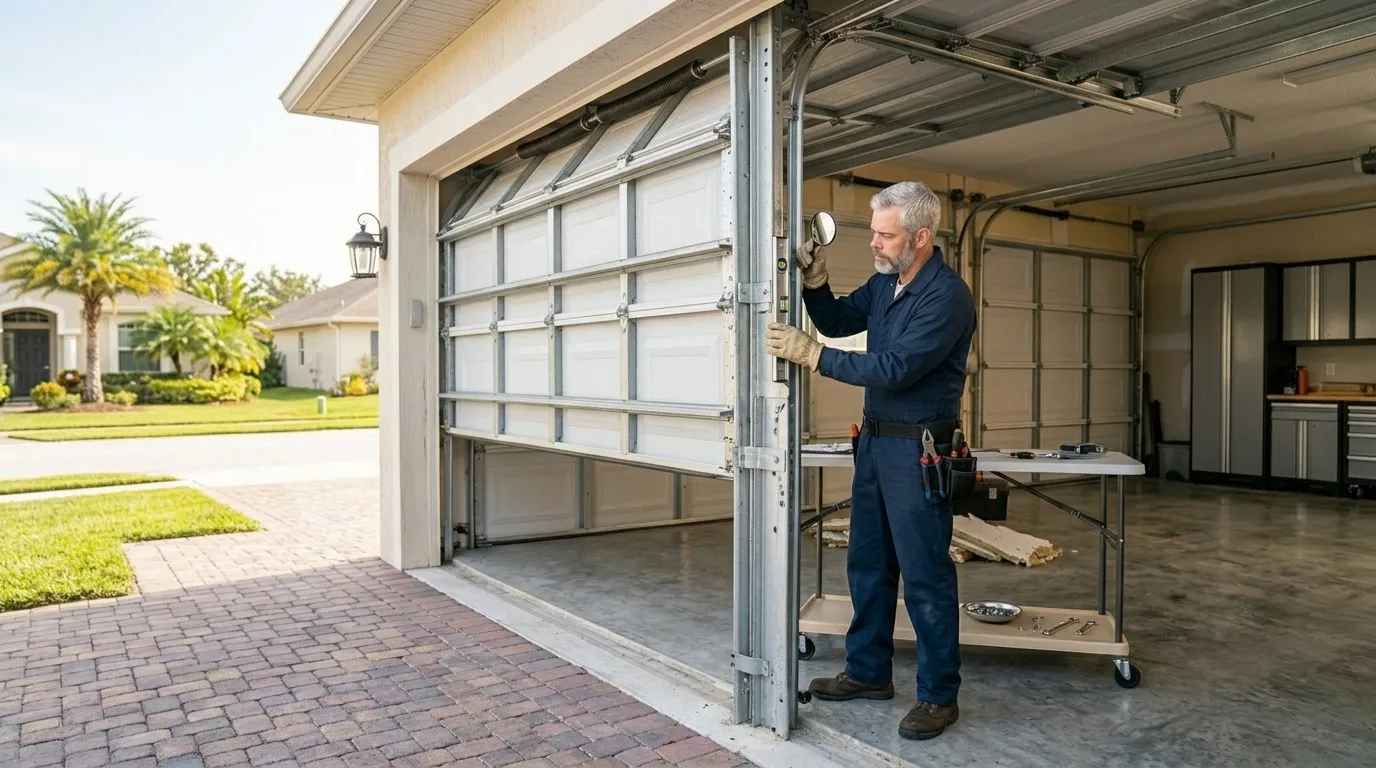
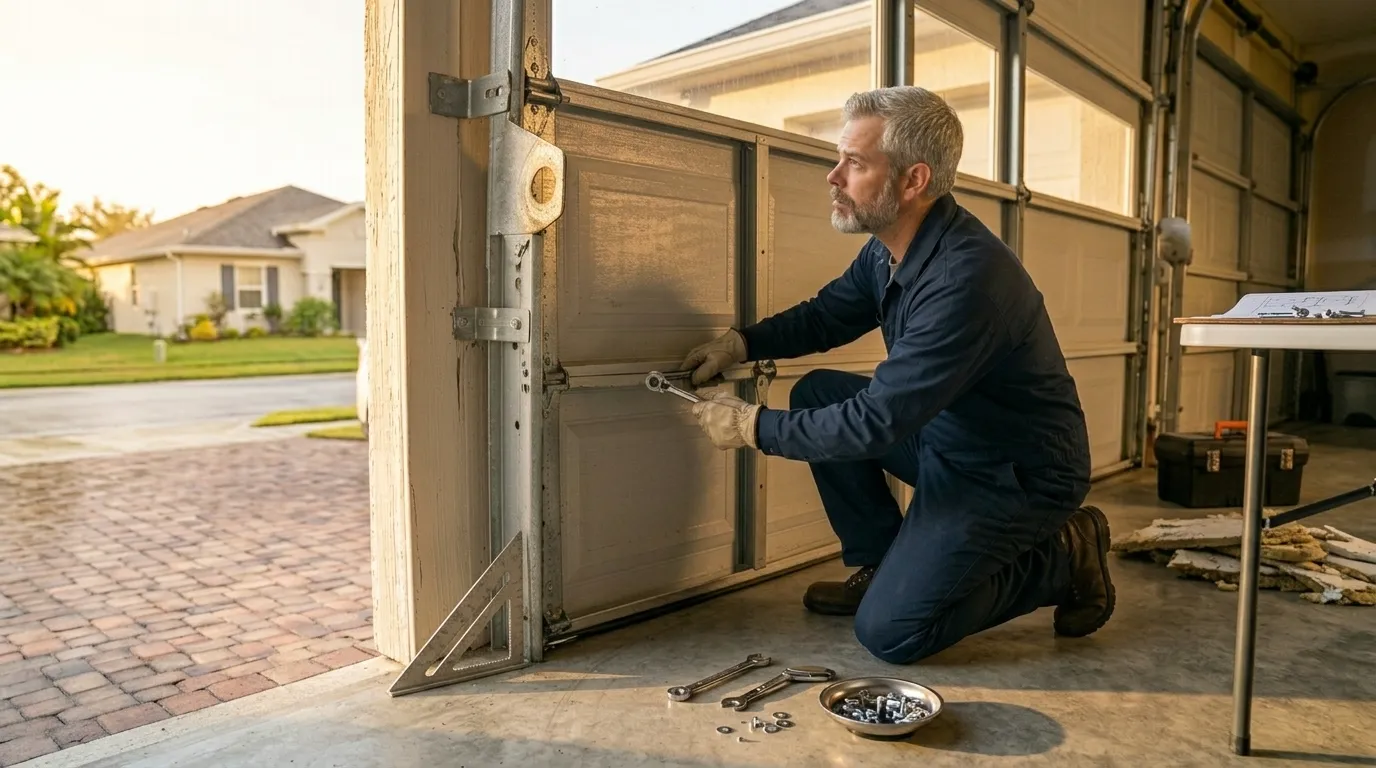
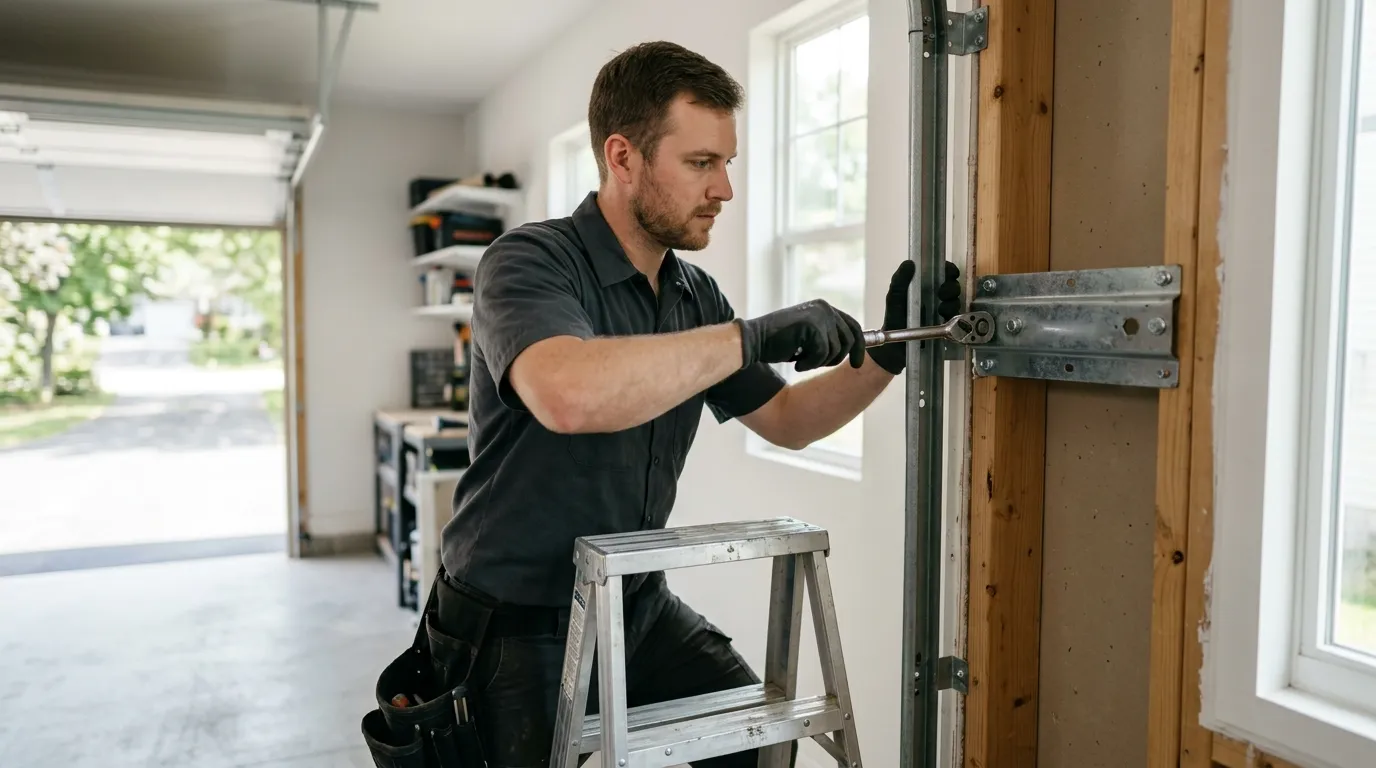
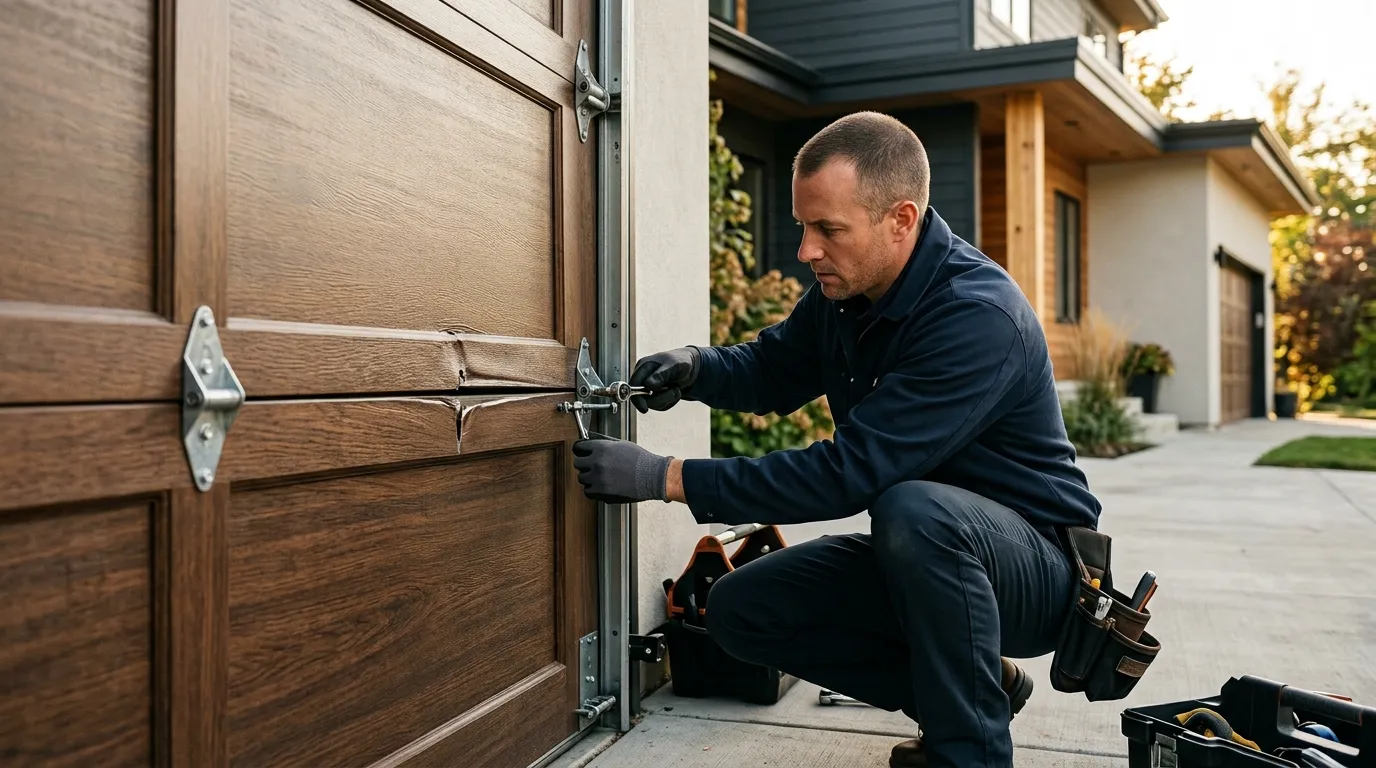
First we take the tension off the door safely - this is not a job to do with the springs still wound, and it's the step that hurts people who try it themselves. We check the door weight and the drum size to confirm the right spring rating rather than assuming the old spring was correct to begin with; a lot of these doors have had a mismatched spring on them for years without anyone noticing. We replace both springs on a torsion pair even if only one broke, because the surviving one is usually close behind it in age and cycle count. Cables, drums, and bearing plates get inspected while everything's off, since replacing a spring around worn cable just means a second call soon after. Once the new spring is wound to the correct number of turns for the door's weight, we run the door through several full cycles and check balance - it should hold position at any point when you let go of it by hand. Opener force settings often need a small adjustment afterward, since a properly sprung door lifts differently than one the opener was straining to compensate for.
Why It Happens Here
Philadelphia sits in a cold-climate band with real winter swings, and a steel torsion spring that's flexed through fifty-plus freeze-thaw cycles is a spring near the end of its life, whether or not anyone's touched it. Cold makes steel less forgiving right at the moment a worn spring is already close to its limit, which is why so many of these calls land in the coldest weeks of the year. Across the 95 named areas we cover, from to pre-1960 construction is still the dominant stock, not the exception, and that means original hardware is common, not rare. A lot of the detached garages built before 1960 in this area still run on extension springs rather than torsion, because that's what was standard when they were built, and those systems age differently - the side cables and pulleys wear before the springs sometimes fail outright. With roughly 409,216 households in our service area and most of the housing built before the 1990s, spring replacement is one of the most common calls we get, not an unusual repair. It isn't bad luck. It's what happens when steel wound decades ago finally reaches the end of its cycle count in a climate that doesn't go easy on it.
How it works
From “it’s stuck” to “it’s fixed”
01
Tell us what’s wrong
Describe the symptom - won’t open, loud bang, opener runs but the door won’t move.
02
On-site diagnosis
A technician tests the door under power and by hand and finds what actually failed.
03
Clear, up-front plan
You get the fix that’s needed and what drives the cost - before any work starts.
04
Repaired & tested
The repair is done, the door is set true and tested, and the work area left clean.
Serving Philadelphia, PA - tell us what your door’s doing and we’ll take it from there.
How do I know if it's the spring and not the opener?
Disconnect the opener (there's usually a release cord) and try lifting the door by hand. If it's heavy, drops on its own, or won't stay put at any height, that's a spring problem. A door with good springs should lift smoothly and hold position wherever you stop it, even with the opener disconnected.
Can I replace just one spring if only one broke?
You can, but we don't recommend it on a torsion pair. Both springs age and cycle at the same rate, so if one has failed the other is usually close behind. Replacing both at once costs less in the long run than a second service call a few months later.
Is it dangerous to try this myself?
Yes. A wound torsion spring stores enough force to cause serious injury if it releases while you're working on it. This is one of the few garage door jobs we'd tell any homeowner, regardless of skill level, to leave to someone with the right winding bars and clamps.
Why does my spring keep failing faster than it should?
Usually it's a mismatched rating - a spring that's too light for the door's actual weight cycles harder every time it lifts. It's common on older doors that have had a replacement spring installed at some point without the weight being rechecked.
Ready to get your garage door sorted?
Tell us what it’s doing and where you are in Philadelphia - we’ll take it from there.