Before you touch a wrench, know where the line sits. Yeadon's median household income is $57,336, less than half the $109,706 median across the wider service area we cover. That number matters because it sets the repair-or-replace line lower here than in the wealthier suburbs on our list. A $600 opener swap that a Bala Cynwyd owner might not blink at is a harder call on a Yeadon budget, and it's why we look hard at repair first on these jobs rather than pushing straight to replacement.
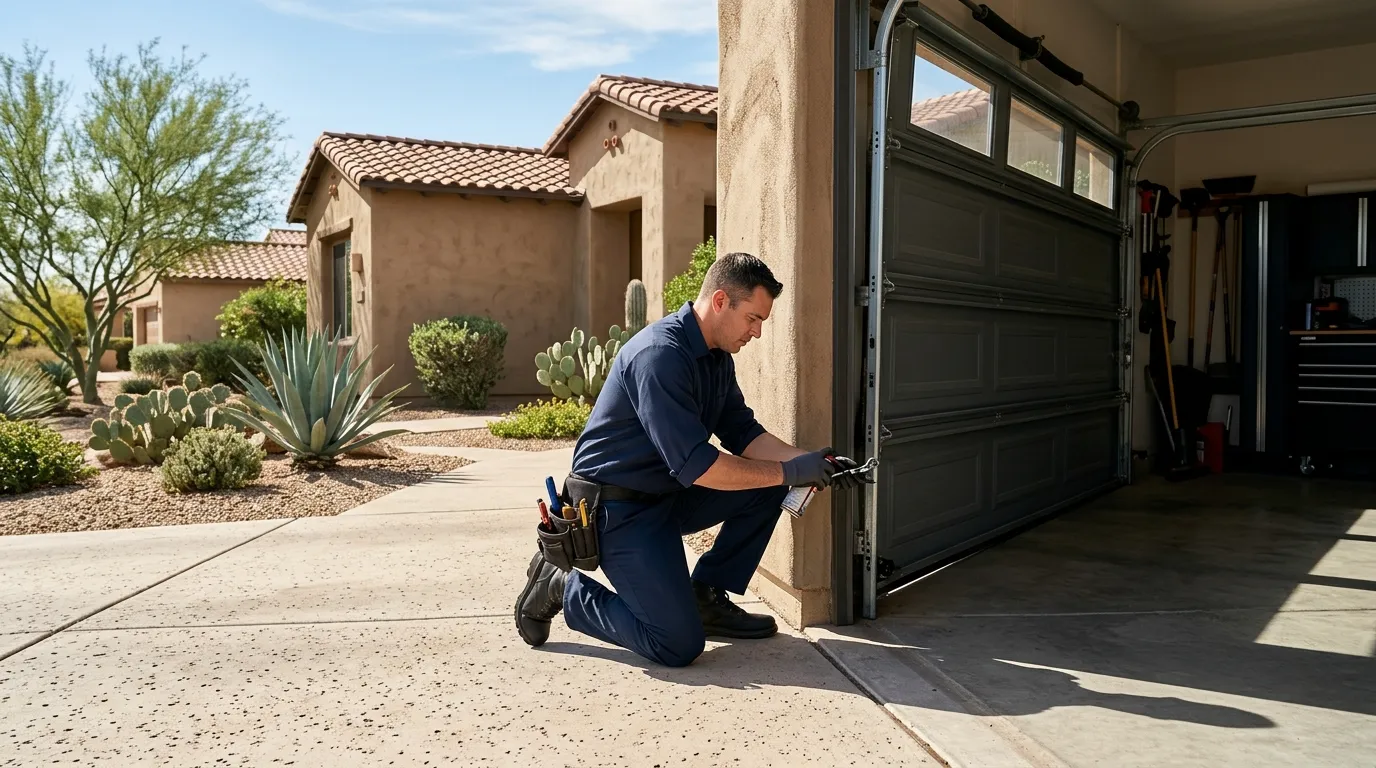
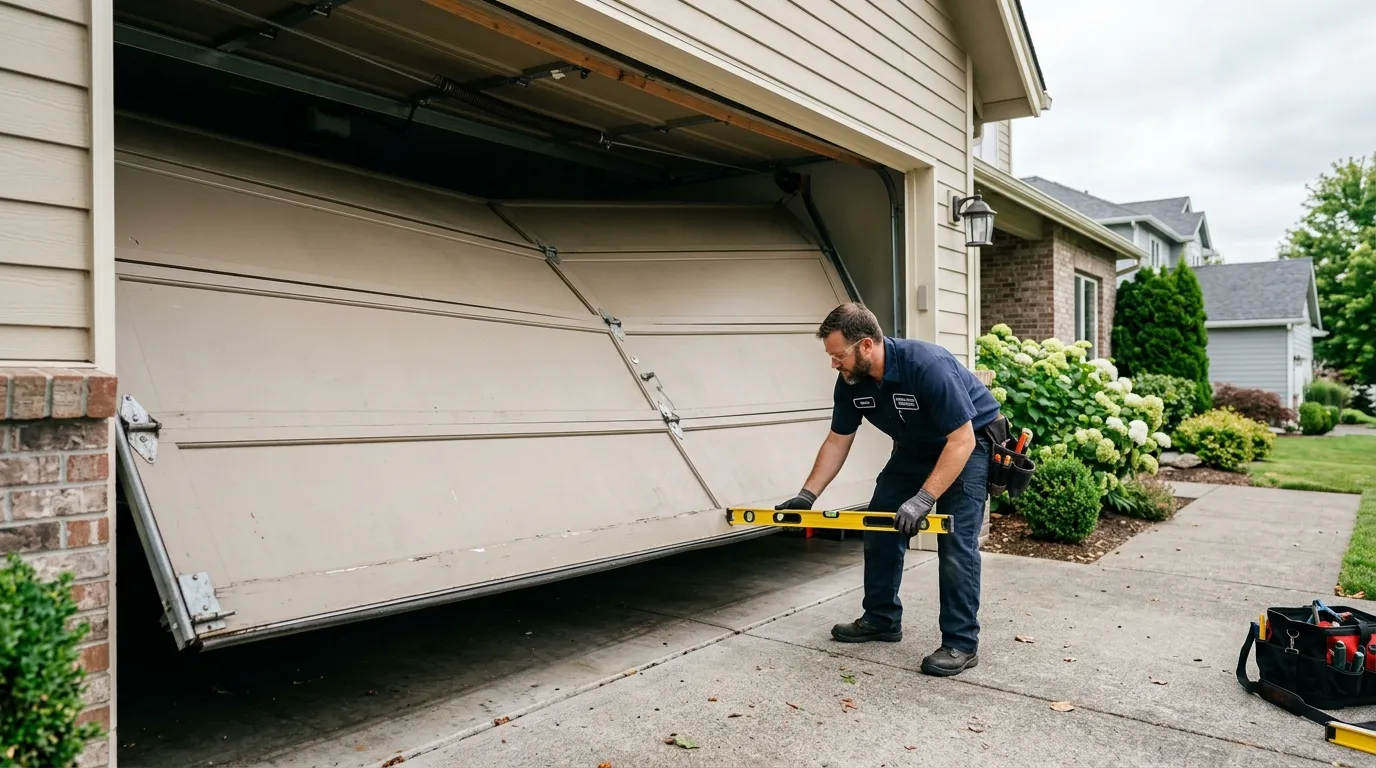
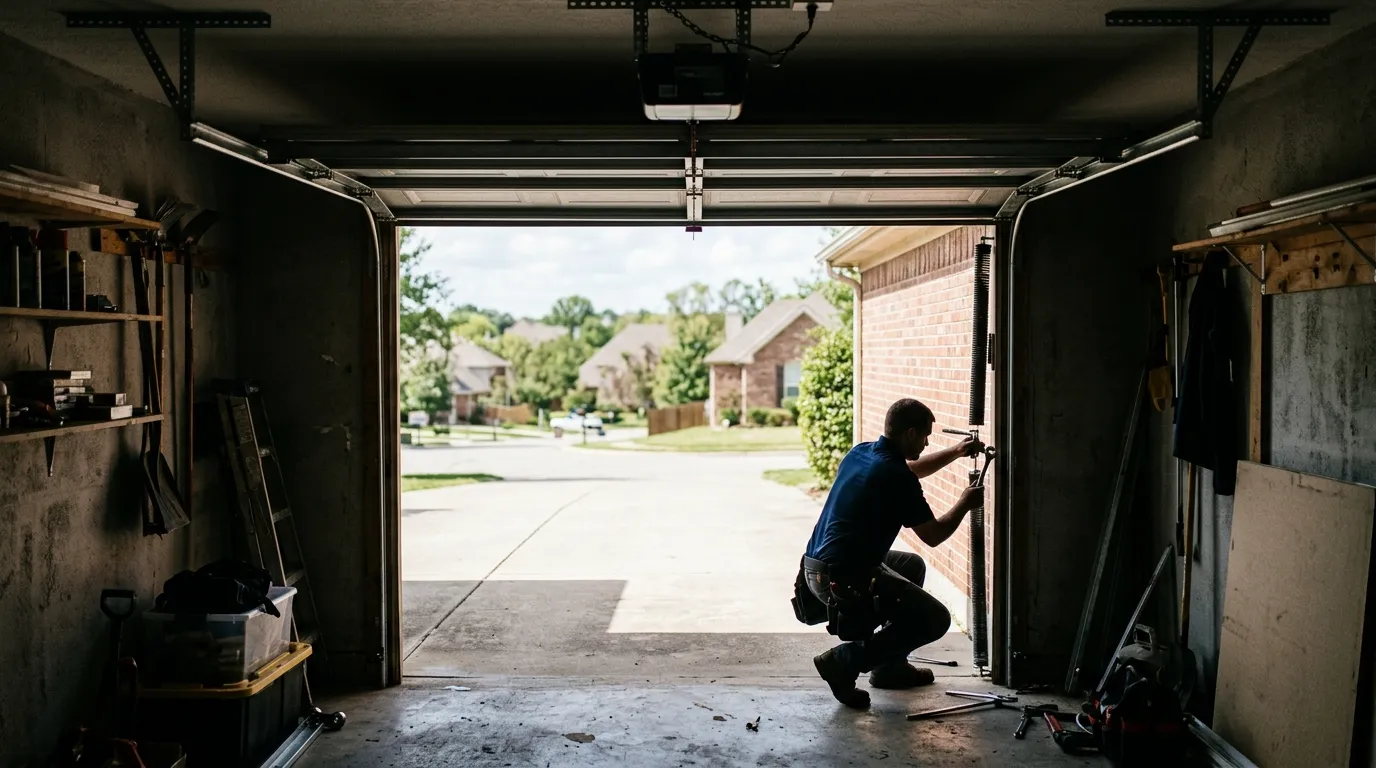
Some things are safe to check yourself: a track that's visibly bent, a sensor with a blinking light, a remote with a dead battery. Springs are not on that list. A torsion spring under load can put someone in the ER, and on the pre-1960 housing stock common in this area, the hardware holding it is often original and undersized for a DIY fix. If the door won't lift, or lifts unevenly, that's a call, not a project.
We'll tell you straight when a $150 cable job beats a $900 opener replacement, and we'll tell you when it doesn't. Given the income numbers here, that honesty is worth more than an upsell.
Parts We Carry
Yeadon's housing dates mostly to the 1938-1994 build window that covers this whole service area, with a median year of 1950 for the town itself - a decade earlier than the area median of 1957. That decade matters on the truck. Doors from 1950 were built for lighter torsion or extension hardware than anything sold today, and the springs, drums, and end bearings from that era aren't stocked at a big-box store.
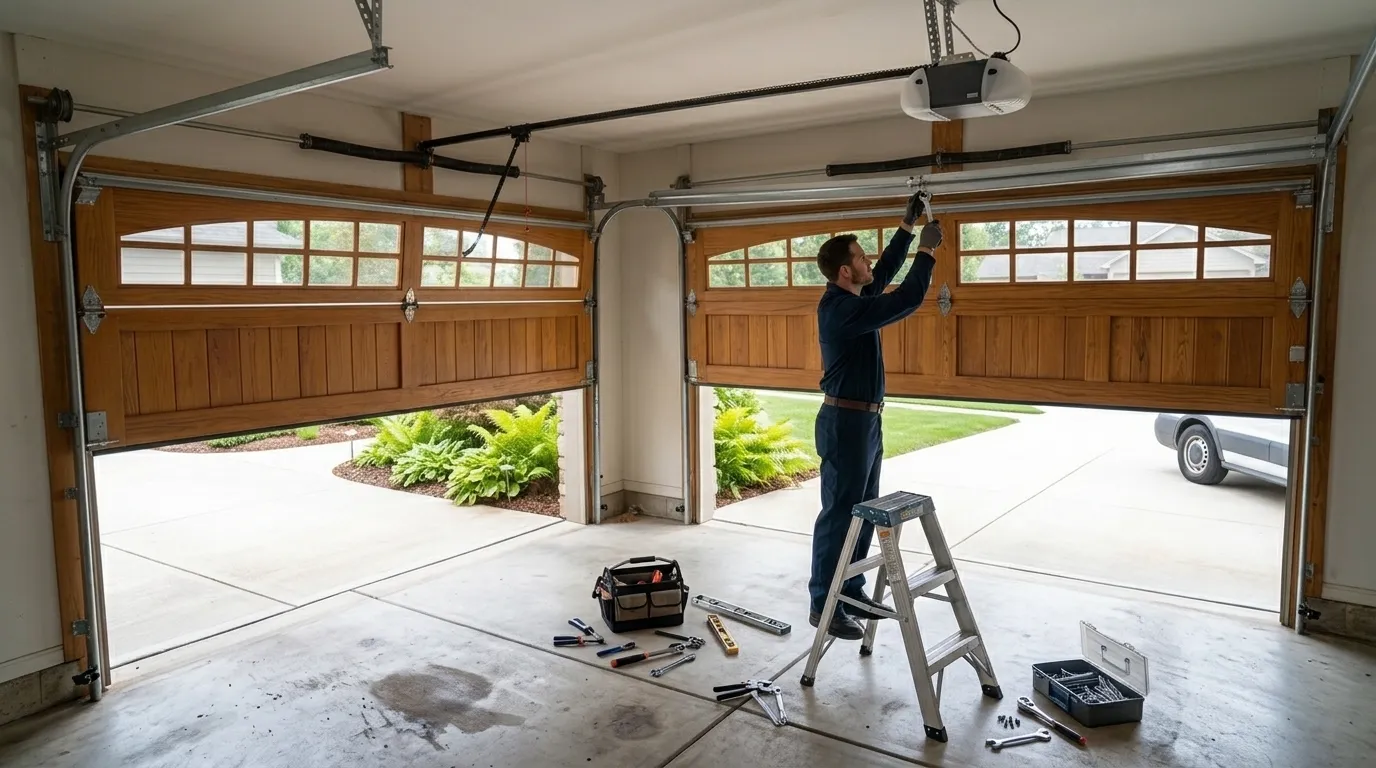
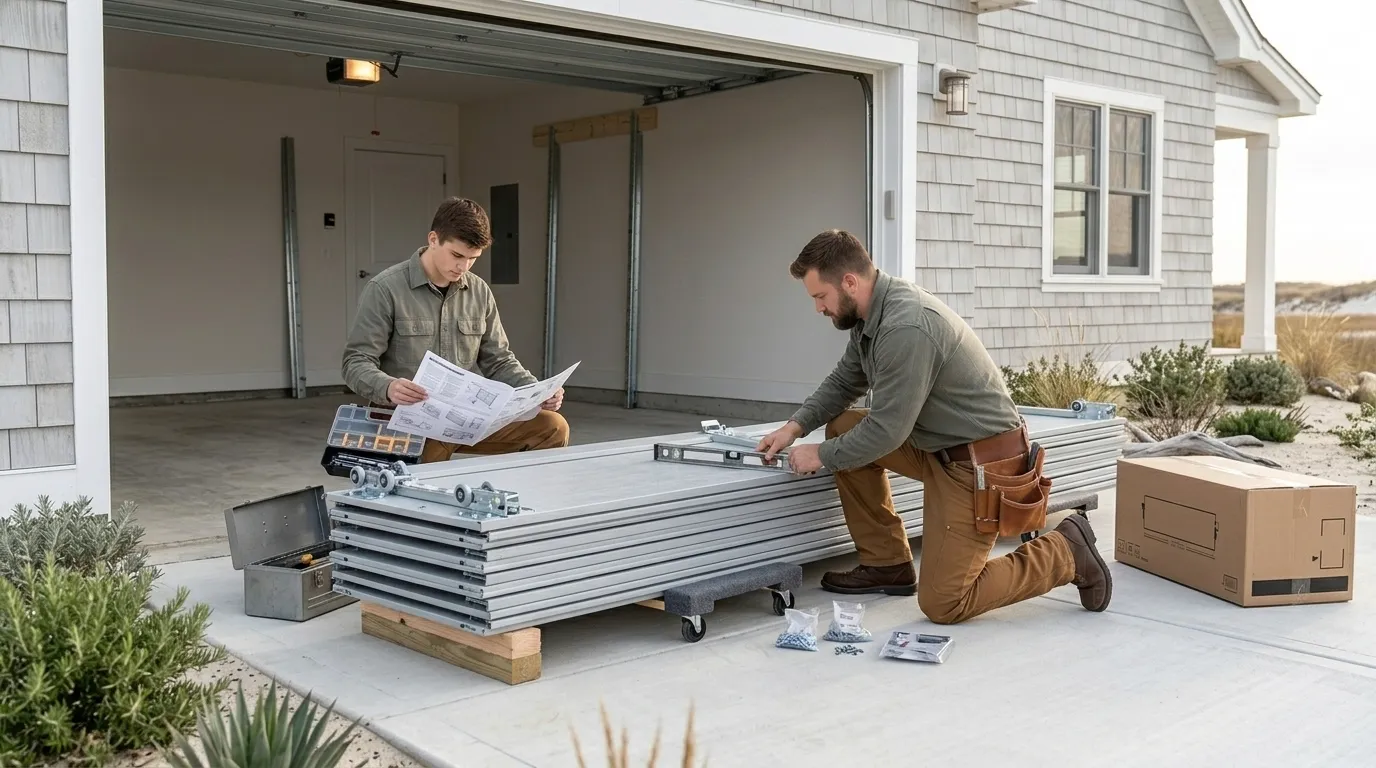
We carry standard torsion and extension springs sized to fit both older narrow-track hardware and newer wide-track systems, along with rollers, cables, and hinges that cover most of what shows up on a house built in that window. Openers are a different story - if yours is original to a 1950 install, the motor itself is long past parts support, and we're not going to pretend otherwise. That's a full-unit swap, not a repair.
What we don't carry on the truck: specialty insulated panels in custom colors, and anything requiring a manufacturer back-order. Those jobs take longer because the part isn't ours to control. We'll say so at the door, not after we've already opened up the header.
Getting It Booked In
We run out of Philadelphia, and Yeadon sits about 8 miles out on our route through the western suburbs, alongside stops like Lansdowne and Darby at similar distance. That's close enough that a Yeadon call doesn't sit at the back of the queue, but we're not based in town, so we don't promise a same-hour arrival - we schedule against the route, not a local depot.
When you call, tell us the door's age if you know it, or just the decade the house was built. Given how much of Yeadon's stock lines up with that 1950 median, that single detail often tells us more about which spring size and drum type to bring than the model number on the opener does.
We'll ask what the door is doing - won't open, opens crooked, makes a bang before it stops - and we bring the parts most likely to match a house of that age rather than a generic kit. It cuts down on the second trip, which matters more on a smaller household budget than it does elsewhere on our route.
Why It Happens Here
This area sits in a cold, severe climate band, and Yeadon's houses, most built around 1950, were framed before modern insulation and sealing standards existed. Garages built to that era's code often have less protection at the header and jamb than anything built after the 1970s. Cold snaps make steel springs and cables contract, and on hardware already decades past its design life, that contraction is often what turns a stiff door into a broken one.
Across the wider area we cover - 409,216 households and 160,961 owner-occupied houses - the pattern repeats in any pocket where the housing predates 1960, but Yeadon's median year of 1950 puts it on the older edge of that range. Combine that with a household income well under the area's $109,706 median, and you get a town where deferred maintenance on a garage door is common - not from neglect, but because a bigger repair often waits until it can't wait anymore.
That's the honest read: we see more full-hardware-replacement calls here than quick fixes, simply because by the time we're called, the original 1950s-era parts have usually already failed together.
How it works
From “it’s stuck” to “it’s fixed”
01
Tell us what’s wrong
Describe the symptom - won’t open, loud bang, opener runs but the door won’t move.
02
On-site diagnosis
A technician tests the door under power and by hand and finds what actually failed.
03
Clear, up-front plan
You get the fix that’s needed and what drives the cost - before any work starts.
04
Repaired & tested
The repair is done, the door is set true and tested, and the work area left clean.
Serving Philadelphia, PA - tell us what your door’s doing and we’ll take it from there.
Is it worth repairing a garage door on a house built in the 1950s, or should I replace it?
Depends what's broken. A single spring, cable, or roller is almost always worth repairing even on 1950s hardware - those parts are standard sizes we stock. Where replacement wins is the opener itself, if it's original; motors from that era are past parts support, and a new opener usually costs less than trying to keep an old one running.
Do you have a branch in Yeadon?
No. We run out of Philadelphia and cover Yeadon as part of our route, about 8 miles out. That means we schedule the visit rather than promising an immediate same-hour arrival, but Yeadon sits close enough on the route that it's not a long wait.
Why do garage doors in Yeadon seem to fail more in winter?
This area sits in a cold, severe climate band, and steel springs and cables contract in low temperatures. On a house built around 1950, the hardware is often original and already near the end of its service life, so the added strain of a cold snap is frequently what turns a stiff door into a broken one.
What garage door parts do you actually carry on the truck?
Standard torsion and extension springs, rollers, cables, hinges, and drums sized for both older narrow-track and newer wide-track hardware - enough to cover most homes built in this area's 1938-1994 window. Specialty insulated panels or manufacturer-specific parts usually need to be ordered, and we'll tell you upfront if that's the case.
Ready to get your garage door sorted?
Tell us what it’s doing and where you are in Philadelphia - we’ll take it from there.