Serving Philadelphia, PA & nearby
(267) 430-8692
Philadelphia, PA

Cable Repair for Northampton's 1980s Garage Doors

Northampton's homes date to about 1980, decades newer than Philadelphia's. That gap changes which cable system fails and how we fix it. We travel out from Philadelphia to do the job right.

Cable Repair for Northampton's 1980s Garage Doors
Philadelphia, PA
8 services
7 service areas
Diagnosis first, then the fix

Why It Happens Here

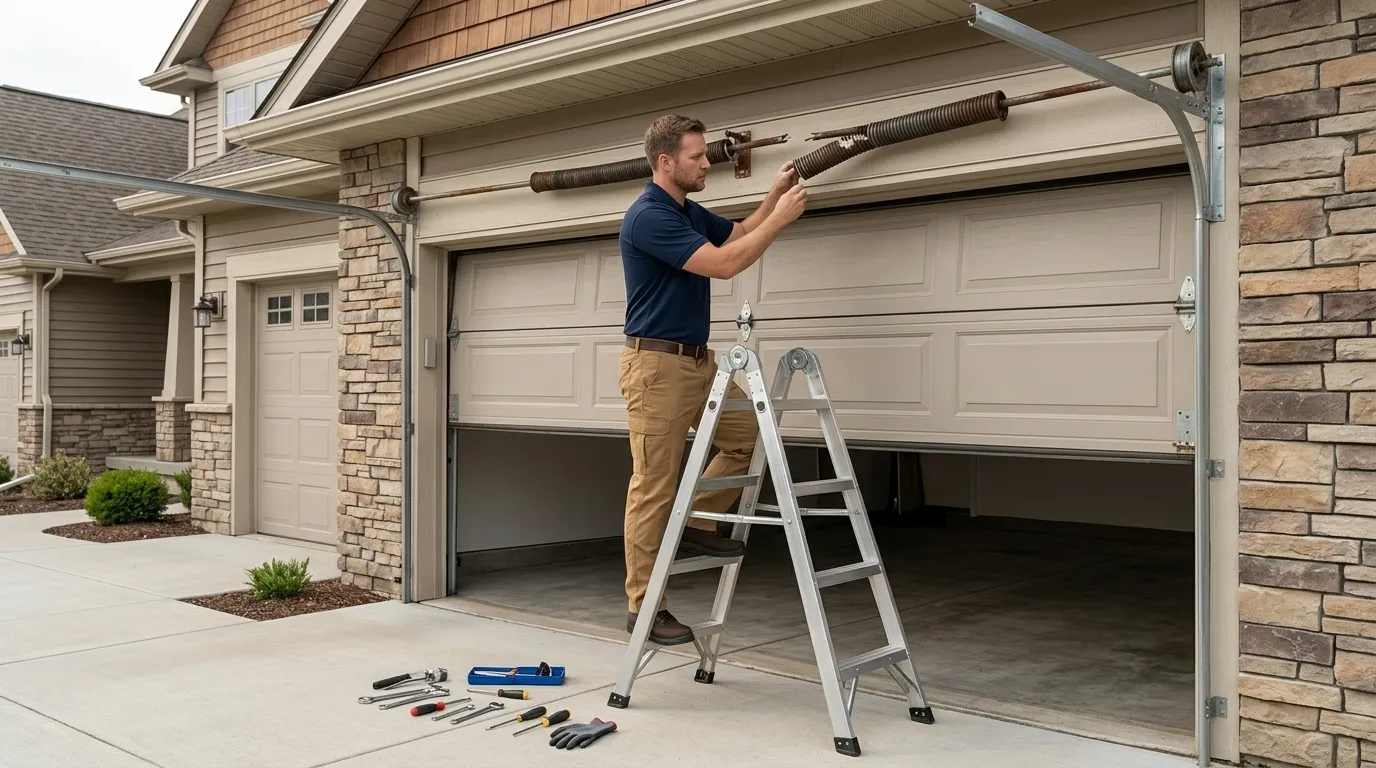
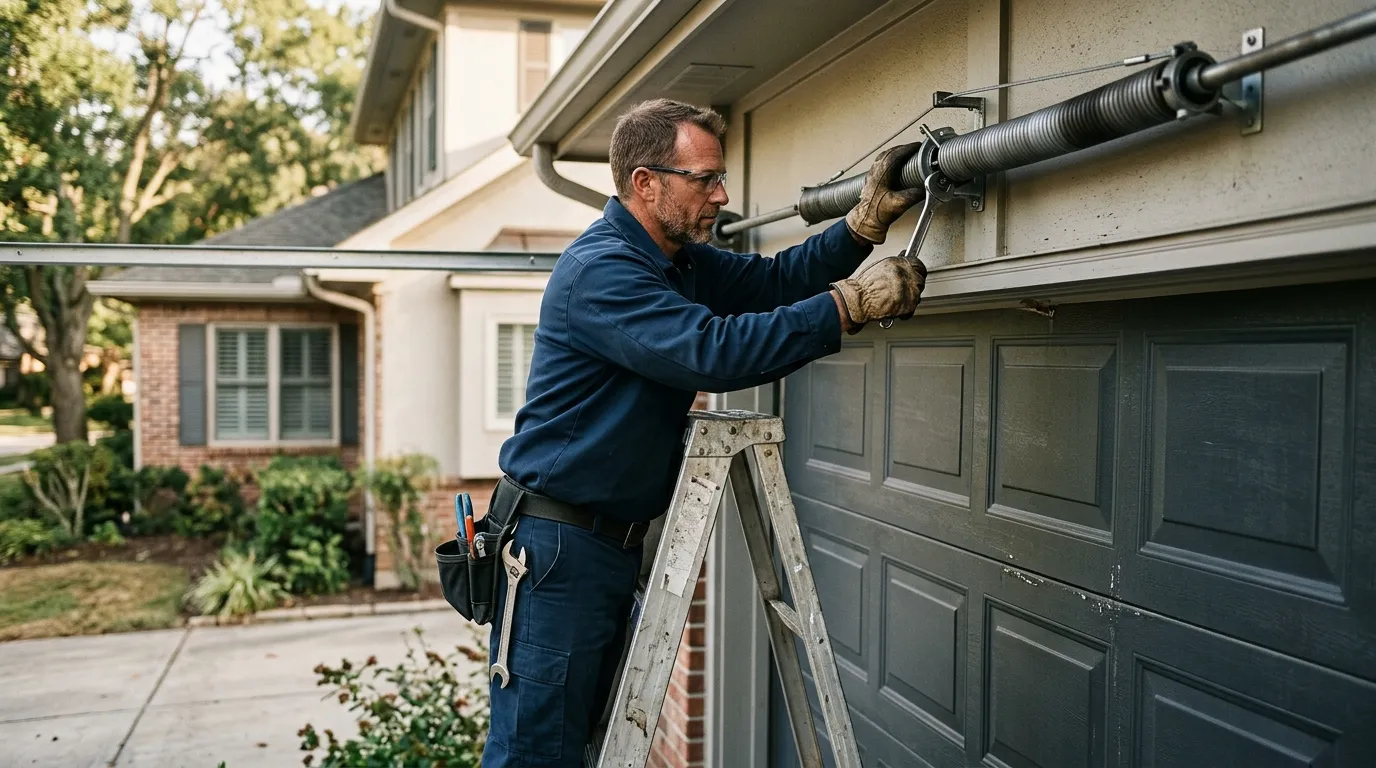
Start with the number that actually matters for this job: Northampton's housing stock centers on 1980, decades newer than Philadelphia's citywide median of 1957. That gap isn't trivia. It means the doors we see out here are far more likely to be factory steel sectional units built for extension-spring hardware, not the older one-piece wood or original single-panel doors still common on Philadelphia's pre-1960 blocks. Extension-spring systems route a cable over a pulley at the top of each track, and that cable does a different job than the lift cable on a torsion-drum door - it's under constant tension whenever the door is down, not just when it's moving. Add in a climate band that runs cold and severe for the whole region, and you get a specific failure pattern: the galvanized cable strands corrode and fray where they wrap the pulley, especially on the side of the garage that gets less sun and holds ice longer into the day. On a torsion system the failure shows up at the drum instead. Knowing which era of door you're dealing with before we get there saves a wasted trip for the wrong parts.

What the Fix Involves

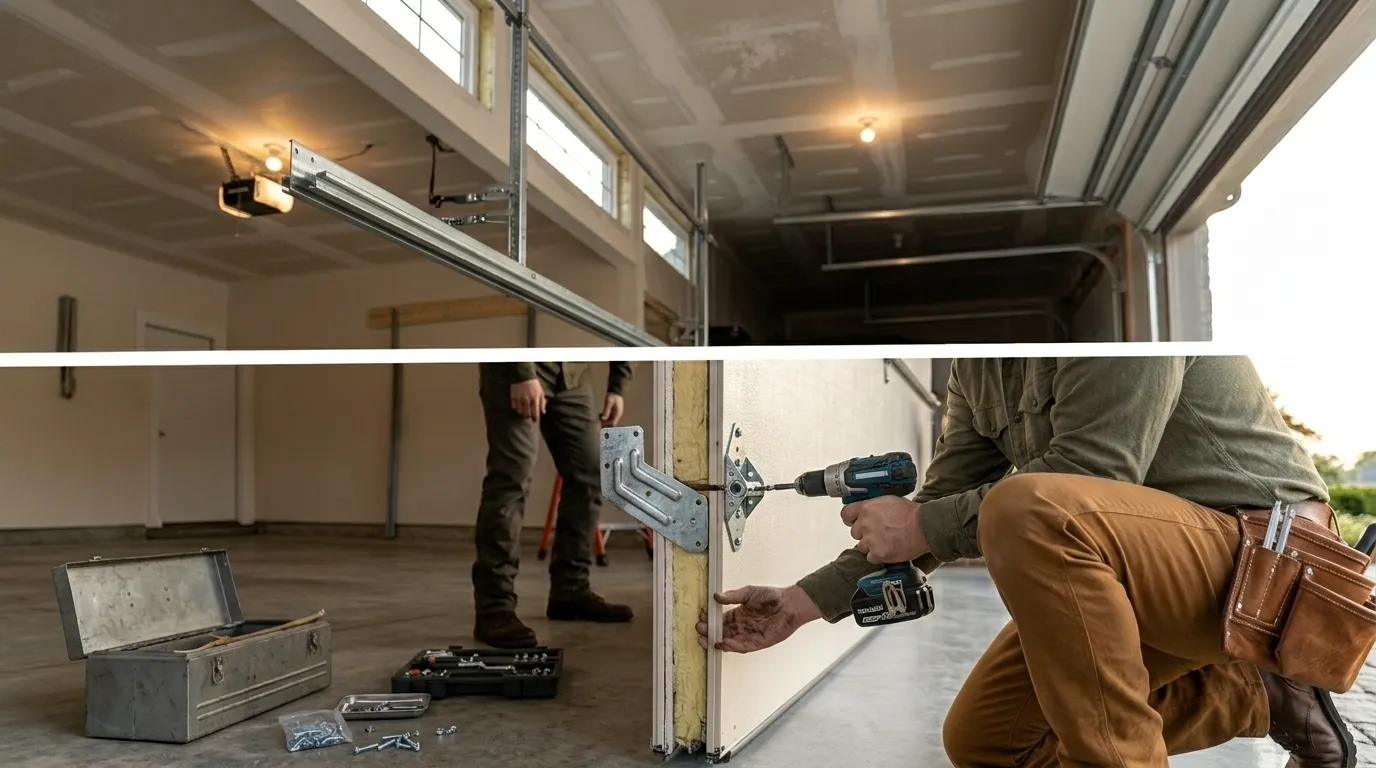
We start by identifying which cable system is actually on the door - extension-pulley or torsion-drum - because the parts, the tension setup, and the safety steps aren't interchangeable. For an extension system, that means releasing tension on both springs, pulling the old cable off the pulley and the bottom bracket, and running a replacement of the correct gauge and length. For a torsion system, the cable comes off the drum, and the drum has to be reset to the same number of turns it had before, or the door goes up crooked. Either way we check the bottom bracket the cable anchors to, since a bent or rusted bracket is often what actually caused the cable to jump or fray in the first place, not just wear. We also check the opposite side cable even if it looks fine - if one side failed from age or corrosion, the other side is usually close behind. We test the door through a full cycle before we call it done, watching for drift, uneven travel, or a track that binds. If the springs themselves are shot rather than just the cable, that's a separate repair, and we'll say so before starting rather than after.

The Symptom

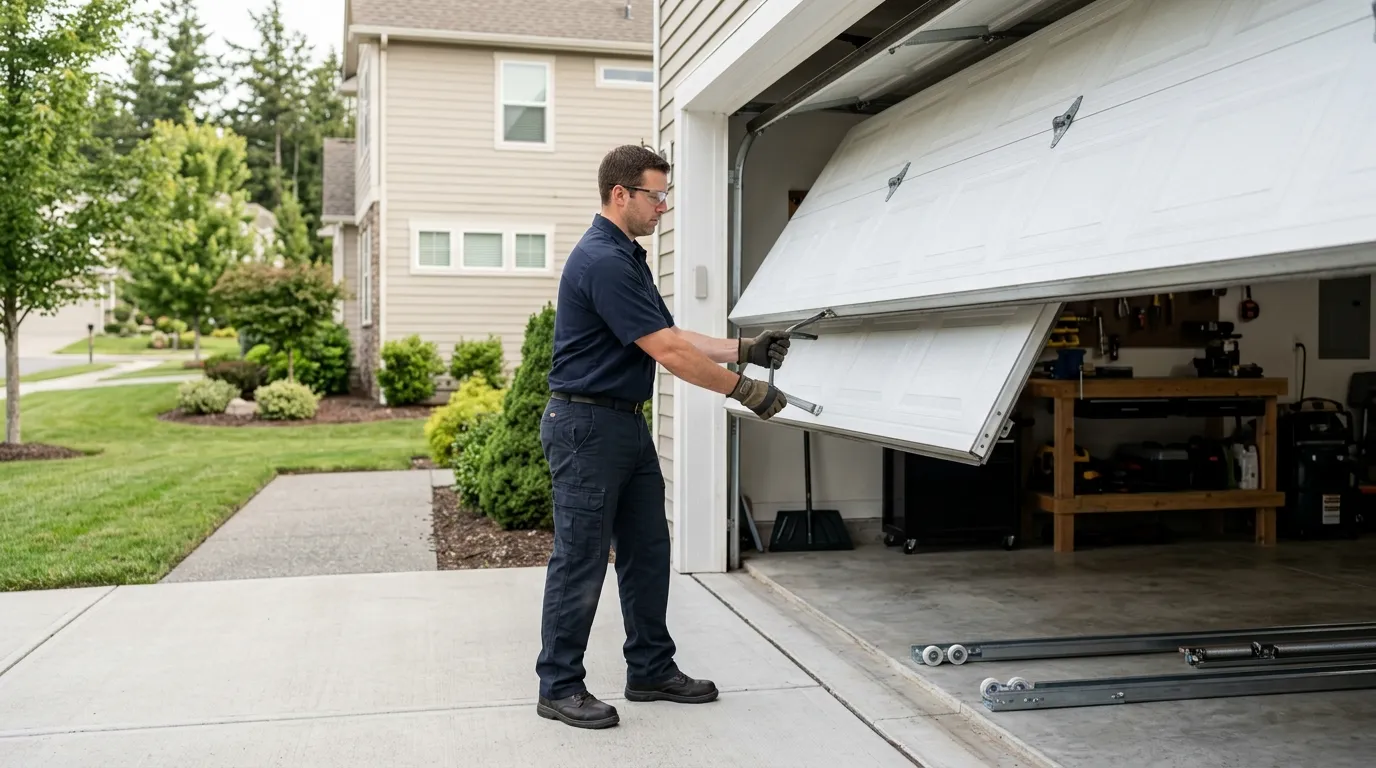
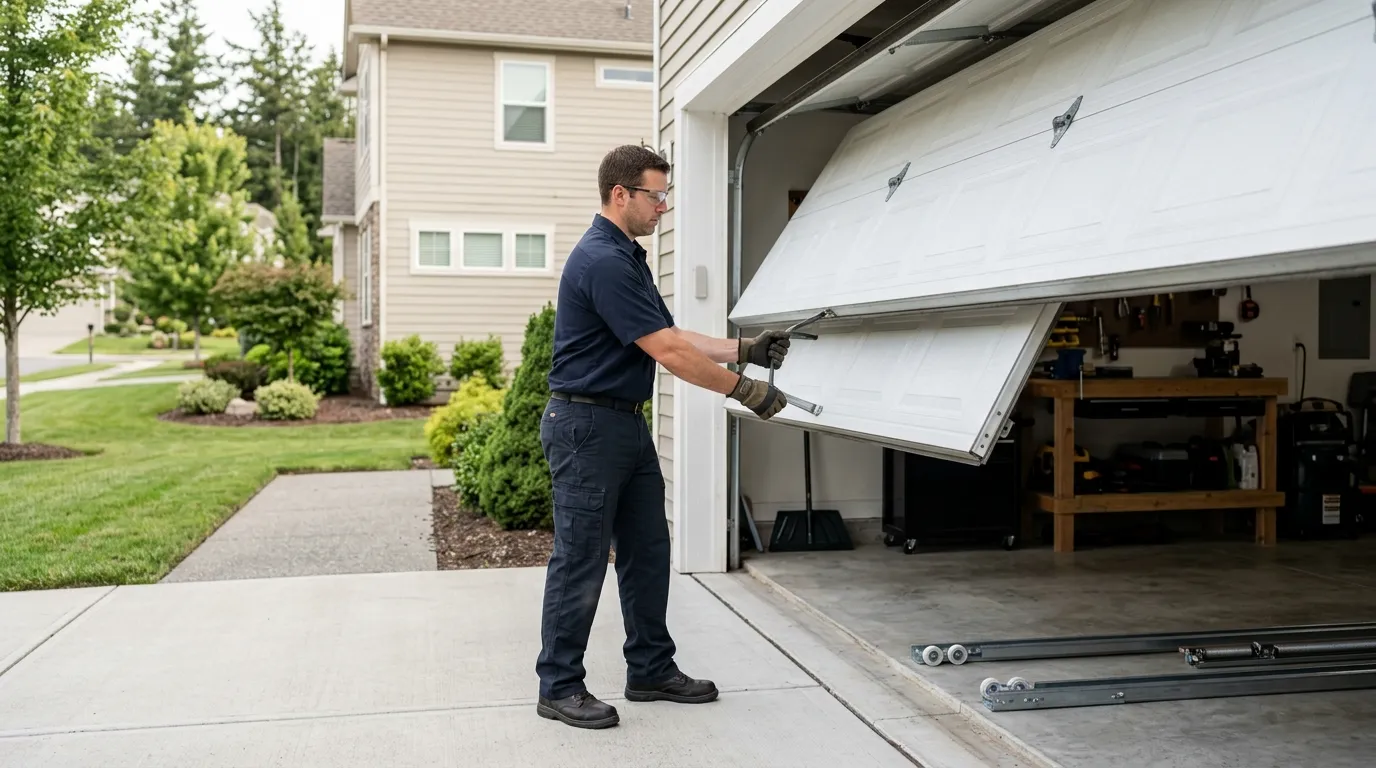
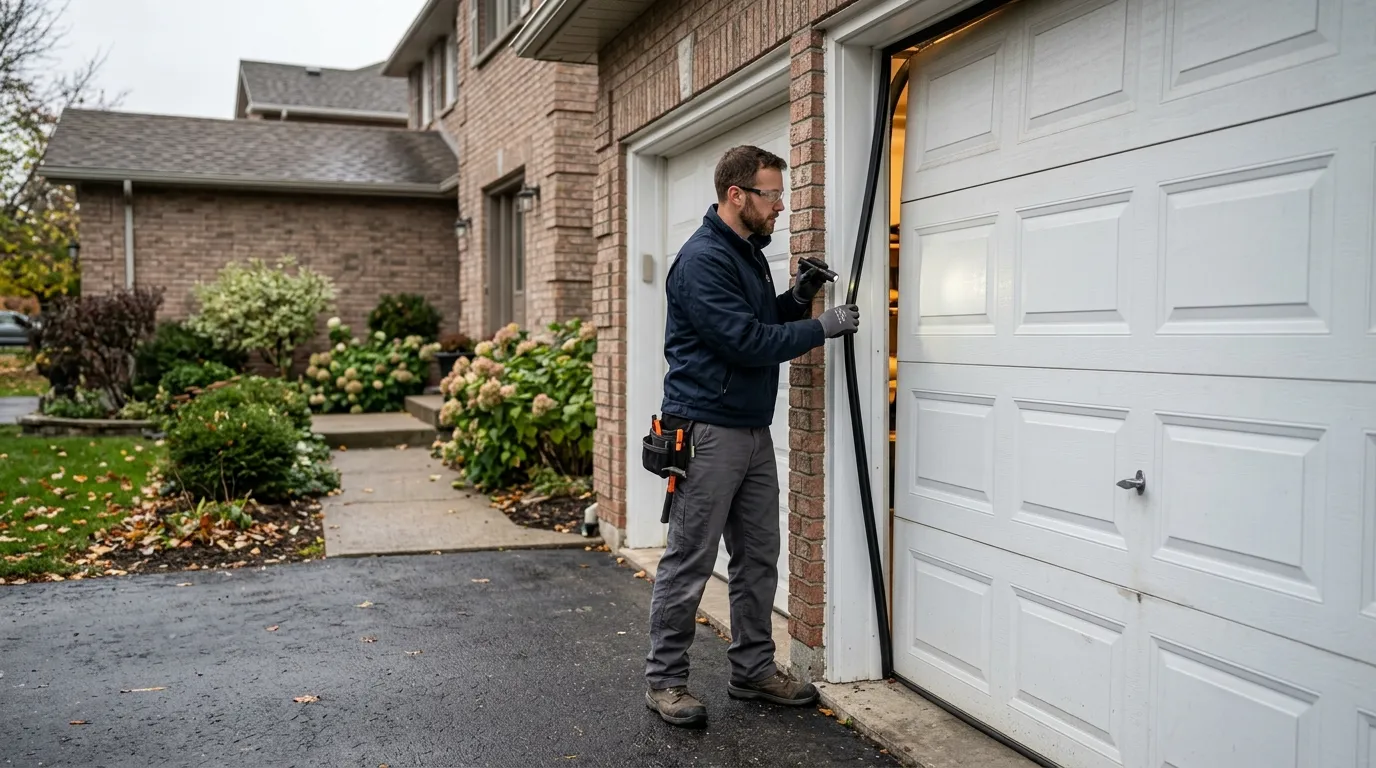
The most common call we get for this is a door that suddenly sits crooked in the opening - one corner low, the panel racked at an angle - or a door that won't move at all and has a visible loop of loose cable hanging near the bottom bracket. Sometimes it's less dramatic: the door runs rough for a few weeks, catching partway up, before the cable finally lets go. On extension-spring setups, a frayed cable can also slip off the pulley without fully breaking, which makes the door lift unevenly on one side before it jams. If you hear a bang followed by the door refusing to open, that's usually the cable or the spring itself letting go under tension, and it's not a job to force through with the opener. Don't keep hitting the remote - running the opener against a jammed or off-track door usually turns a cable repair into a track and roller repair too.

The Complications

Northampton's newer build year works in your favor here in one way: less rust-through on tracks and brackets than we see on Philadelphia's oldest housing stock. But the extension-spring systems common to 1980-era construction bring their own wrinkle - the cable, pulley, and safety cable (if one was installed) all have to be matched and reset together, and skipping the safety cable on an older extension system is a real hazard if the main cable ever lets go again. With a median household income of $153,375 in this area, well above the roughly $109,706 seen across the wider Philadelphia service area, we also see more insulated, heavier-panel doors - garage doors upgraded or replaced with higher-spec models over the years. A heavier door needs a cable rated for that added weight, not a generic replacement pulled off the shelf. One honest limit: if the door has been re-sprung or retrofitted more than once over the decades with mismatched hardware, sometimes the safest fix is converting the whole lift system to torsion rather than patching the existing extension setup - that's a bigger job, and we'll tell you plainly if that's what we're looking at before we start.

Parts We Carry

We stock galvanized lift cable in the common gauges and lengths used on extension-spring residential doors, along with the drums, bottom brackets, and pulleys that most often fail alongside the cable itself. For torsion setups we carry matched cable sized to standard drum diameters. What we don't keep on the truck is every proprietary cable length used on architect-specified or custom insulated doors - those sometimes require an order from the door manufacturer, which can add a day or two before we can finish the job. At 16 miles out from Philadelphia, this is one of the farther stops on our route, so we try to confirm the door type and rough door size before we head out, which cuts down on a second trip for a part we didn't bring the first time.
How it works

From “it’s stuck” to “it’s fixed”

Tell us what’s wrong - Philadelphia garage door service

Tell us what’s wrong

Describe the symptom - won’t open, loud bang, opener runs but the door won’t move.

On-site diagnosis - Philadelphia garage door service

On-site diagnosis

A technician tests the door under power and by hand and finds what actually failed.

Clear, up-front plan - Philadelphia garage door service

Clear, up-front plan

You get the fix that’s needed and what drives the cost - before any work starts.

Repaired & tested - Philadelphia garage door service

Repaired & tested

The repair is done, the door is set true and tested, and the work area left clean.

Serving Philadelphia, PA - tell us what your door’s doing and we’ll take it from there.

How we work

What to expect

Diagnosis first

Every visit starts by finding what actually failed - not a pre-written parts list.

The right part for the door

Springs and openers matched to the door’s weight and age, so the fix holds up.

Straight answers

When a repair makes more sense than a replacement - or the reverse - you hear it plainly.

Clean, careful work

Tension released safely, hardware set true, the door tested under power before we leave.

1,573,916Residents in Philadelphia
8Garage door services
7Neighborhoods & suburbs
PAServing Philadelphia, PA
Questions

Frequently asked

Straight answers about garage door repair in Philadelphia. Still unsure? Ask us directly.

Why did my garage door cable snap out of nowhere?

Usually it's not sudden at all - the cable frays gradually where it wraps the pulley or drum, and it finally lets go under normal tension. Cold winters speed this up by making the steel strands more brittle and by holding moisture against the cable longer, which corrodes it from the inside out before you see it fraying.

Is this a job I can do myself?

We don't recommend it. A garage door cable is under spring tension even when the door looks still, and releasing that tension wrong can snap the cable or spring back with enough force to cause a serious injury. It's a short job for someone who does it daily, but not a safe one to learn on your own door.

Do you have a local branch in Northampton?

No - we're based in Philadelphia and travel out to Northampton for calls. We don't keep a depot or promise a specific arrival window here, but we do bring the common cable sizes and hardware for both extension and torsion systems so most repairs finish in one visit.

How do I know if it's the cable or the spring that failed?

If the door won't budge and you see a loose or hanging cable near the bottom bracket, that's the cable. If the door feels unusually heavy to lift by hand and there's no visible cable damage, the spring itself may have lost tension or broken - that's a different repair, and we'll check both before quoting anything.

Ready to get your garage door sorted?

Tell us what it’s doing and where you are in Philadelphia - we’ll take it from there.

Request a QuoteCall