Serving Philadelphia, PA & nearby
(267) 430-8692
Philadelphia, PA

Garage Door Spring Repair for Northampton's 1980-Era Doors

Northampton's housing went up around 1980, later than most of the service area, so the springs failing now are worn-out torsion units, not old extension setups. We drive out from Philadelphia to fix them.

Garage Door Spring Repair for Northampton's 1980-Era Doors
Philadelphia, PA
8 services
7 service areas
Diagnosis first, then the fix

Why It Happens Here

Most houses in Northampton went up around 1980, which puts this town well into the era when torsion springs above the door were standard equipment, not the extension springs bolted along the horizontal track that you'll still find on older housing closer into the city. That matters because the failure mode is different. A torsion spring wound tight on a shaft doesn't sag or stretch the way an old extension spring does - it winds, unwinds, and eventually the wire fatigues at the same stress point every cycle until it lets go, usually at the winding cone or right where the coil meets the stationary bracket.

A torsion spring installed when a Northampton garage went up in 1980 has had roughly four and a half decades to hit its rated cycle count, which is why we replace as many worn-out original springs here as we do springs that failed outright with a bang. If your door still opens smoothly, that spring may be near the end anyway just from age and use, not from any one dramatic event.

We cover Northampton from our shop in Philadelphia, about sixteen miles out, so we don't keep a local branch here - every job means one trip, which is part of why we try to catch the whole problem on the first visit instead of guessing at parts over the phone.

What the Fix Involves

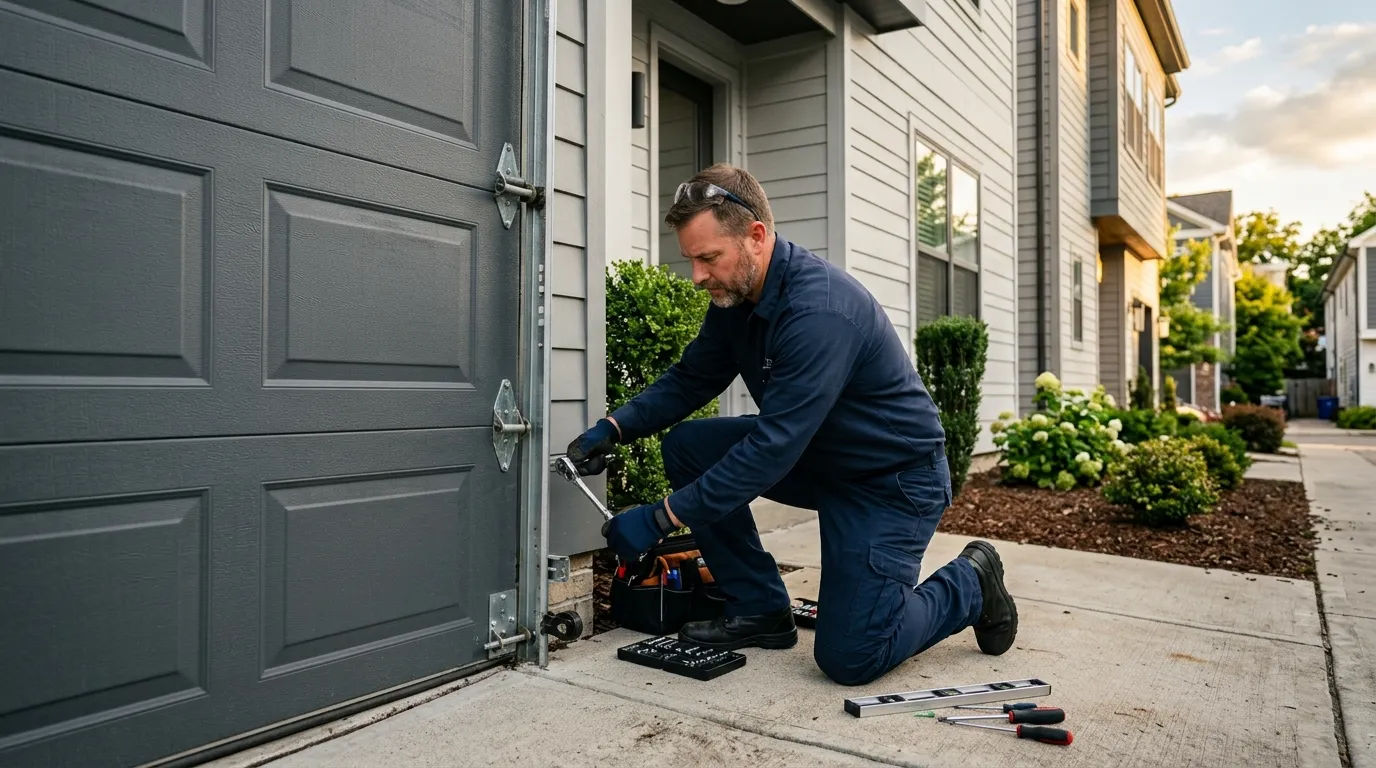
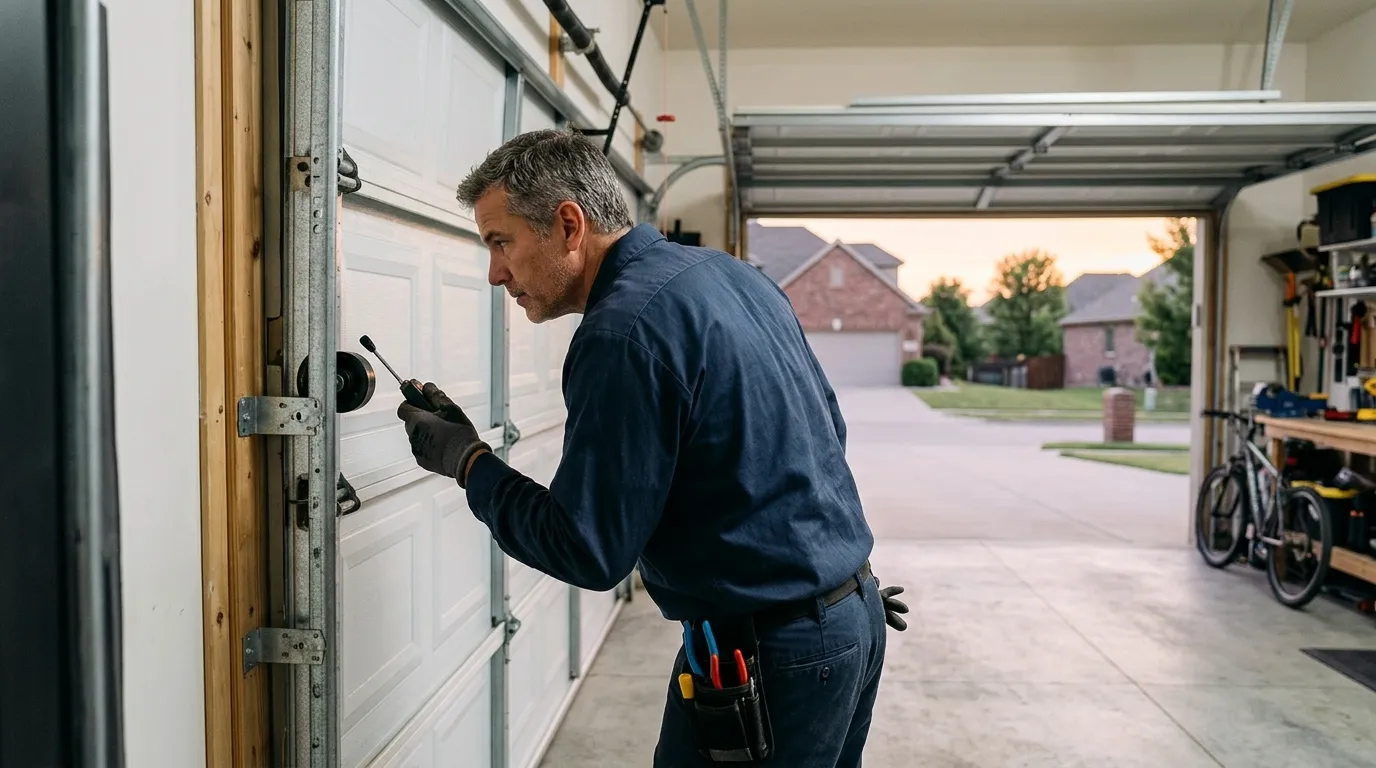
On a 1980s torsion setup, the job starts with unloading the spring safely - clamping the shaft, backing off the winding cone with bars, never just cutting a cable and letting it fly. Once the old spring is off, we check the shaft for wear where the cone bit into it over the years, check the bearing plates at each end, and look at the drums the cables wind onto, since a torsion spring rarely fails alone after this many cycles.

We size the replacement spring to the door's actual weight, not just what came stock in 1980. If the original steel panel door has been swapped for a heavier insulated one somewhere along the way - common on houses this age as owners upgrade - the factory spring spec is wrong for the door hanging on it now, and we adjust for that rather than just matching what's already there.

Winding is done with the correct number of quarter turns for the drum size, and we test the door through a full cycle, checking balance by hand with the opener disconnected, before we call it finished. A door that's properly balanced should hold still at any point when lifted halfway - if it drifts, the spring tension isn't right yet.

The Symptom

The most common call from Northampton is a door that won't budge, or one where the opener strains and reverses partway up. On a 1980-era torsion door, that's almost always one spring gone dead, not both - since most of these are single-spring setups on standard doors, or two matched springs on double-wide doors, and it's rare for both to fail on the same day.

You'll also hear it before you see it. A spring under tension that's about to go often makes a sharp bang, loud enough to bring someone running from another room, followed by the door refusing to lift. If the door was moving fine yesterday and won't budge today with a loud noise in between, that's a spring, not a track or an opener problem.

A slower warning sign is a door that's gotten noticeably harder to lift by hand over a few weeks - creaking, sagging slightly to one side, or an opener that used to run quiet now grinding. That's a spring losing tension gradually rather than snapping outright, and it's worth calling before it fails completely and leaves the door stuck wherever it happens to be.

The Complications

With 14,086 households in Northampton, most sharing that same 1980-era torsion setup, the complication we run into most isn't a mystery part - it's a cracked winding cone or a worn shaft bearing that gets missed if someone just swaps the spring and calls it done. Skip that check and the new spring wears the same weak point out again in a fraction of the time.

Median household income in Northampton runs $153,375, and that shows up in the doors themselves: heavier insulated steel panels installed as upgrades over the years, which load a stock 1980-era torsion spring beyond what it was ever rated to lift. If your door feels heavier than it should when the opener is disconnected, that's often why, and it means the fix isn't just a spring swap - it's a spring sized for the door you actually have now.

One honest limit: if the shaft is bent or the drums are cracked, a spring alone won't fix the door, and we'll say so rather than sell a spring that won't solve the real problem. That's a bigger repair, and sometimes it's the point where replacing the door beats patching around it.

Parts We Carry

We carry torsion springs sized for the door weights common on 1980-era Northampton construction - standard steel sectional doors and the heavier insulated replacements many owners have put in since. We also stock winding cones, cable drums, and the bearing plates that wear alongside a spring on a door this age, since replacing one without checking the others is how a repair gets you back out here again in six months.

What we don't stock on the truck is anything custom-sized for a door outside typical builder specs - an oversized or unusually heavy door sometimes needs a spring ordered to match, and that's a short wait rather than a same-visit fix. We'll tell you upfront if that's the case rather than force a spring that's close enough.

Because we're driving in from Philadelphia rather than working out of a shop in town, we try to carry what a typical Northampton call needs on the truck itself, so the sixteen-mile trip covers the whole repair in one stop rather than a diagnosis visit followed by a second trip for parts.
How it works

From “it’s stuck” to “it’s fixed”

Tell us what’s wrong - Philadelphia garage door service

Tell us what’s wrong

Describe the symptom - won’t open, loud bang, opener runs but the door won’t move.

On-site diagnosis - Philadelphia garage door service

On-site diagnosis

A technician tests the door under power and by hand and finds what actually failed.

Clear, up-front plan - Philadelphia garage door service

Clear, up-front plan

You get the fix that’s needed and what drives the cost - before any work starts.

Repaired & tested - Philadelphia garage door service

Repaired & tested

The repair is done, the door is set true and tested, and the work area left clean.

Serving Philadelphia, PA - tell us what your door’s doing and we’ll take it from there.

How we work

What to expect

Diagnosis first

Every visit starts by finding what actually failed - not a pre-written parts list.

The right part for the door

Springs and openers matched to the door’s weight and age, so the fix holds up.

Straight answers

When a repair makes more sense than a replacement - or the reverse - you hear it plainly.

Clean, careful work

Tension released safely, hardware set true, the door tested under power before we leave.

1,573,916Residents in Philadelphia
8Garage door services
7Neighborhoods & suburbs
PAServing Philadelphia, PA
Questions

Frequently asked

Straight answers about garage door repair in Philadelphia. Still unsure? Ask us directly.

How old does a spring have to be before it's just going to fail?

There's no fixed age - it comes down to cycles, not calendar years. A spring on a house built around 1980 in Northampton has had roughly forty-five years of daily use, which is well past where most torsion springs are rated to last, even if it hasn't snapped yet. If it's original to the house, age alone is a reason to have it checked.

Why did only one spring break if my door has two?

Two springs on a double-wide door rarely fail at the same time. They're under similar tension but wear at slightly different rates depending on manufacturing and how evenly the door's weight sits on each side. When one goes, we usually recommend replacing both anyway, since the survivor is close behind it in cycle life.

Can I just replace the spring myself?

Torsion springs are wound under several hundred pounds of tension and the tools to wind them safely aren't something most homeowners have on hand. We don't recommend it - this is one job where the risk of a hand or a face getting in the way of a spring letting go isn't worth the savings.

Ready to get your garage door sorted?

Tell us what it’s doing and where you are in Philadelphia - we’ll take it from there.

Request a QuoteCall