Why It Happens Here
The service area's housing stock runs 1938 to 1994 with a median build year of 1957, and Bala Cynwyd sits right on that median. Doors installed in that window were sized and hung for lighter materials - thin wood, single-layer steel, no insulation - on hardware that assumed a door weighing far less than what's sold now. When a homeowner finally replaces that door with a modern insulated model, the added weight is the reason the old torsion spring, the old track brackets, and sometimes the old header need to come out too, not just the door skin.
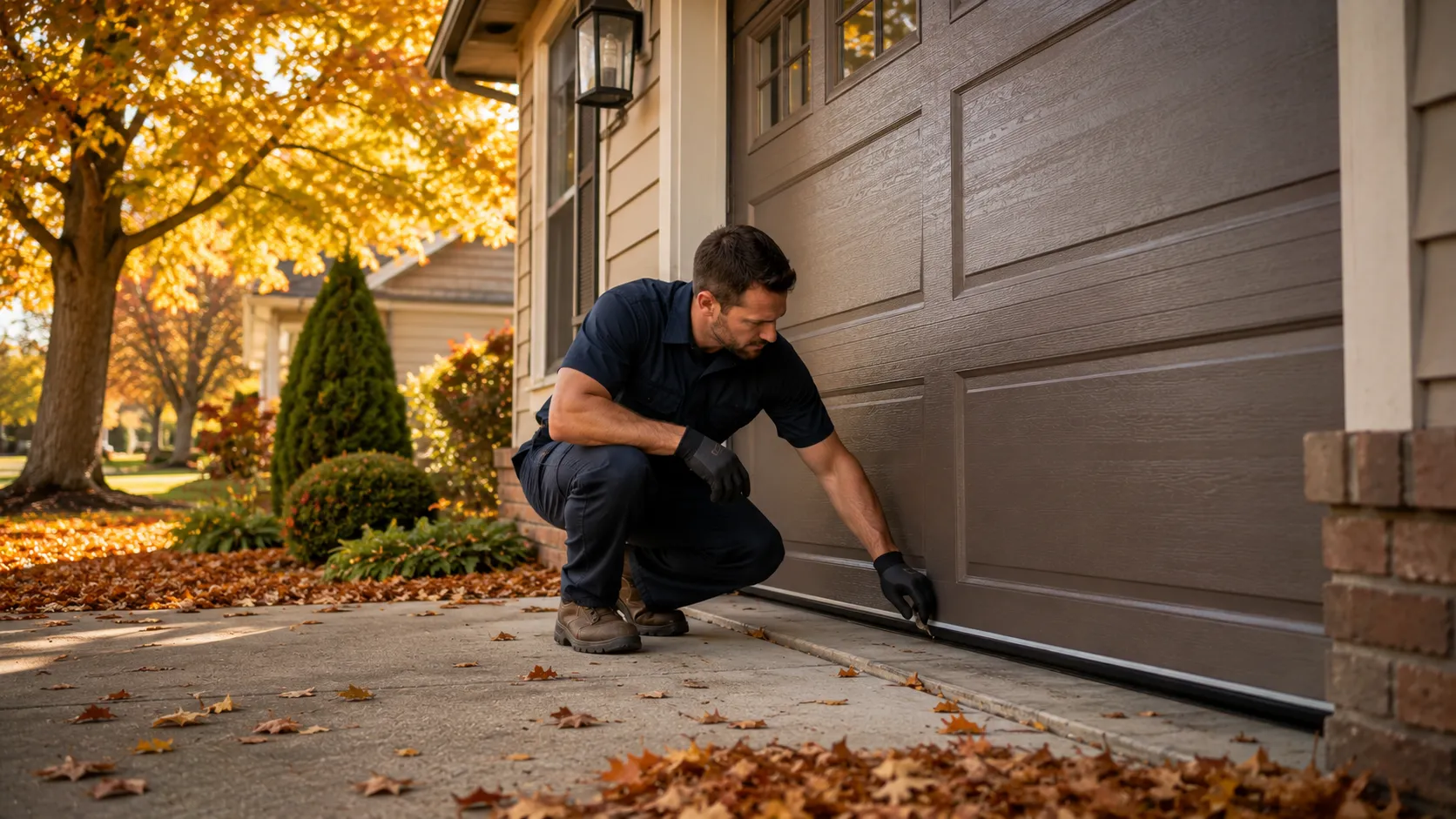
Winters in this service area fall into the severe-cold band, and an old door with no thermal break or worn-out seals loses heat straight into the garage all season, which shows up as an opener working harder and bottom seals cracking early. New installation is the point where that gets fixed for good, since retrofitting insulation onto a 1950s-era door frame rarely pays off compared to just putting in one built for the weather from the start.
Parts We Carry
We stock insulated steel sections in standard widths, torsion springs sized for the heavier modern doors that replace these older ones, and openers rated for the added weight and for the cold-climate demands of this service area. What we don't keep on the truck is every trim option and panel finish - some finish and window-insert combinations have to be special-ordered, and that adds lead time we won't pretend away. If you want a specific wood-look finish or a custom panel pattern, expect to wait on that piece rather than get it installed the same week.
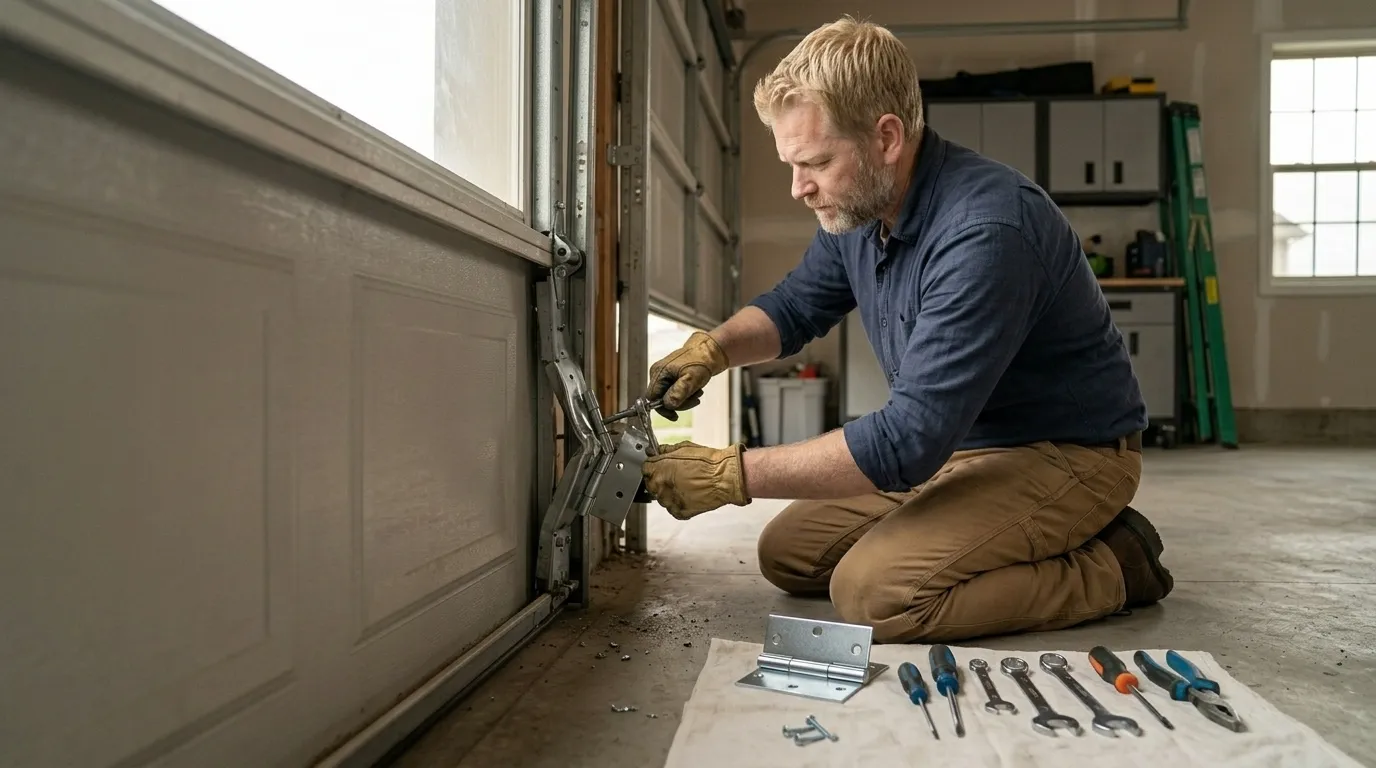
For a straight steel or insulated steel door in a common size, we carry enough on hand to install without a special order in most cases. Track hardware, drums, and cables get swapped as a set on any new install, since reusing 1950s-era hardware on a new door usually costs more in callbacks than it saves.
What the Fix Involves
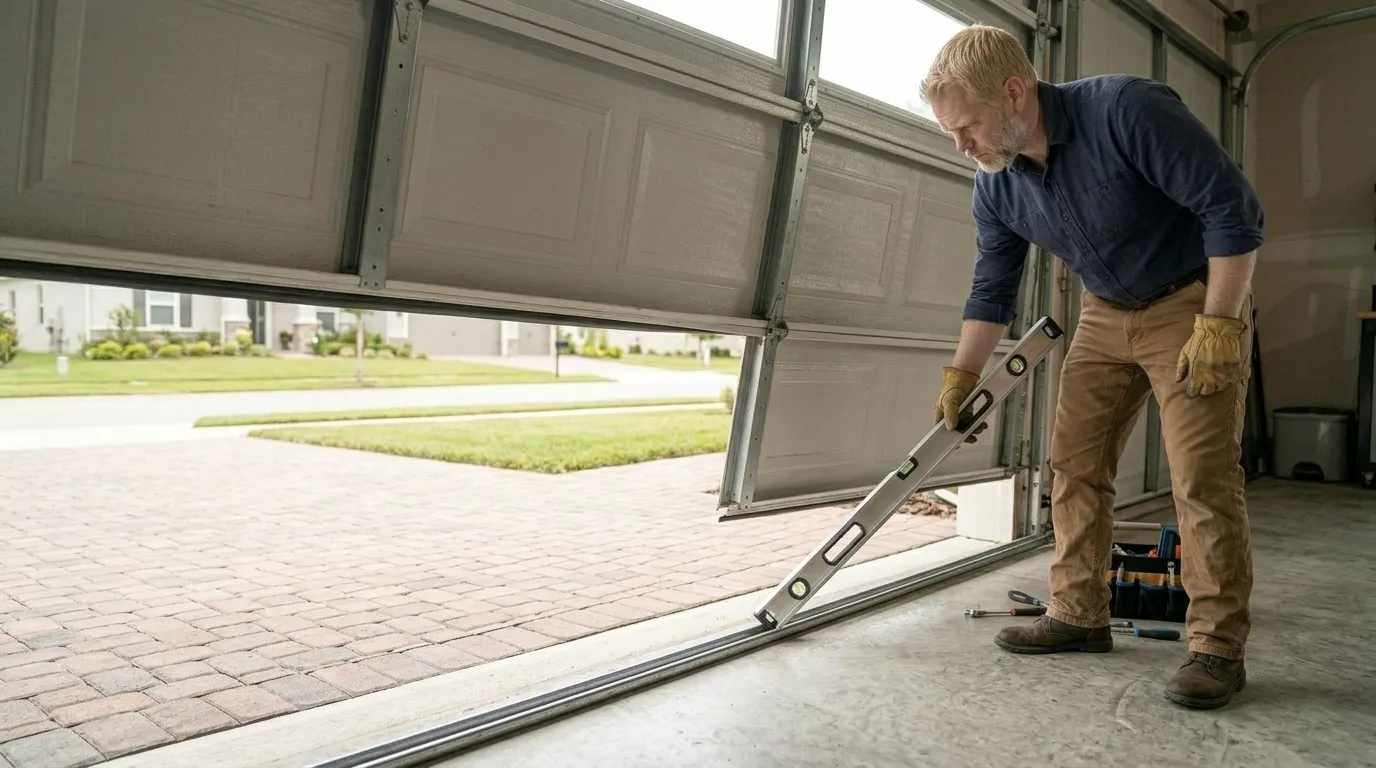
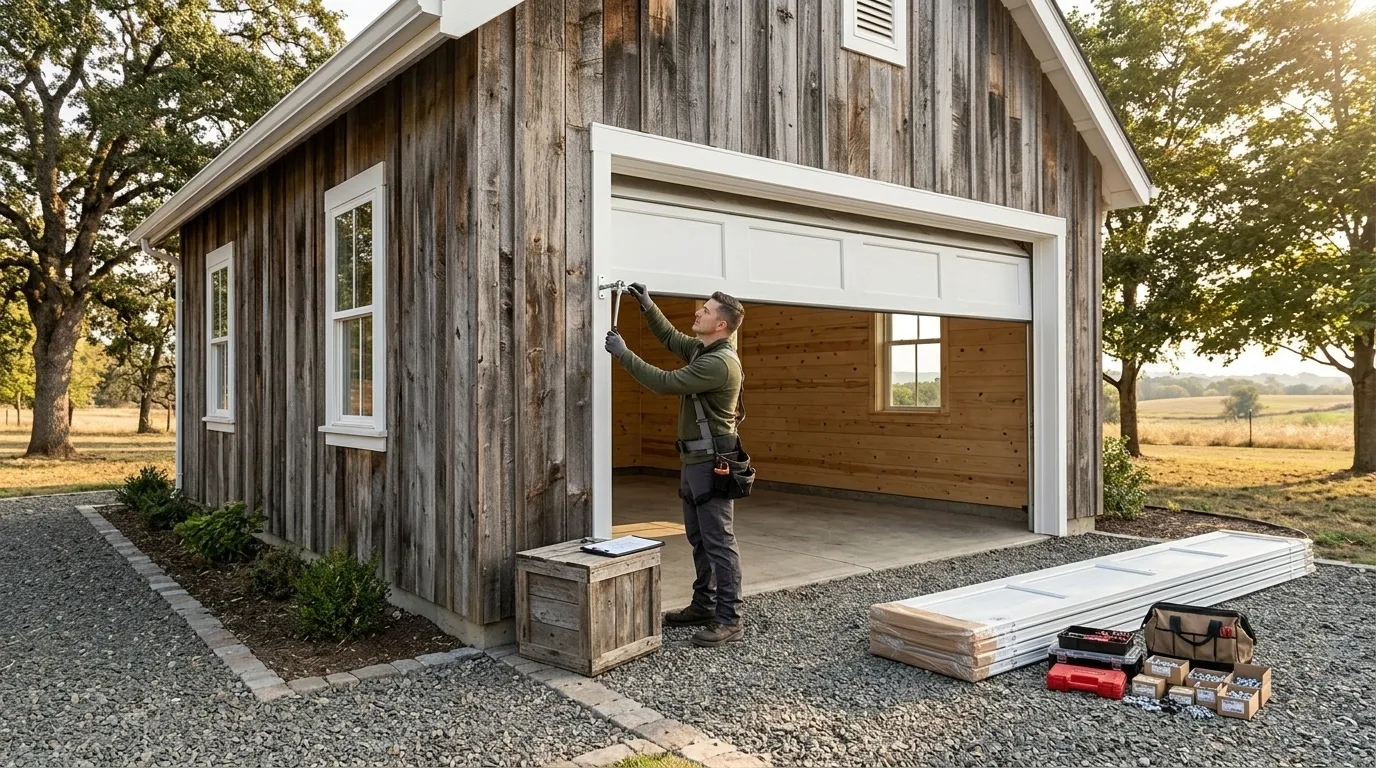
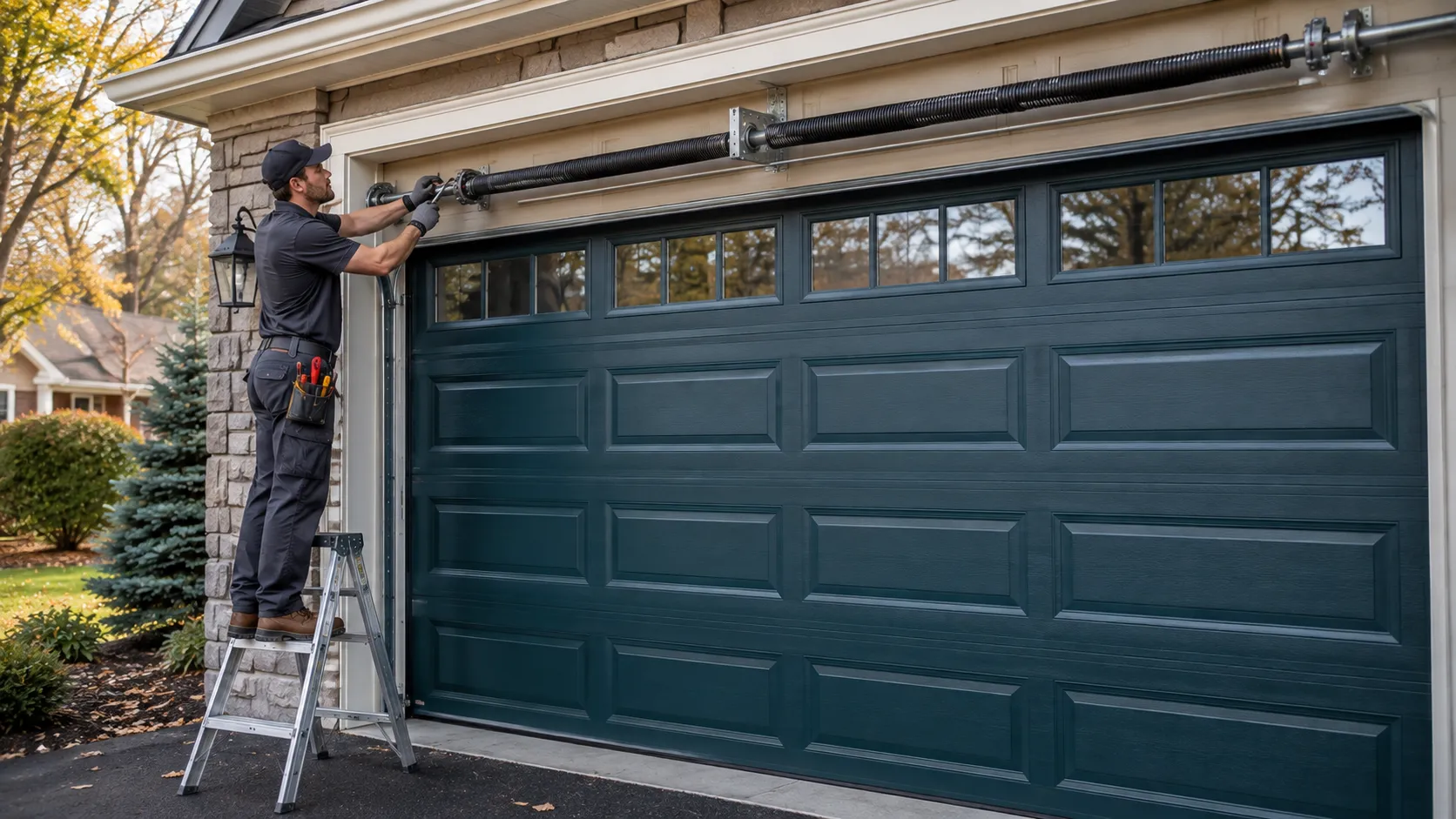
New installation means removing the old door, springs, and often the old track and drums as one unit, then hanging new track sized for the new door's weight, a new torsion spring rated for it, and the door itself. On a house from the 1957-era stock, that also means checking the header can carry the added weight of an insulated door before anything gets hung - skipping that step is how a new door ends up sagging within a year.
Opener replacement usually goes with it, since older openers weren't built for the torque a heavier insulated door needs. We won't recommend keeping an old opener on a new heavy door just to save money up front; it's the kind of shortcut that shows up as a failed opener within a season or two. If the existing opener is recent and rated for the new door's weight, we'll say so and leave it alone.