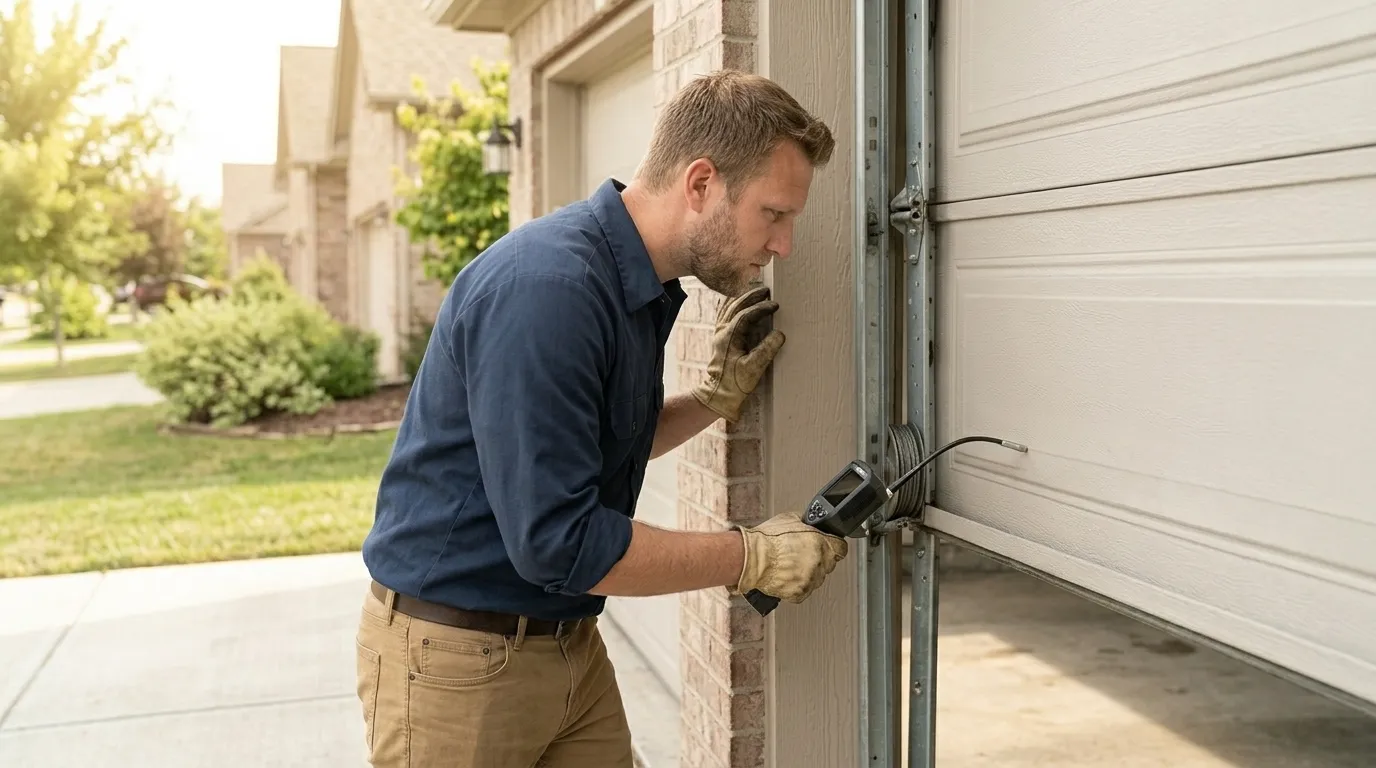

Parts We Carry
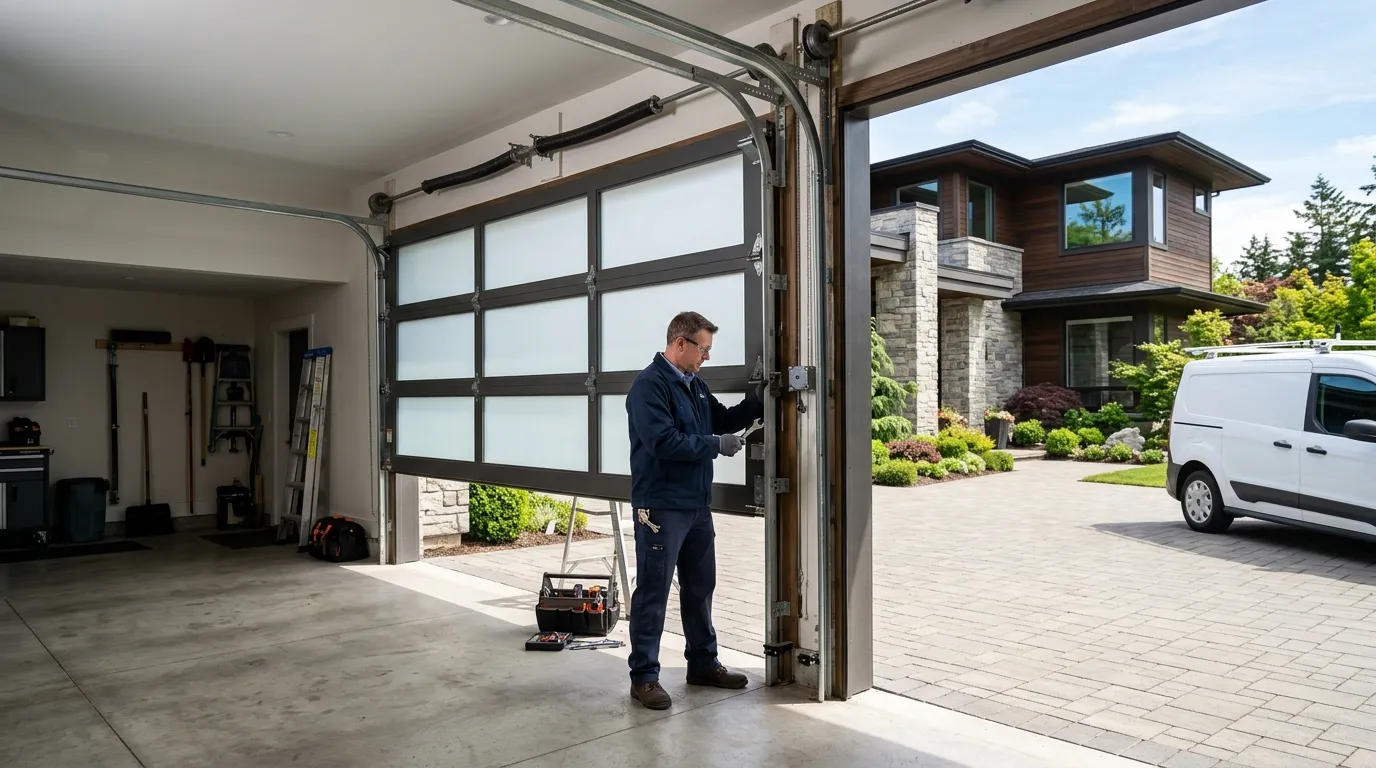
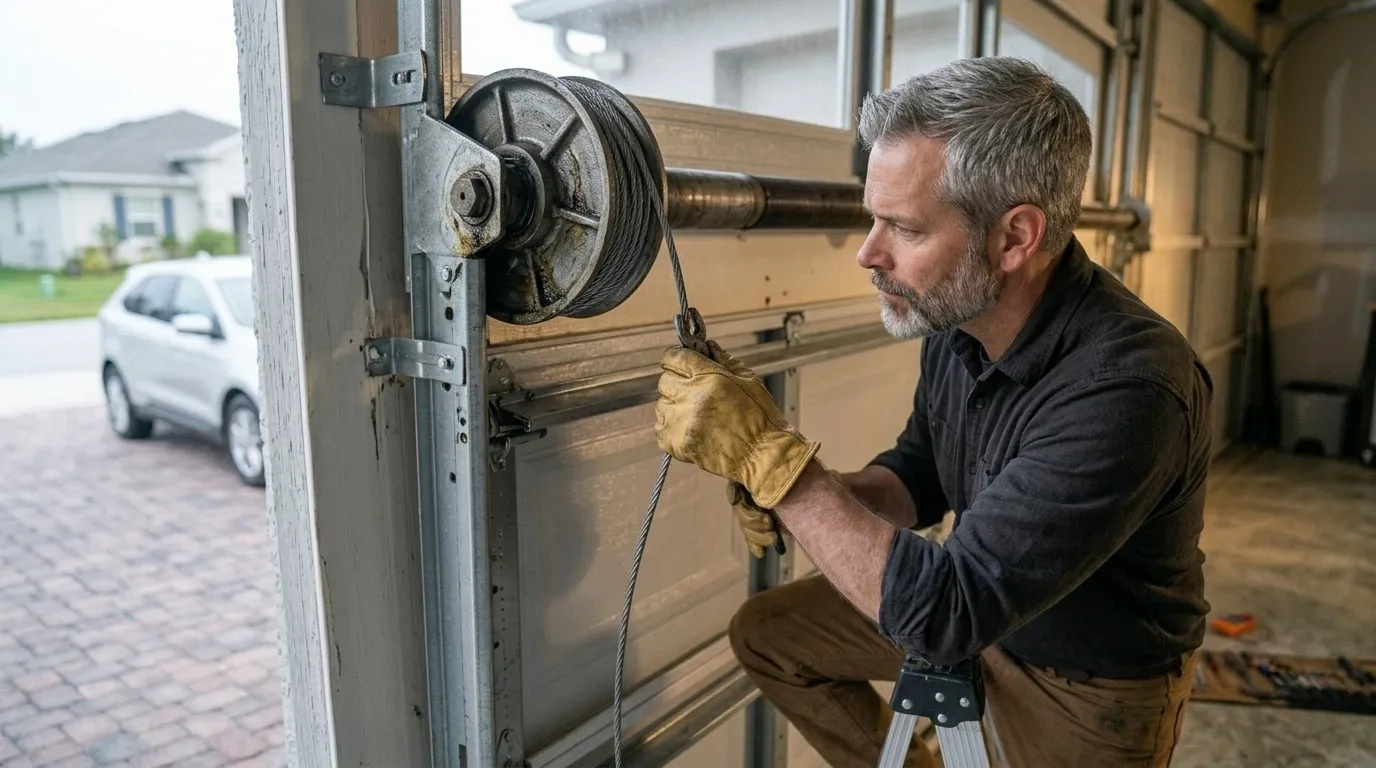
We carry standard aircraft cable in the diameters that fit both torsion-drum systems and older extension-spring setups, along with the S-hooks, safety cables, and drum sets that go with them. Most Drexel Hill jobs use a common gauge, but a handful of the original single-car door tracks from the 1948-era builds run a narrower drum than what's typical on later two-car doors, so we bring both sizes on the truck rather than guess.
We don't stock every obsolete pulley wheel or bracket that came off a door built when these blocks first went up - some of that hardware hasn't been manufactured in decades. If your bracket or drum is genuinely non-standard, we'll tell you straight rather than force a part that doesn't seat right.
The Symptom
The classic sign is a door that drops hard on one side, or slams down the last foot instead of settling. Sometimes it's quieter: the door starts to open, gets a few inches up, and stops, because one cable let go and the opener senses the imbalance. On older extension-spring doors here, you'll sometimes hear the cable go before you see it - a sharp snap, then the door sagging visibly on one corner.
Either way, don't run the opener again once you notice it. Forcing a lift with one side unsupported puts the whole load on the remaining cable and the track, and that's how a $200 repair turns into a bent track and a $600 one.
Why It Happens Here
Drexel Hill's median build year sits around 1948, a full decade before the wider service area's median of 1957. Doors and openers installed on houses that old have usually been through at least one full hardware cycle, sometimes two, and cables are consumable parts - they stretch, fray, and rust long before the door itself gives out. Add a cold-climate winter, where road salt and slush get flung up onto a garage floor and cable end near the bottom bracket, and corrosion sets in faster than on a cable kept dry.
Household income here runs lower than the wider area's median, which we mention only because it shapes a real decision homeowners make: repair the cable and keep an aging door running, or put that money toward full replacement. Both are reasonable calls, and we'll tell you honestly which one makes more sense once we've looked at the drum and track.
What the Fix Involves
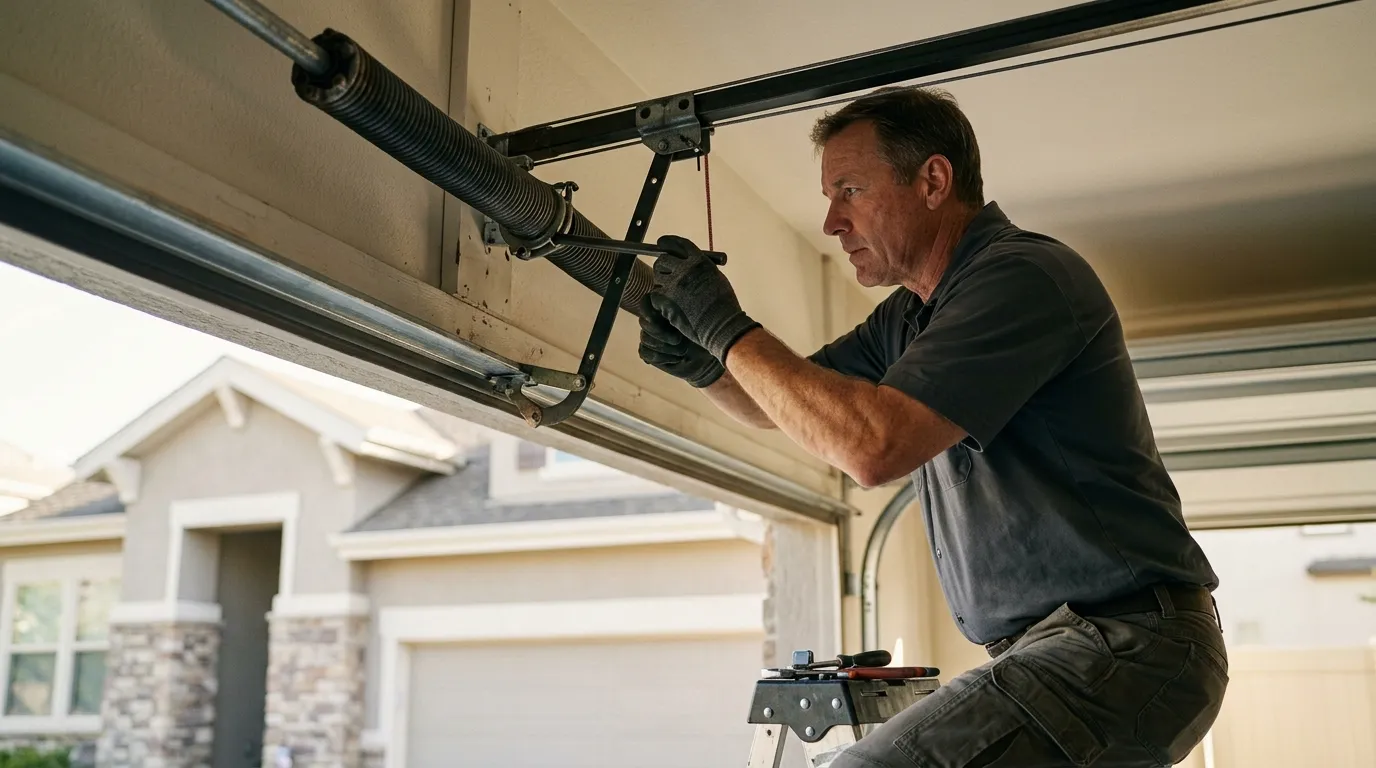
We release spring tension safely, pull the old cable and inspect the drum, bracket, and pulley it rode on. If those are original and worn, we replace them along with the cable rather than put new cable on a groove-worn drum that will fray it again in a year. We re-wind the new cable to matched tension on both sides, run the door through a full cycle, and check the opener's force setting, since an opener compensating for a slack cable often needs re-adjustment once the tension is correct again.
We travel to Drexel Hill from our Philadelphia base, about 10 miles out, so we schedule the visit rather than treat it as a same-hour drop-in. If you're not sure whether it's the cable or something upstream in the spring, our page on cable repair covers the general diagnosis in more depth.