Serving Philadelphia, PA & nearby
(267) 430-8692
Philadelphia, PA

Spring Repair for Drexel Hill's 1948-Era Garage Doors

Drexel Hill's houses mostly date to 1948, a decade older than the citywide median - that changes which springs fail and how. We travel from Philadelphia to fix them.

Spring Repair for Drexel Hill's 1948-Era Garage Doors
Philadelphia, PA
8 services
7 service areas
Diagnosis first, then the fix

Can You Do This Yourself

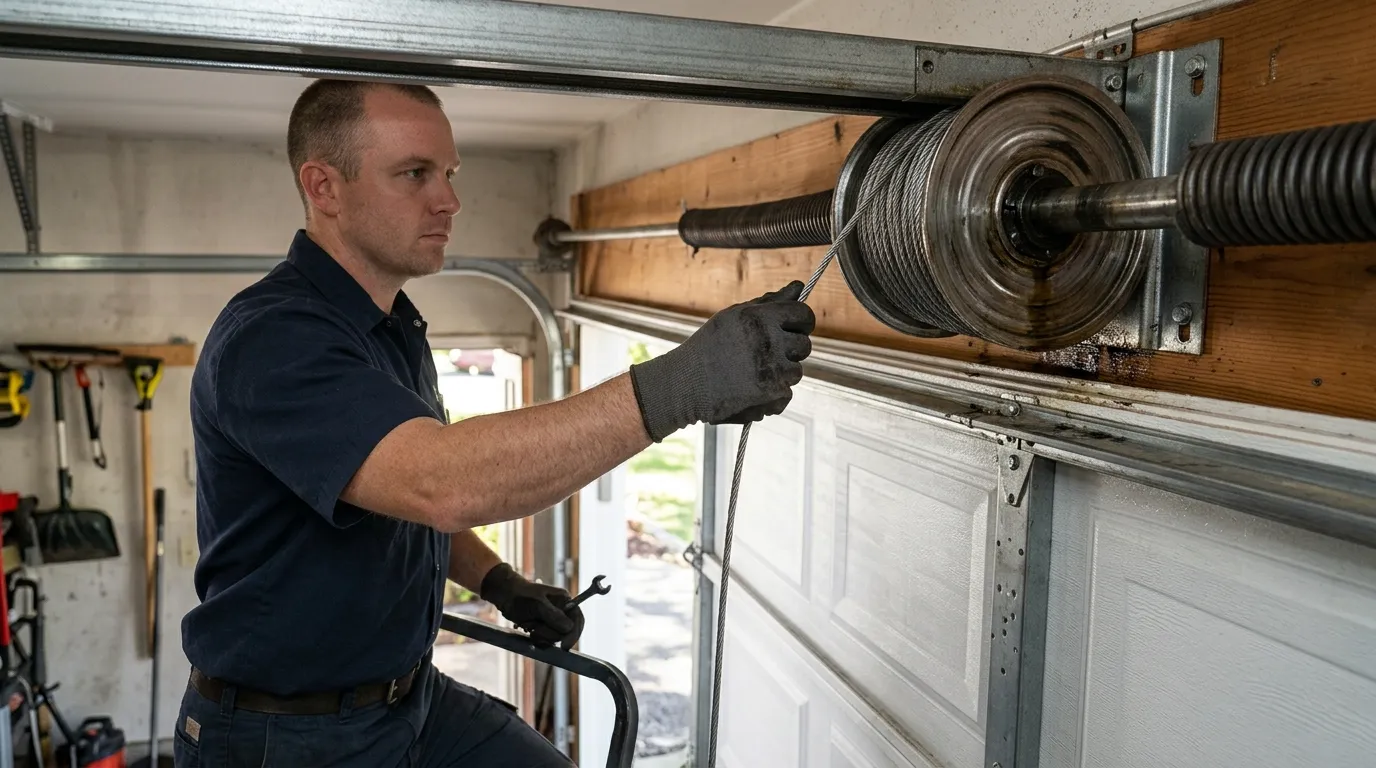
A torsion spring is wound under enough tension to break a bone or worse if the winding bars slip, and that risk doesn't change because a house is in Drexel Hill instead of downtown. What does change here is what you're likely dealing with: houses in this part of the county went up mostly around 1948, a decade before the broader service area's 1957 median, which means more original hardware still hanging on doors that have never been upgraded. If you can see the spring is broken - the door won't budge, or one side hangs lower than the other - you can confirm the diagnosis yourself. Winding, unwinding, or replacing the spring is not a job to learn from a video. Extension springs (the kind that stretch along the horizontal tracks) are somewhat more forgivable to work around than torsion springs mounted over the header, but both carry enough stored force to fling a bar across a garage. Disconnect the opener, leave the door down, and call it in. That's the honest limit of DIY here.

Parts We Carry

We stock torsion springs in the sizes that show up most often on doors from the late 1940s and 1950s - shorter shafts, narrower wind diameter, and the end brackets that went with them before manufacturers standardized. We also carry standard modern torsion springs and extension springs for doors that have already been replaced or retrofitted. What we don't keep on the truck is anything custom-wound to a discontinued opening size; those get ordered, and that's a lead time we tell you about upfront rather than promise around. Cables, drums, and bearing plates that share the load with the spring come out with us too, since a spring failure on a door this old often takes a cable or a worn bearing down with it.

The Symptom

The door refuses to lift, or it lifts a few inches and stalls, or it slams down faster than it should when someone pulls the release. On a two-car door with a single center torsion spring - common on the wider openings built into houses from this era - a full break usually means the door won't move at all, opener or no opener. On older extension-spring setups, you'll sometimes still get partial movement before the second spring gives out too, which tricks people into thinking it's an opener problem instead of a spring problem. Either way, a door that suddenly feels twice as heavy as it did yesterday is a spring, not a fluke.

The Complications

Drexel Hill's housing stock sits at the older end of the service area's 1938-1994 range, and older doors bring older brackets, older track spacing, and sometimes a header that was never built to modern spring-mounting standards. That's a complication a 1980s-built house two towns over simply doesn't have. We also see doors here where a previous repair used a spring sized for a different door - a mismatch that works until it doesn't, usually taking out a cable or bending a track on its way down. Winter matters too: this area sits in a cold-and-severe climate band, and steel contracts in the cold, which is exactly when a spring already fatigued from decades of cycles tends to finally let go. None of that means every job is complicated - plenty are a straight swap - but we'd rather flag it than surprise you with it.

Why It Happens Here

A median build year of 1948 means a lot of Drexel Hill's garage doors are carrying springs that have outlived several owners. Steel torsion springs are rated for a number of open-close cycles, not a number of years, but houses from this vintage have simply had more decades to rack up cycles - plus the freeze-thaw stress that comes with a cold-severe climate band. With roughly 11,981 households in this immediate area, and a median income of $87,993 that tends to run above the wider service area's $109,706... actually that figure runs below it, and that gap shows up in the field as more owners choosing a spring repair over a full door replacement when the springs go, because the door itself is often still sound. It's a maintenance call, not a house-age accident - but the house age is why the call comes in.

What the Fix Involves

We test the door balance first, because a spring replaced on an unbalanced door just wears out faster. Then we unwind and remove the failed spring, check the cables, drums, and center bearing while everything's off, and install a matched spring rated for that door's weight and cycle count - matched, not just similar, since a mismatched spring is the complication we mentioned above waiting to happen again. On a two-spring extension setup we replace both, even if only one broke, because the survivor is close behind it. Once it's wound and the door is rehung, we run it through a full cycle by hand and by opener before we call it done. On original hardware from a 1948-era build, if the header or track brackets are too far gone to trust a new spring against, we say so - that's a bracket or track job first, not a spring job.
How it works

From “it’s stuck” to “it’s fixed”

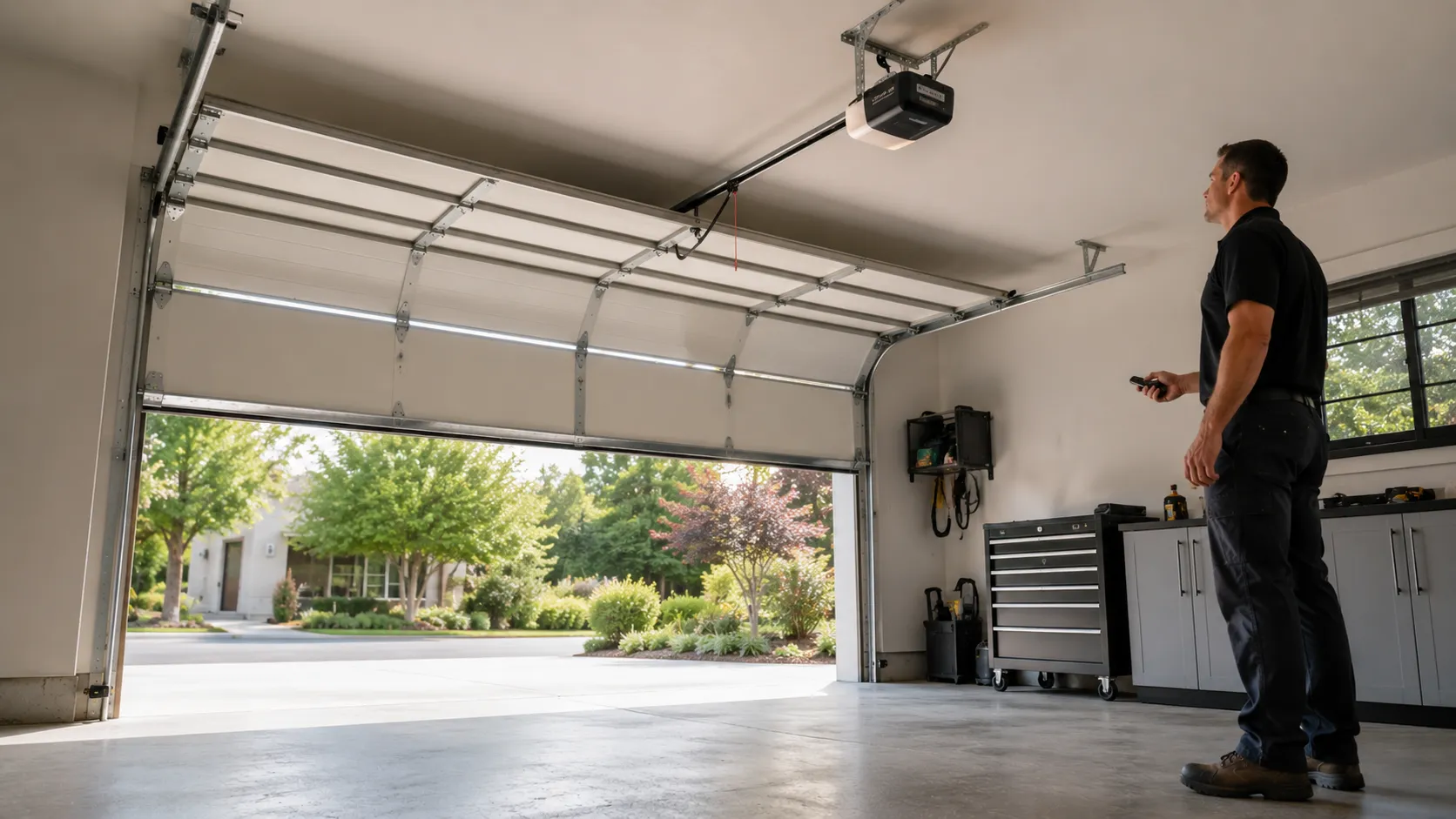
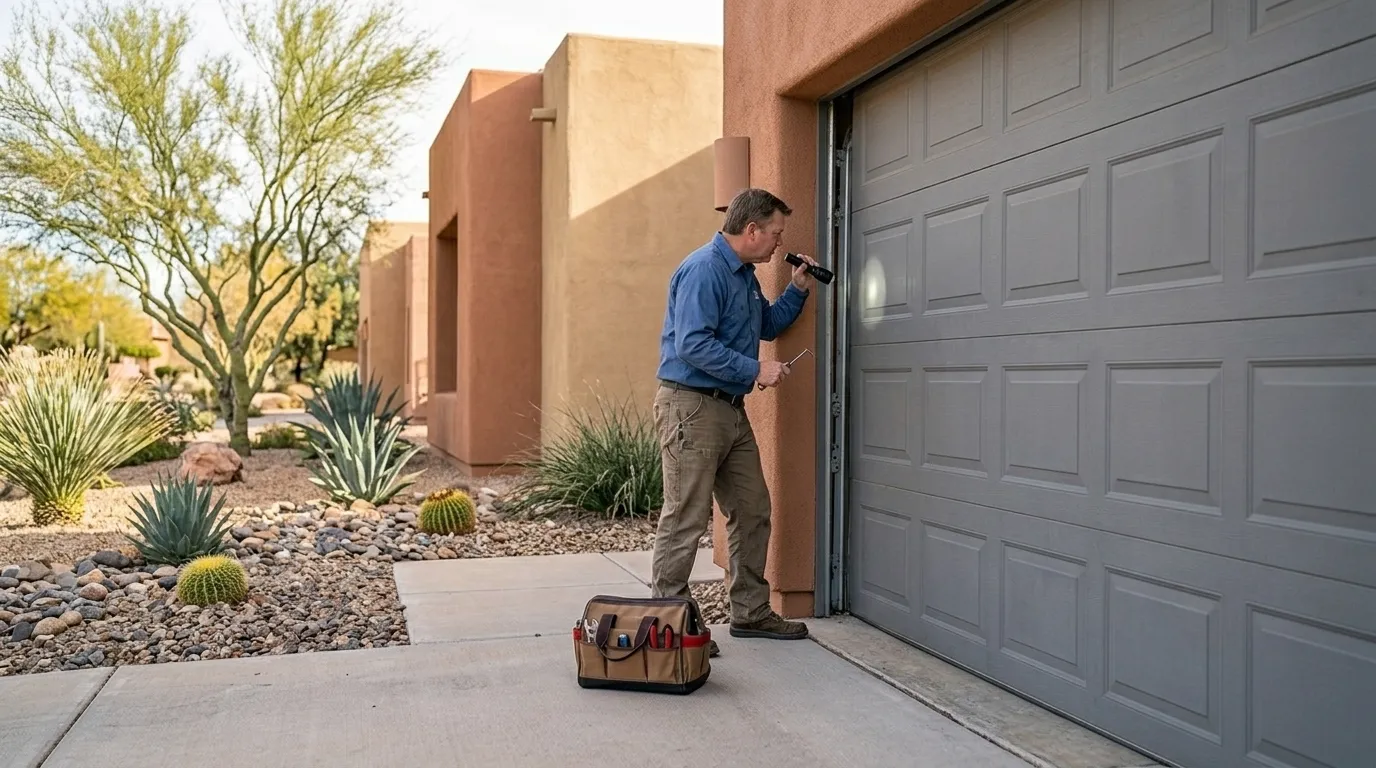
Tell us what’s wrong - Philadelphia garage door service

Tell us what’s wrong

Describe the symptom - won’t open, loud bang, opener runs but the door won’t move.

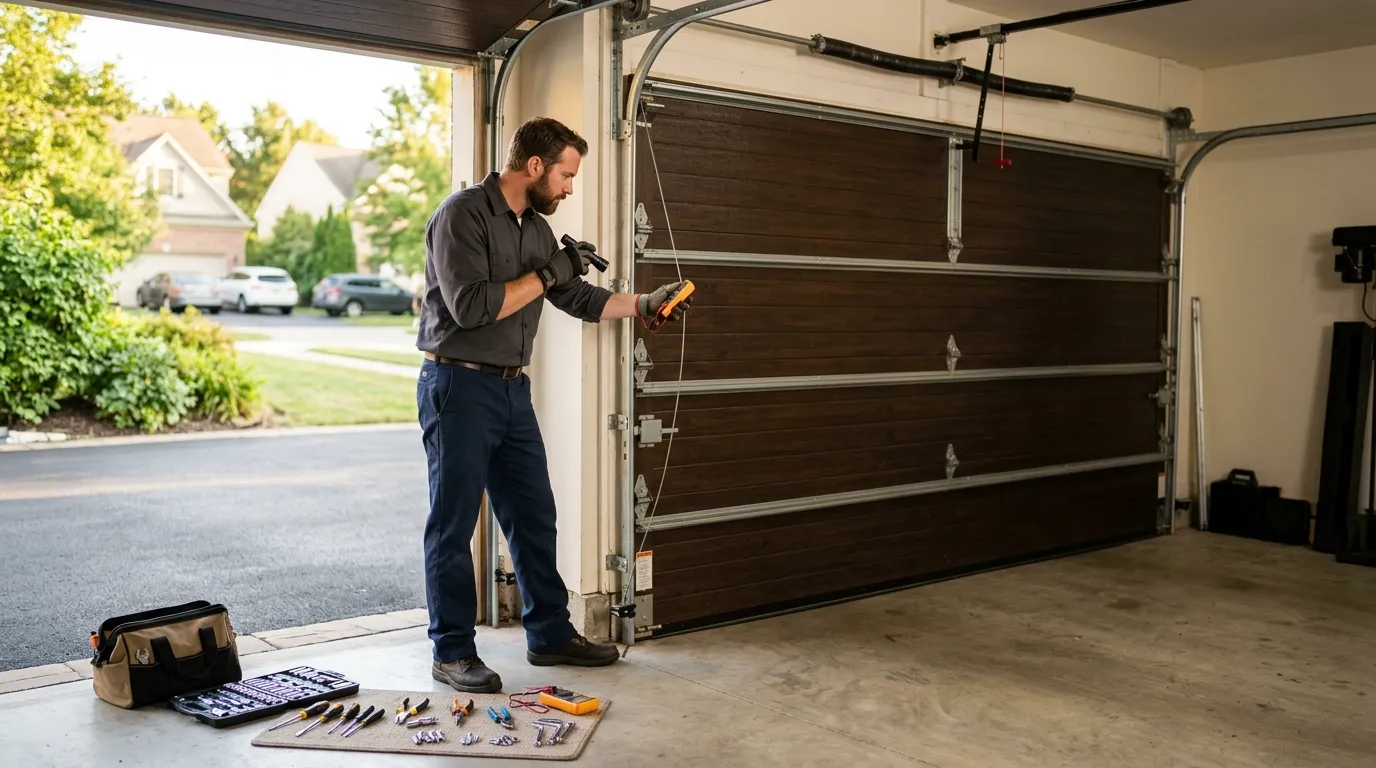
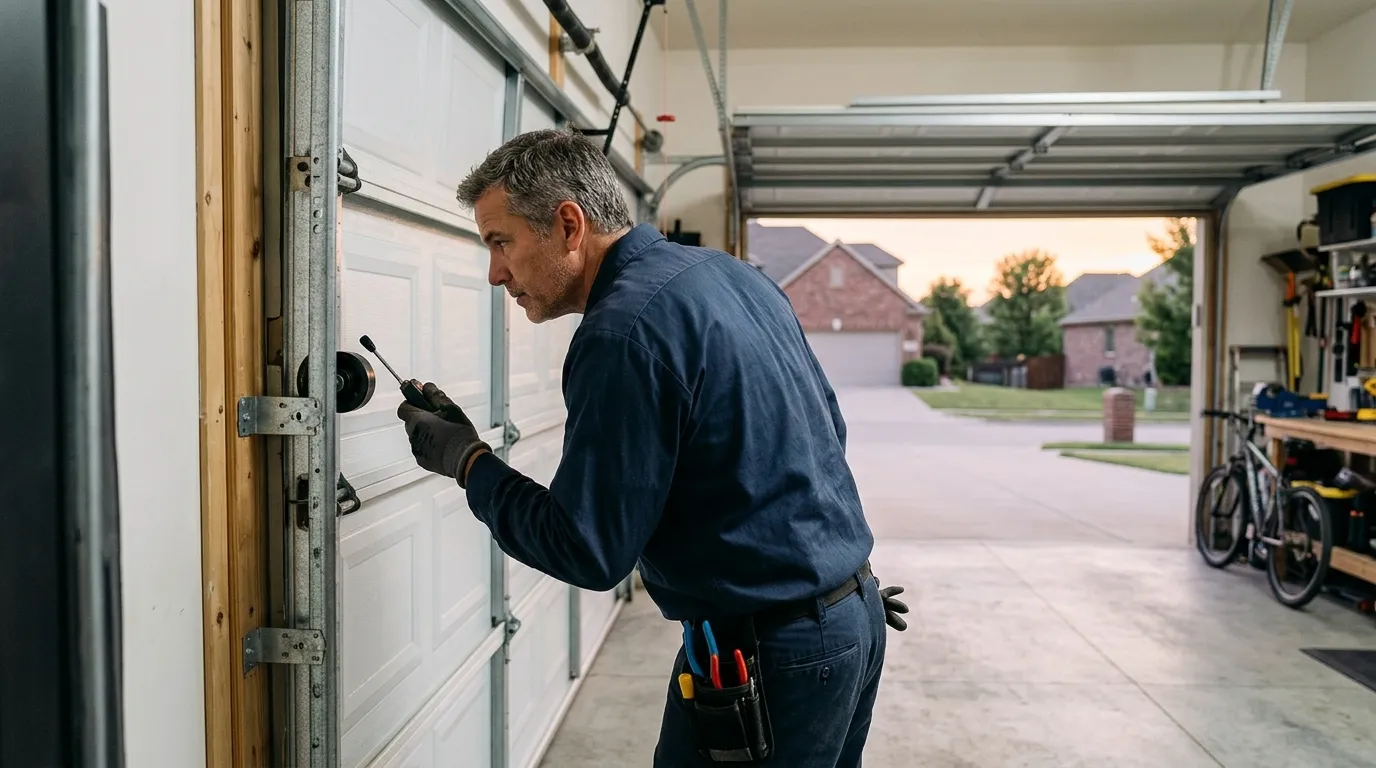
On-site diagnosis - Philadelphia garage door service

On-site diagnosis

A technician tests the door under power and by hand and finds what actually failed.

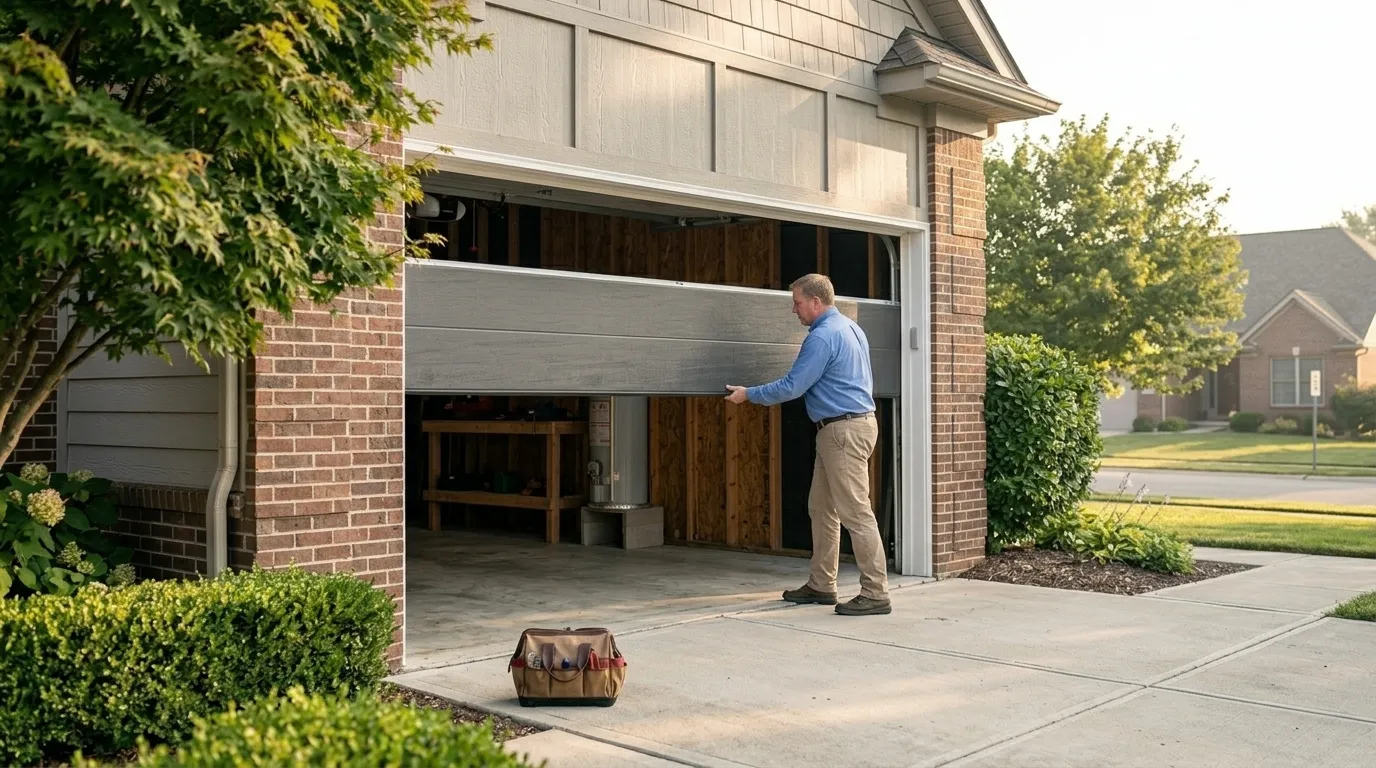
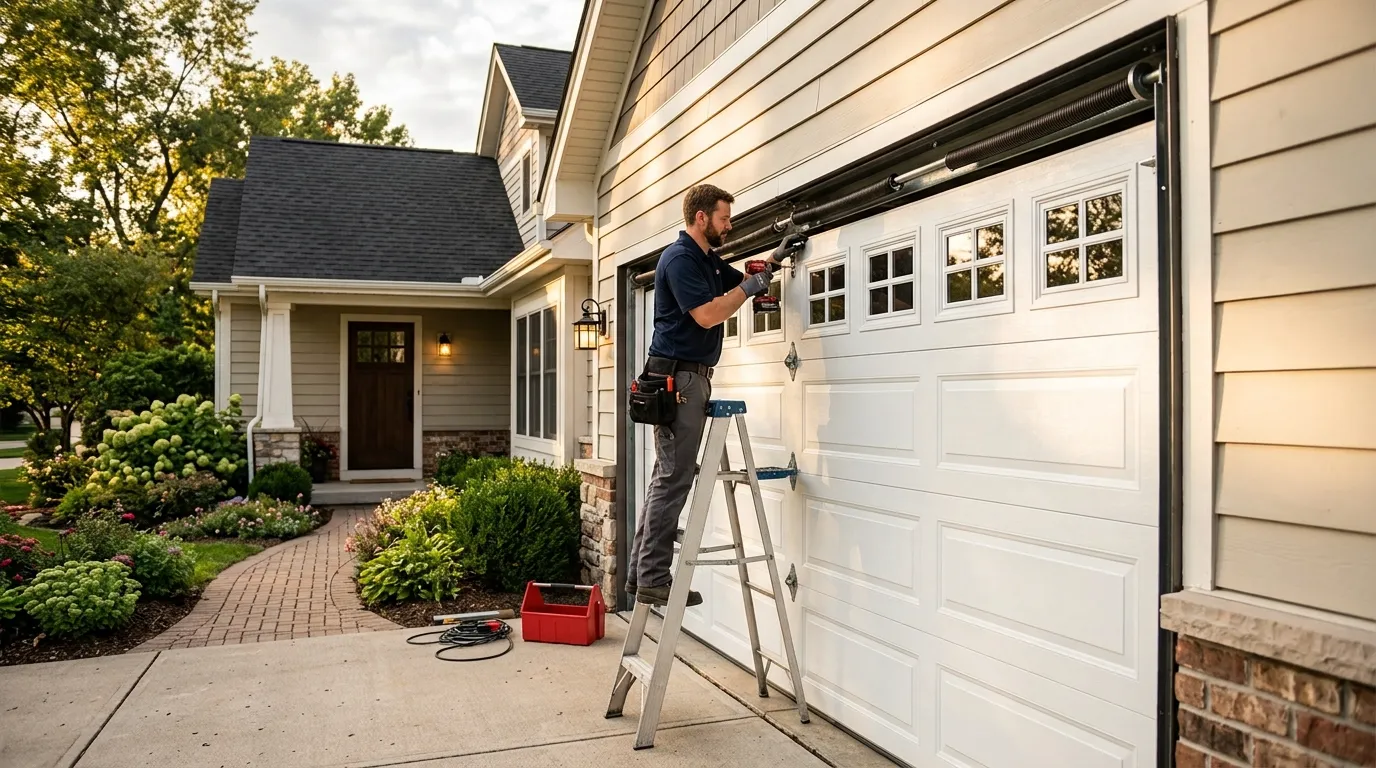
Clear, up-front plan - Philadelphia garage door service

Clear, up-front plan

You get the fix that’s needed and what drives the cost - before any work starts.

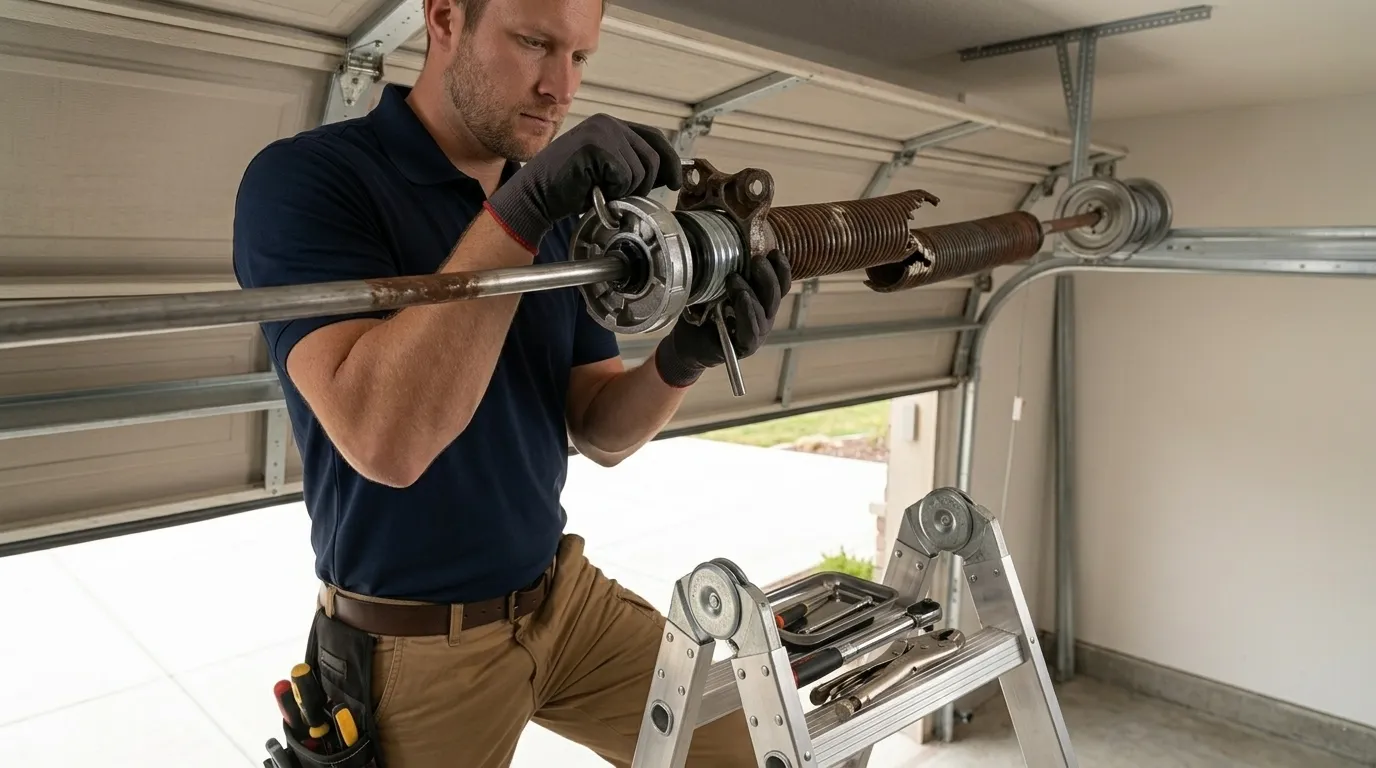
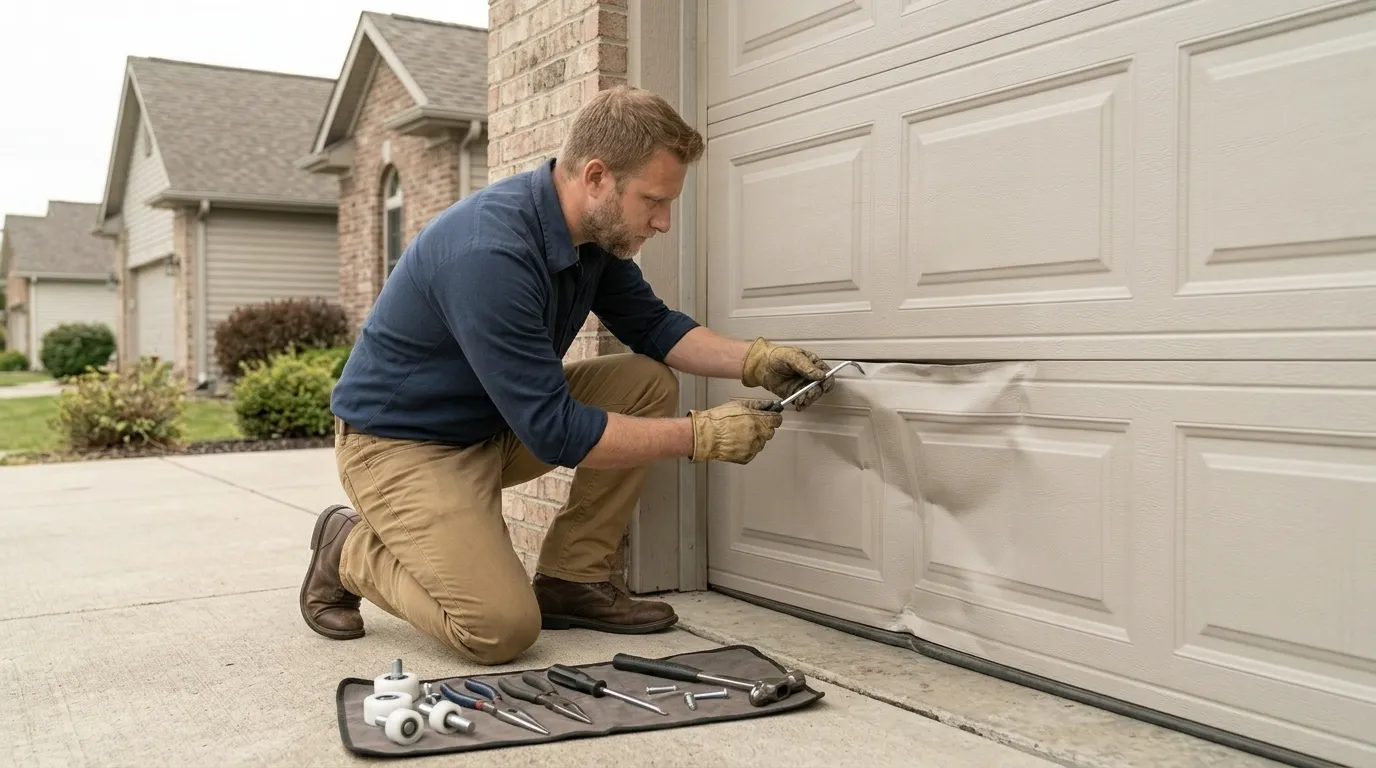
Repaired & tested - Philadelphia garage door service

Repaired & tested

The repair is done, the door is set true and tested, and the work area left clean.

Serving Philadelphia, PA - tell us what your door’s doing and we’ll take it from there.

How we work

What to expect

Diagnosis first

Every visit starts by finding what actually failed - not a pre-written parts list.

The right part for the door

Springs and openers matched to the door’s weight and age, so the fix holds up.

Straight answers

When a repair makes more sense than a replacement - or the reverse - you hear it plainly.

Clean, careful work

Tension released safely, hardware set true, the door tested under power before we leave.

1,573,916Residents in Philadelphia
8Garage door services
7Neighborhoods & suburbs
PAServing Philadelphia, PA
Questions

Frequently asked

Straight answers about garage door repair in Philadelphia. Still unsure? Ask us directly.

Why did my spring break in winter?

Steel contracts in cold weather, and this area sits in a climate band the federal data marks cold and severe. A spring already worn from years of cycles is most likely to finally snap when the metal is stiffest, which is why winter calls spike even though the spring itself has been weakening for a while.

Do you carry springs for older Drexel Hill doors on the truck?

We stock torsion and extension springs sized for the houses common in this area, including the shorter shafts and older bracket styles that show up on doors from around 1948. A spring custom-wound for a discontinued size may need to be ordered rather than pulled off the truck.

Is it cheaper to replace the door instead of the spring?

Usually not, if the door itself is structurally sound. A spring is a fraction of the cost of a full door. Replacement only makes sense when the panels, track, or header are also failing, and we'll tell you plainly if that's what we're looking at.

Do you have a branch in Drexel Hill?

No. We work out of Philadelphia and travel to Drexel Hill for the job. There's no local depot, so scheduling is set when you call rather than based on a truck already parked nearby.

Ready to get your garage door sorted?

Tell us what it’s doing and where you are in Philadelphia - we’ll take it from there.

Request a QuoteCall