Serving Philadelphia, PA & nearby
(267) 430-8692
Philadelphia, PA

Garage Door Service for Drexel Hill's 1948-Era Housing Stock

Drexel Hill homes date to a 1948 median build year, a decade earlier than the region's 1957 average. That gap changes what's likely original on your door.

Garage Door Service for Drexel Hill's 1948-Era Housing Stock
Philadelphia, PA
8 services
7 service areas
Diagnosis first, then the fix

Can You Do This Yourself

Drexel Hill's housing stock centers on a median build year of 1948, roughly a decade ahead of the wider service area's 1957 median. That earlier date matters: a garage built in the late 1940s has had more decades for its original hardware to wear quietly instead of failing loudly. If your door still uses the drums, cable, or track hung when the house was framed, you're not dealing with a modern kit where parts snap in.

You can safely handle lubricating rollers and hinges, tightening visible bolts, and clearing debris from the track. What you should not touch is a wound torsion spring or anything holding tension on a cable drum from that era - the hardware sizing on a 1940s door often doesn't match what's sold off the shelf today, and guessing wrong under tension is how people get hurt. If the door won't open, or opens unevenly, that's a call, not a weekend project.

We won't pretend every job needs a truck. Loose screws, dirty tracks, and a sticking sensor are things an owner here can reasonably fix. The honest line is tension and age - once a spring is 70-plus years old, treat it as a professional job, not a DIY one.

Parts We Carry

For a town where the median home dates to 1948, we stock torsion springs and cable drums sized for the older two-piece and three-piece sectional doors that were common before lighter modern panels took over, along with the standard rollers, hinges, and extension springs that fit most doors from the 1938-1994 range this whole area falls into. We also carry current opener logic boards and safety sensors, since even an original door frequently has a replacement opener bolted on from some point in the last twenty years.

What we don't stock on the truck is a match for every custom or oversized panel from that period - some of the wider two-car openings built in the late 1940s used dimensions that aren't standard stock today, and those can mean a short order delay. We'll tell you upfront if that's the case rather than force a fit that won't seal right in a Philadelphia winter.

The Symptom

The most common call from this part of the service area is a door that's suddenly heavy to lift, or one that lifts a few inches and stops. On a house built around 1948, that's almost always a spring that's finally given out after decades of daily cycles - not a sudden failure so much as the last stretch of a very long slow one. Homeowners often describe it as fine yesterday, dead today, but the wear was building the whole time.

A second pattern here is a door that shudders or catches partway down the track. On original hardware, this usually traces to a roller or track bracket that's never been replaced since installation - no fault of the homeowner, just a part that outlived its expected life by several decades. Given that the area's households number 11,981 and its median income sits at $87,993, a good share of these doors are original to homes that have had one or two owners since, and the hardware has simply never come up for replacement.

The Complications

The complication with pre-1960 stock isn't the repair itself - it's sourcing a part that matches. Track widths, drum diameters, and spring wind on a door from 1948 don't always line up with what's manufactured now, since panel and opening standards shifted over the following decades. We carry the common older sizes, but a mismatch means either a custom order or, in some cases, a conversation about whether replacing the whole door makes more sense than patching one more original part onto a system where everything else is the same age.

Another complication is that older doors in this area were rarely built with the insulation or sealing that current code assumes, so a repair that fixes the mechanical fault can still leave a door that performs poorly in winter. We'll flag that separately from the repair itself rather than bundle it into a quote you didn't ask for.

Why It Happens Here

This area sits in a cold, severe winter climate band, and cold is hard on old steel and old grease equally. Torsion springs lose tension faster with repeated temperature swings, and original lubricant from a 1948 installation has long since dried past useful. Combine a median build year a decade ahead of the region's 1957 average with roughly seventy winters of freeze-thaw cycling, and you get hardware that's due for failure well before a homeowner expects it, simply because nobody's looked at it since it went in.

The area also sits about 10 miles from Philadelphia, which doesn't change the mechanics, but it does mean this stock has aged in place rather than in a newer, later-built ring of the region - houses built in the postwar rush here have had extra decades on the same door before anyone touches it.

What the Fix Involves

For a spring replacement on original 1948-era hardware, the job starts with matching wind direction and wire gauge to the existing drums rather than assuming a modern standard size fits. If it doesn't, we order the correct part rather than force one that will unbalance the door. Cable and roller work usually goes alongside it, since hardware from the same install date tends to fail in the same window.

We test balance and travel afterward, not just that the door opens. A door that lifts easily but binds partway is still an unfinished repair. If the underlying door itself is failing at the panel level - rust-through, warped sections - we'll say so plainly; sinking parts into a door near the end of its life isn't a good use of anyone's money, and that's the one call where replacement beats repair.
How it works

From “it’s stuck” to “it’s fixed”

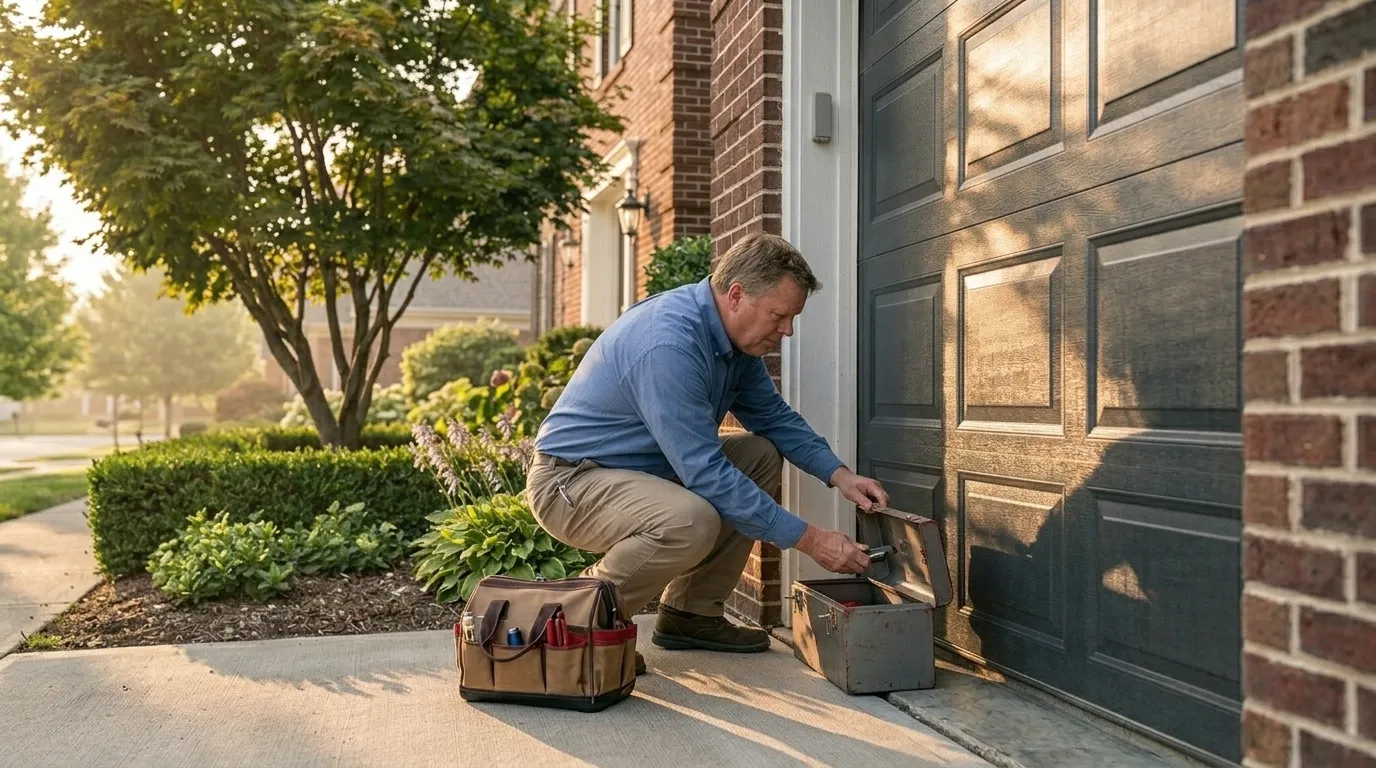
Tell us what’s wrong - Philadelphia garage door service

Tell us what’s wrong

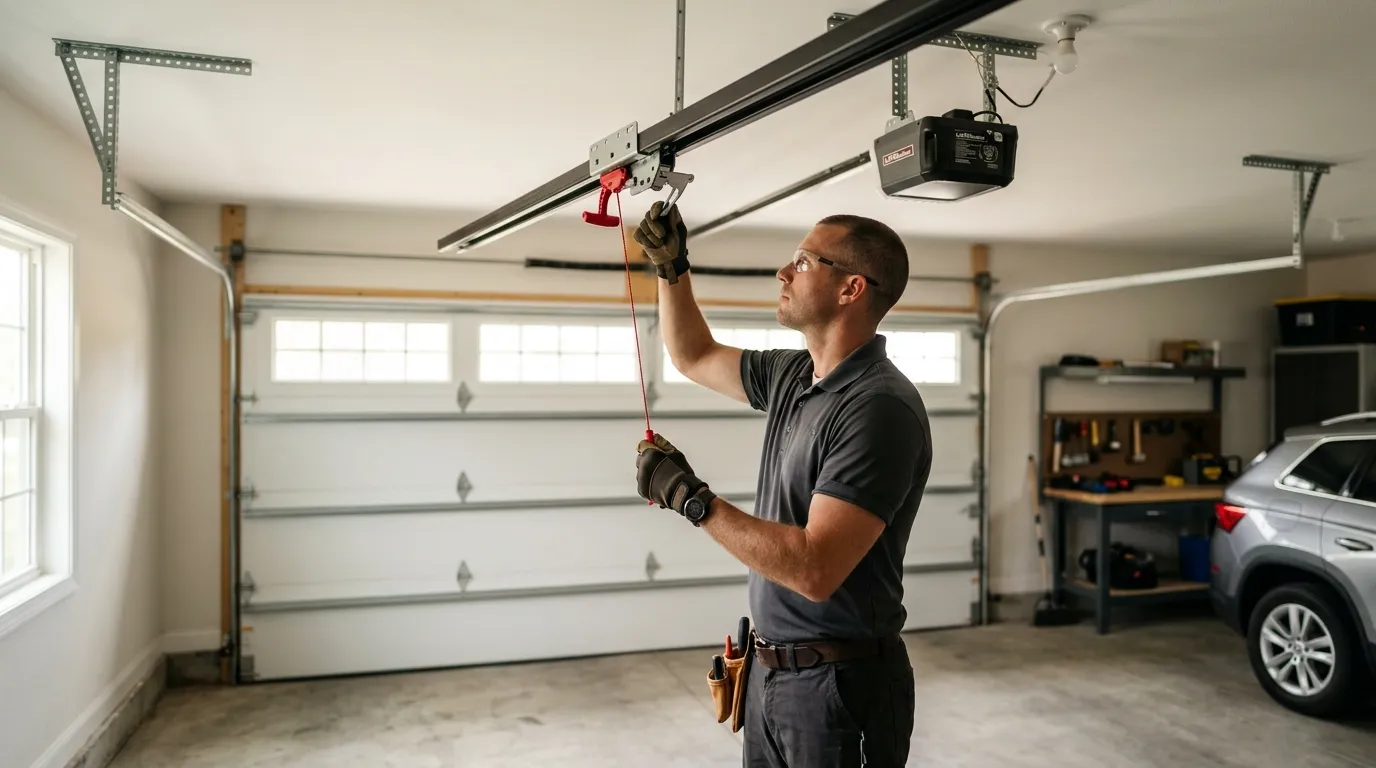
Describe the symptom - won’t open, loud bang, opener runs but the door won’t move.

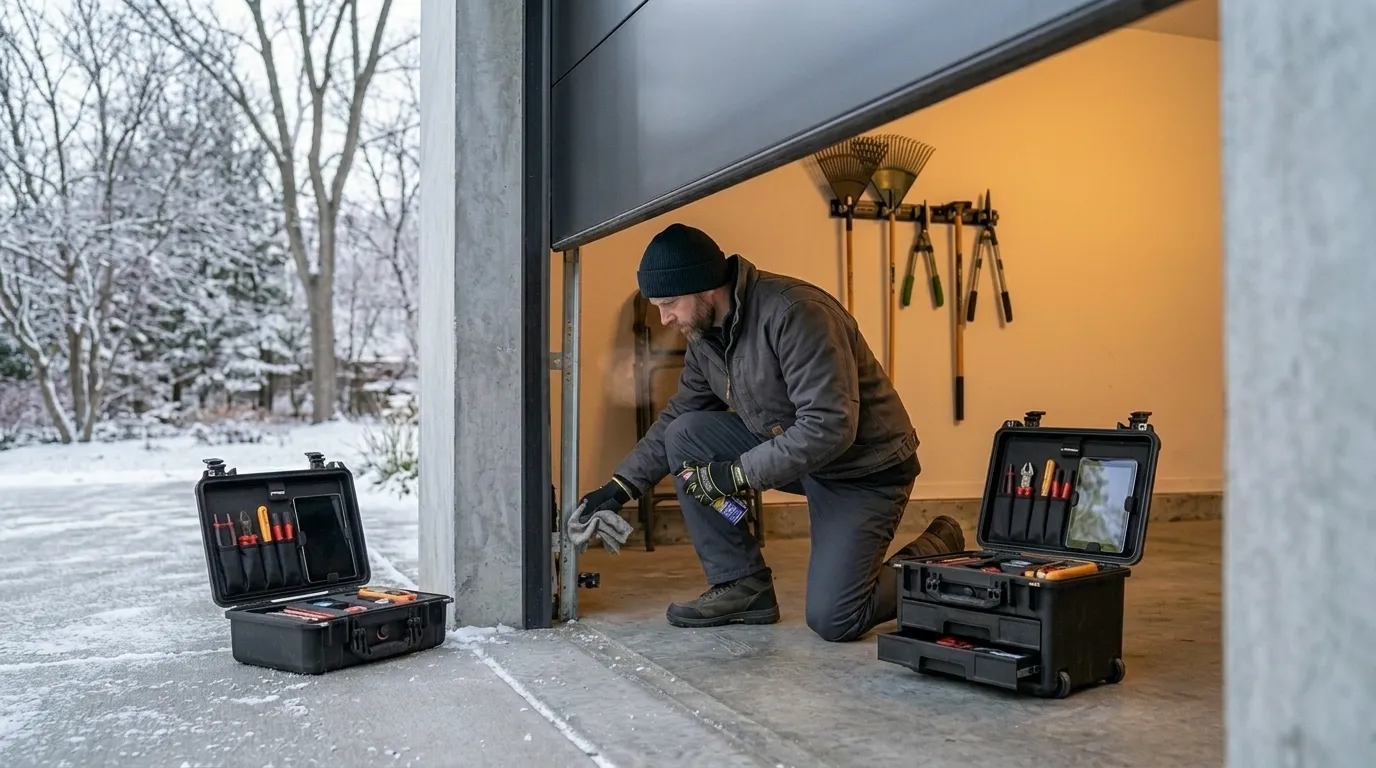
On-site diagnosis - Philadelphia garage door service

On-site diagnosis

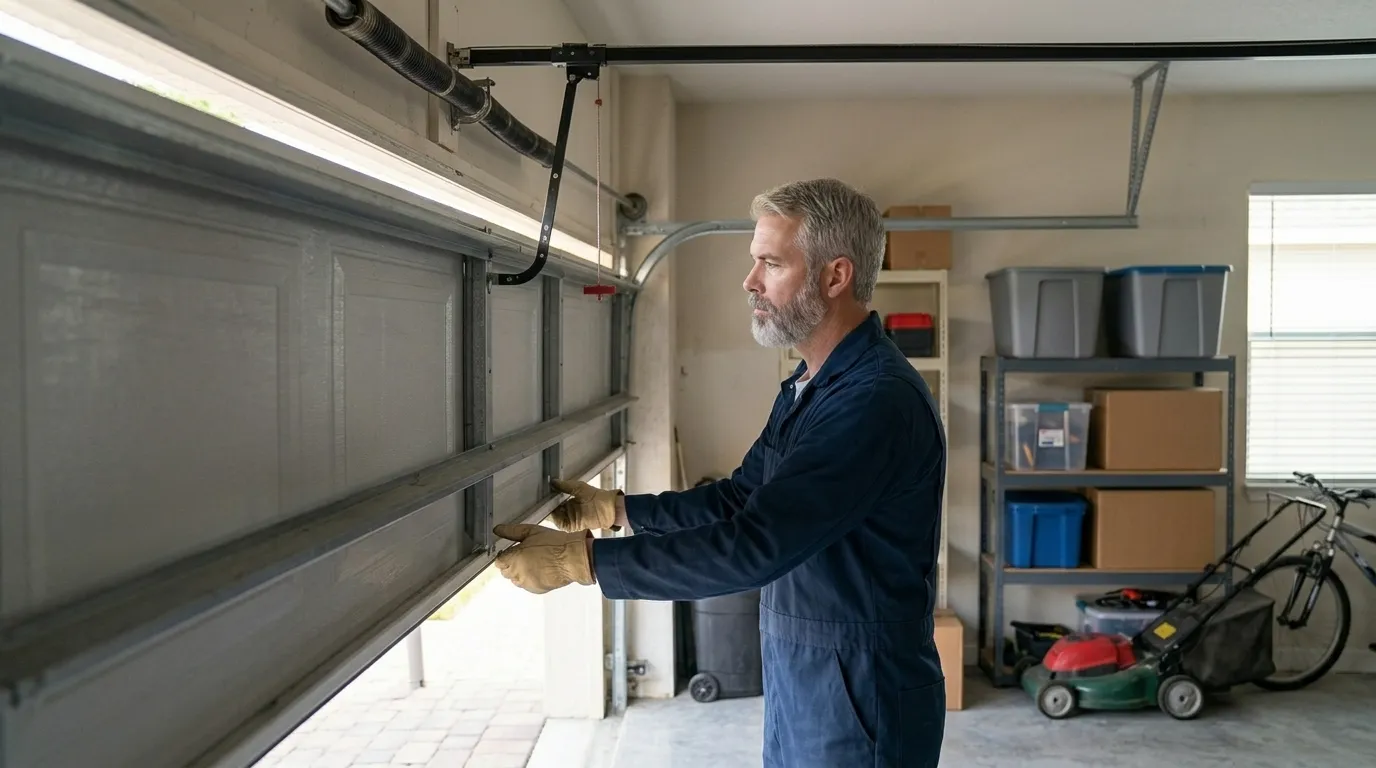
A technician tests the door under power and by hand and finds what actually failed.

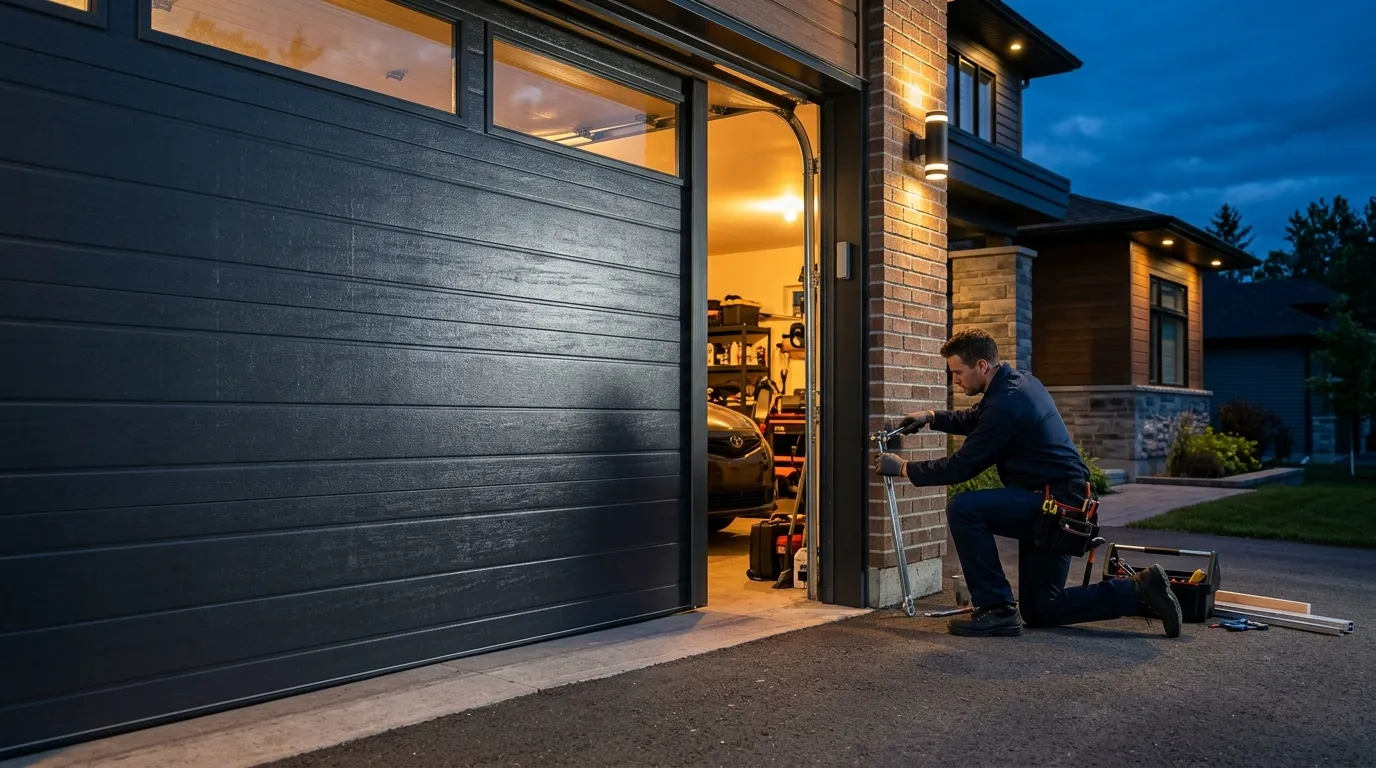
Clear, up-front plan - Philadelphia garage door service

Clear, up-front plan

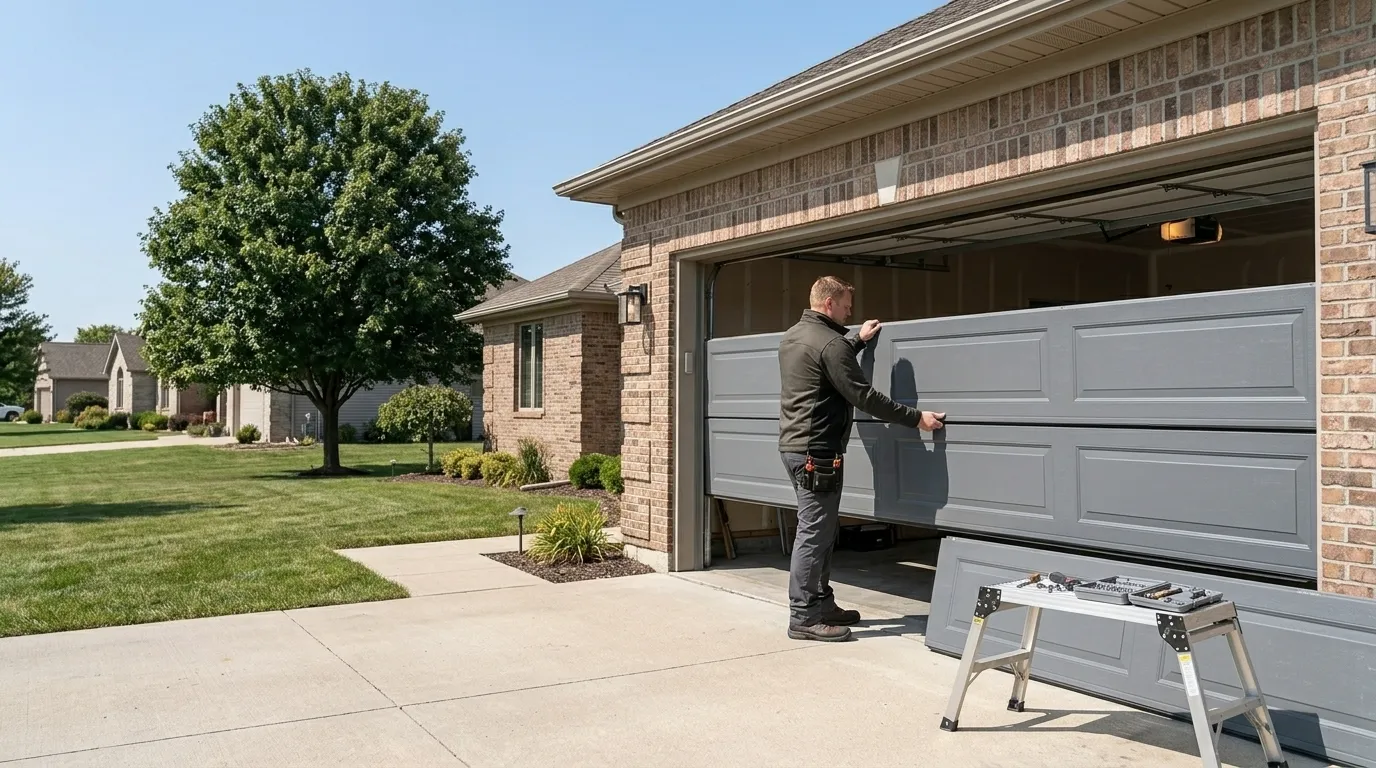
You get the fix that’s needed and what drives the cost - before any work starts.

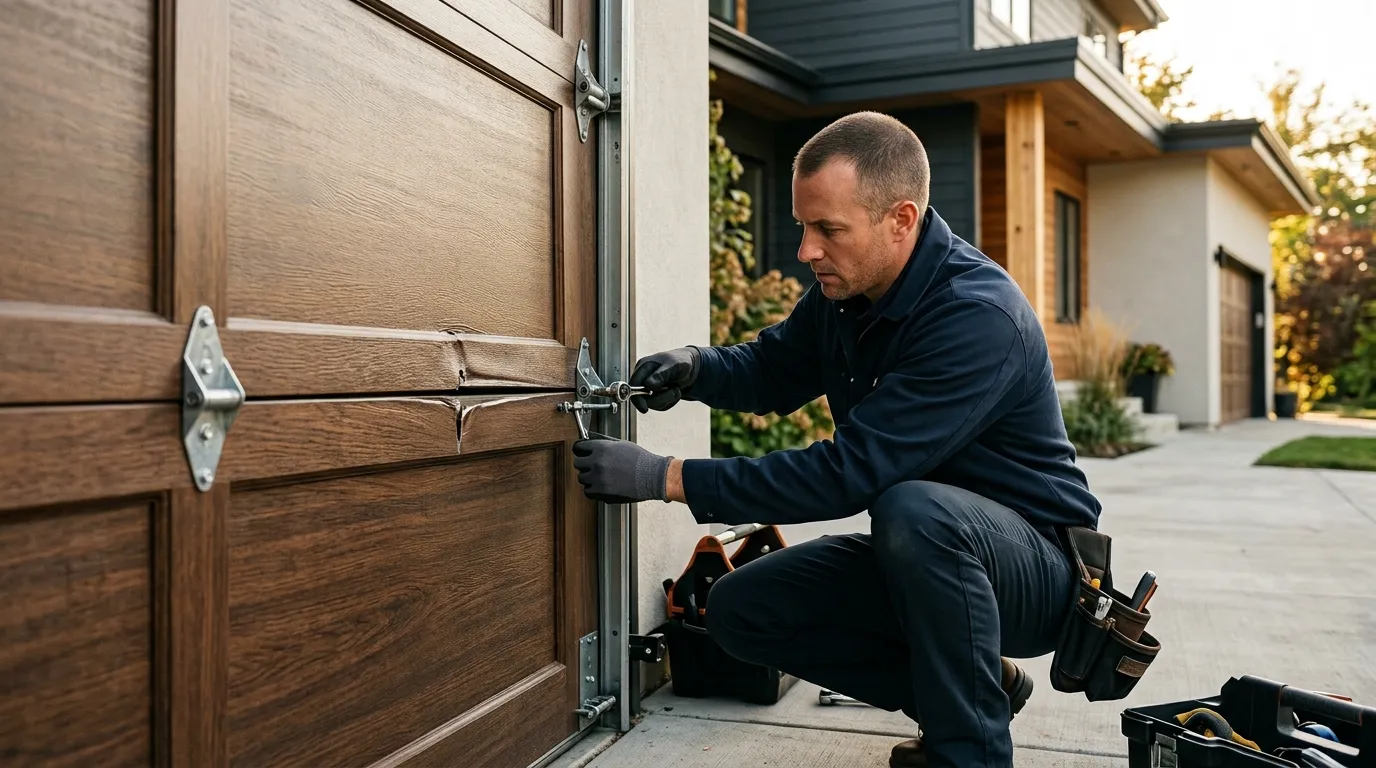
Repaired & tested - Philadelphia garage door service

Repaired & tested

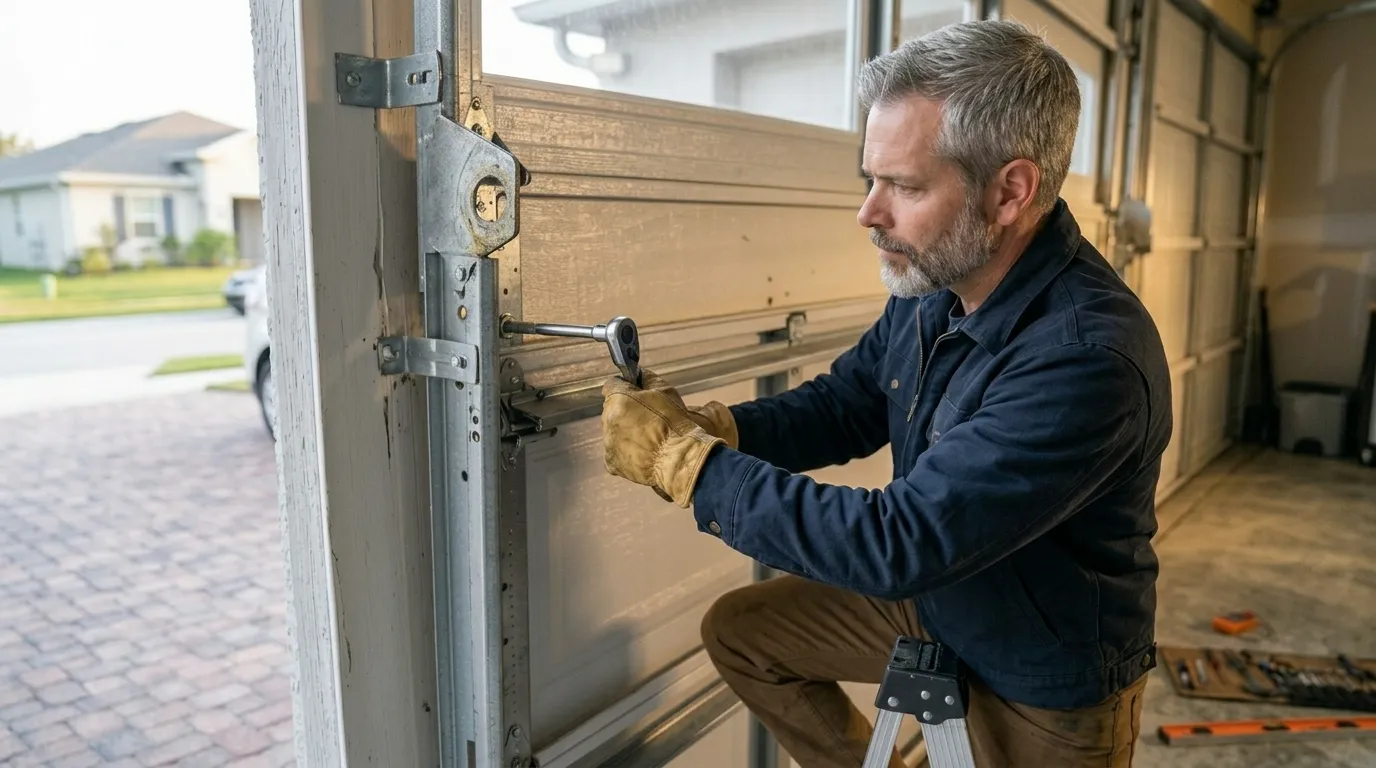
The repair is done, the door is set true and tested, and the work area left clean.

Serving Philadelphia, PA - tell us what your door’s doing and we’ll take it from there.

How we work

What to expect

Diagnosis first

Every visit starts by finding what actually failed - not a pre-written parts list.

The right part for the door

Springs and openers matched to the door’s weight and age, so the fix holds up.

Straight answers

When a repair makes more sense than a replacement - or the reverse - you hear it plainly.

Clean, careful work

Tension released safely, hardware set true, the door tested under power before we leave.

1,573,916Residents in Philadelphia
8Garage door services
7Neighborhoods & suburbs
PAServing Philadelphia, PA
Questions

Frequently asked

Straight answers about garage door repair in Philadelphia. Still unsure? Ask us directly.

Is my garage door original to my house if it was built around 1948?

It's possible, especially if the opener and hardware look older or mismatched from what's sold today. Drexel Hill's housing stock centers on a 1948 median build year, and original torsion springs and track from that era often haven't been touched since installation. If you're not sure, a technician can check the hardware sizing and wear pattern to tell you.

Why does my spring keep failing faster than my neighbor's newer house?

Age and climate combine against older hardware. This area sits in a cold, severe winter climate band, and repeated freeze-thaw cycling shortens spring life faster than it would in a milder region. A spring on a house built in the late 1940s has usually seen far more winters than one on a house from the 1980s or 90s.

Do you keep a branch in Drexel Hill?

No, jobs here are covered from Philadelphia rather than a local branch. We carry parts sized for this area's older housing stock on the truck, including hardware common to 1940s-era doors, so most jobs don't require a separate parts trip.

Will a repair fix the drafty feel of an old garage door?

Not on its own. Many doors from this era predate current insulation and sealing standards, so a mechanical repair can leave the door working smoothly but still cold. That's a separate conversation from the repair, and we'll flag it rather than fold it into the fix you called about.

Ready to get your garage door sorted?

Tell us what it’s doing and where you are in Philadelphia - we’ll take it from there.

Request a QuoteCall