Parts We Carry
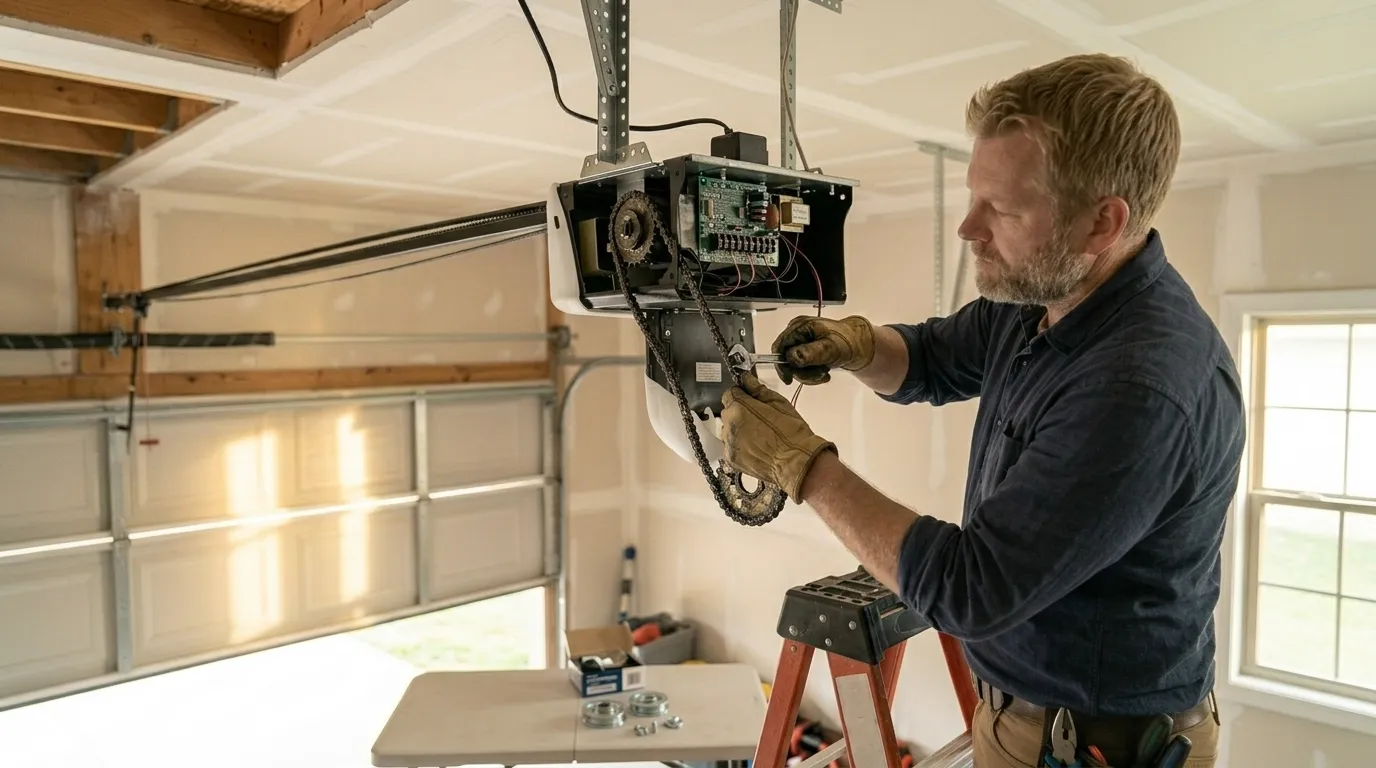
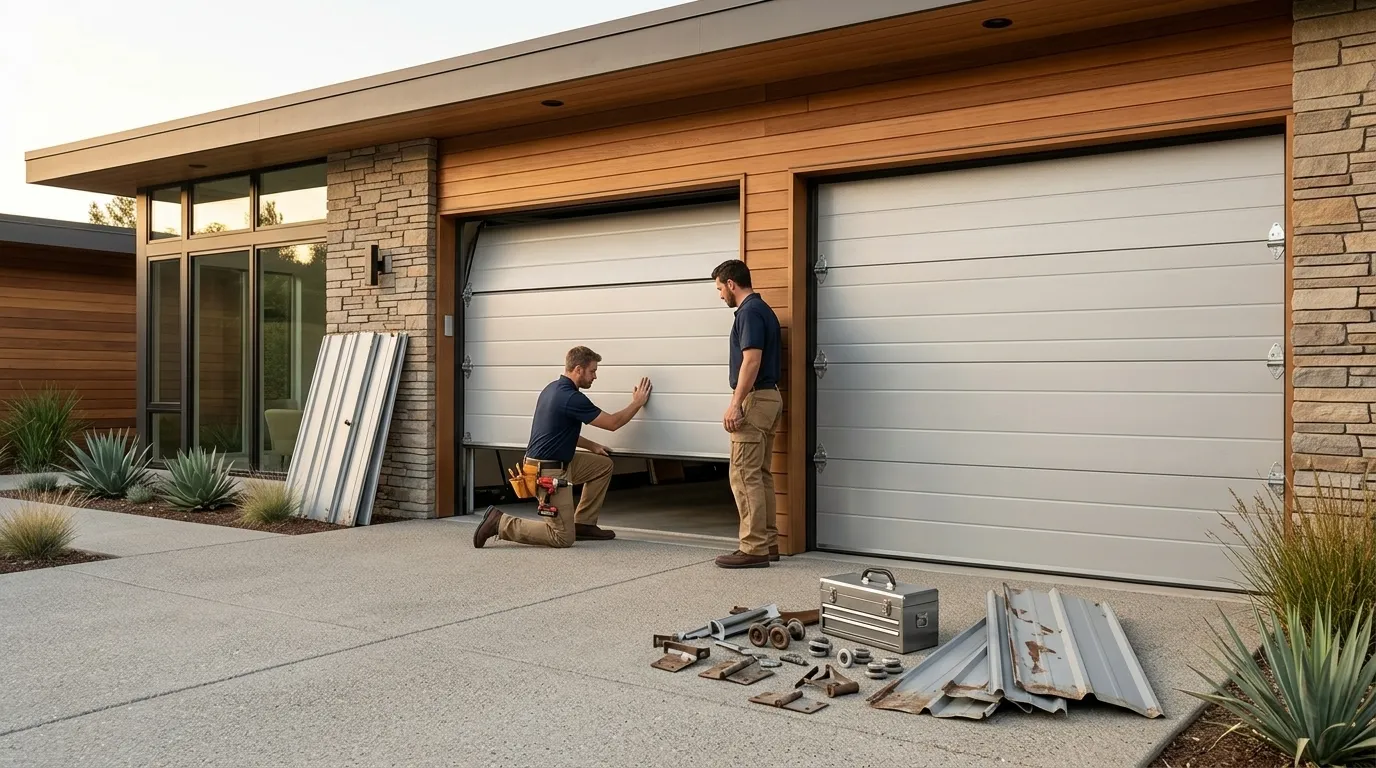
We carry the parts that fail most often on residential openers: drive belts and chains, sprockets, logic boards for common chain and belt-drive models, wall consoles, remotes, and photo-eye sensor pairs. Circuit boards and capacitors for screw-drive units are stocked for the models we see most in this part of the service area.
What we don't stock on the truck: obsolete motor units for openers no longer manufactured, and proprietary boards for a handful of older screw-drive brands that stopped production years ago. On a house with an opener that old, replacement usually costs less than sourcing a part that may take weeks to arrive - we'll tell you straight if that's where you land rather than order a part you'll wait on.
The Symptom
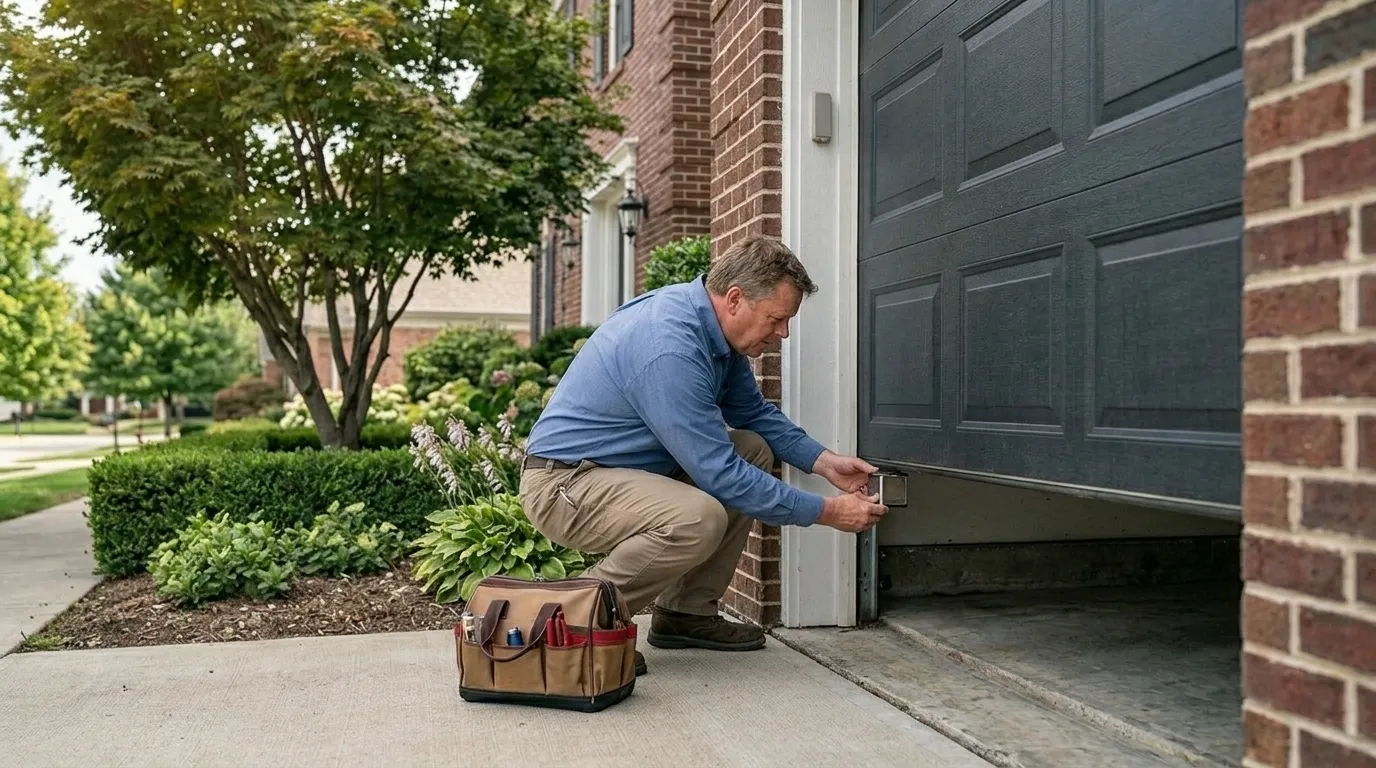
The calls from Drexel Hill split into a few repeat patterns. The opener runs, the light comes on, but the door doesn't lift - usually a stripped nylon gear or a snapped belt/chain, both wear parts on any opener regardless of age. The door opens partway then reverses - almost always the photo-eye sensors, either out of alignment or blocked, common in garages where storage has crept toward the door track.
The third pattern is specific to the housing stock here: openers original to a 1970s or 1980s retrofit, installed decades after the house itself went up in the late 1940s, finally failing after years of service. These units often have a chain drive on a rail that doesn't match anything currently sold, and a logic board that's the actual point of failure - not the motor.
Why It Happens Here
Drexel Hill's houses mostly went up around 1948 - a decade or so ahead of the median build year across the rest of the service area, which runs closer to 1957. That earlier build date matters for openers specifically: garages here were more often added or retrofitted after the original construction, which means brackets, header clearance, and door weight weren't always matched to the opener that eventually got installed. An opener rated for a lighter door working overtime on a heavier one wears out its gear and belt faster than it should.
The region also sits in a cold, severe climate band, and cold matters to openers less through the motor and more through the door it's lifting - springs stiffen, panels get heavier to pull, and an opener already working near its limit on a mismatched door starts showing strain in the coldest months first.
What the Fix Involves
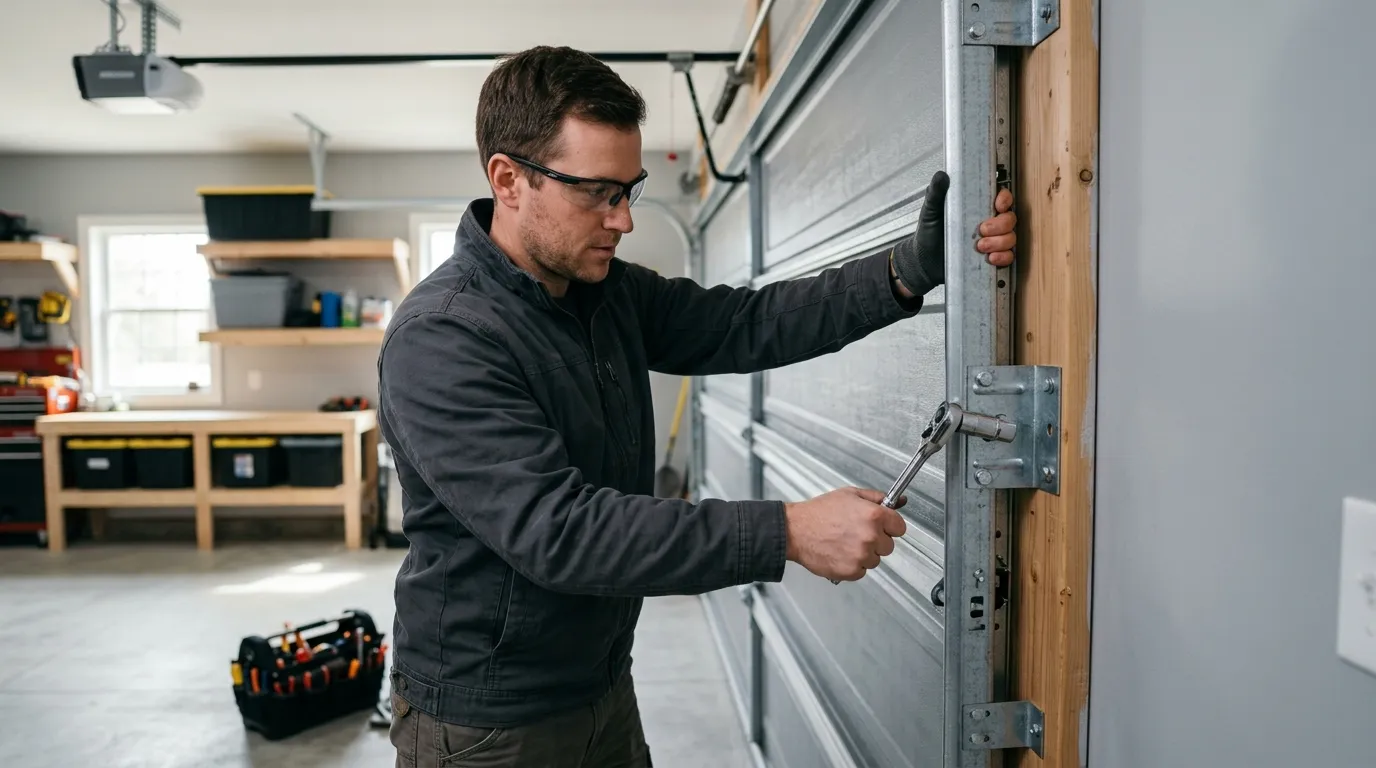
Most opener calls start with pulling the model plate off the motor head - that tells us whether we're dealing with a chain, belt, or screw drive, and whether parts are stocked or need ordering. From there it's usually one of three things: a belt or chain replacement, a logic board swap, or a full sensor realignment and travel-limit reset.
If the opener is original to a 1970s or 1980s retrofit and the board has failed, we'll walk you through the honest math - a new logic board for an obsolete unit can run close to what a new opener costs installed. We won't push a repair that doesn't make financial sense just to avoid saying replacement is the better call.