Parts We Carry
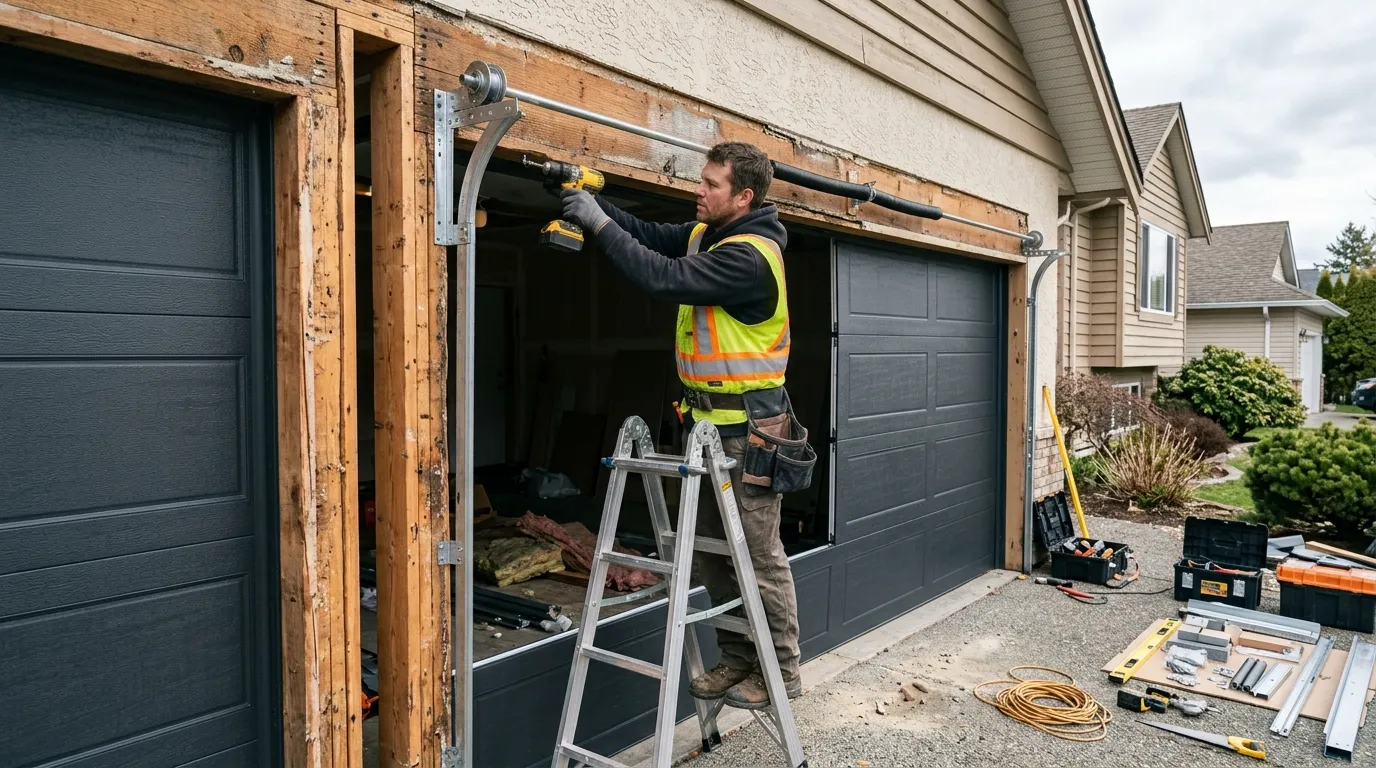
For a neighborhood built mostly in the late 1940s, the parts that fail most are torsion springs sized for the lighter wood doors common to that era, the drums and cables that ride them, and the extension-spring brackets used on some of the detached garages built alongside these houses.
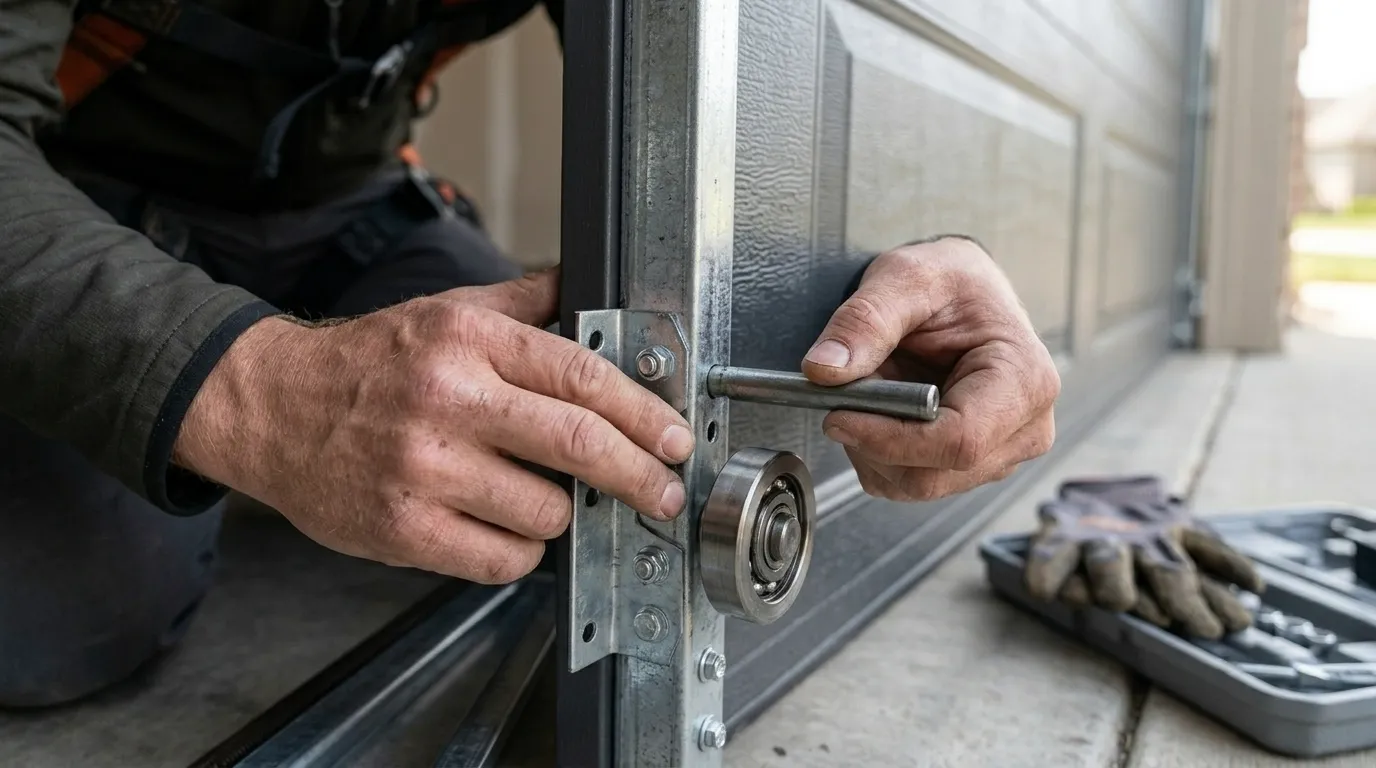
We carry standard torsion springs in the wire sizes that fit these older 7- and 8-foot single doors, along with galvanized lift cable, nylon and steel rollers, and center and end bearing plates. Openers are mostly a stocked-unit swap rather than a repair once the drive gear or capacitor goes - we don't try to rebuild a fifteen-year-old chain-drive unit when a new one costs less than the labor to fix the old one.
What we don't carry on the truck: custom wood panel replacements for doors with a discontinued profile. If a single panel on an older wood door is cracked, we can source a match, but that's an order, not a same-visit fix. We'll tell you that up front rather than have you wait on a truck that can't finish the job.
The Symptom
The call we get most from this area is a door that's suddenly heavy - it was fine yesterday, and this morning either it won't lift past a foot or the opener strains and reverses itself. That's almost always a broken torsion spring, and on a single-car door original to a 1948-built house, it's a spring sized differently than what you'd find on a newer double door.
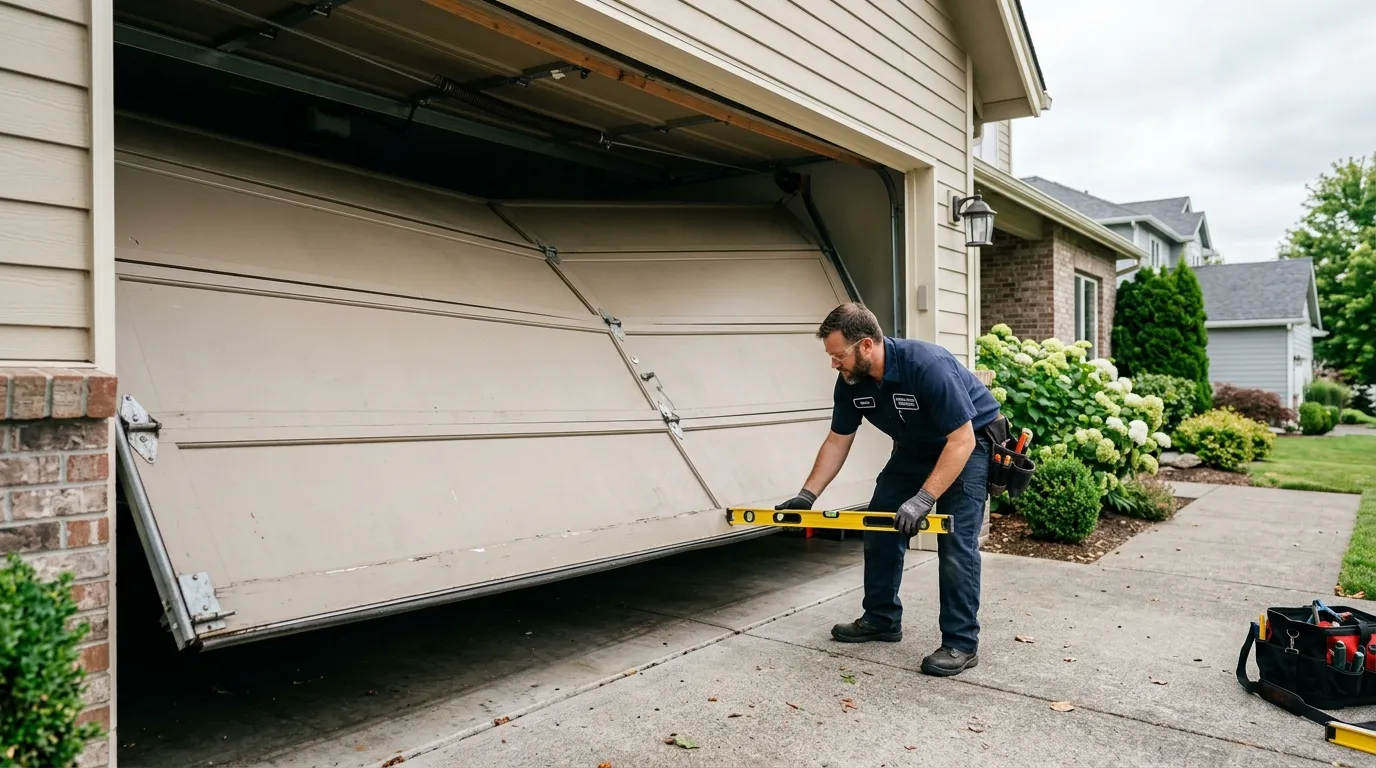
The second most common call is a door that lifts unevenly, one side higher than the other, which points to a cable that's frayed or jumped the drum rather than the spring itself. Less common but not rare: an opener that runs but the door doesn't move at all, which usually means the drive gear inside the unit has stripped, not the door.
We ask a few questions on the phone before the truck rolls - whether the door is single or double, whether it's original hardware, and roughly how old the opener is - because a house built in 1948 is more likely to still have an older torsion setup that needs a specific spring size, not a universal one off the shelf.
Why It Happens Here
Cold winters put steady stress on torsion springs regardless of the town, but a spring that's been in service since a house's last major renovation - which in this area often means decades, given the 1948 median build year - has had that many more freeze-thaw cycles to fatigue the coil. Metal doesn't fail on a schedule; it fails when the cycles catch up to the wear, and older installs have simply logged more cycles.
Homes here also skew toward single-car garages built to the standards of their decade, which means original openings and hardware sized for doors lighter than what's sold today. When a homeowner replaces just the door and keeps the old opener, or replaces the opener and keeps the old track, the mismatch shows up as noise, uneven lift, or premature spring failure years before it should happen.
We don't chase every squeak as an emergency. A door that's noisy but tracking straight and closing all the way usually just needs lubrication and a roller check, not a spring replacement.
What the Fix Involves
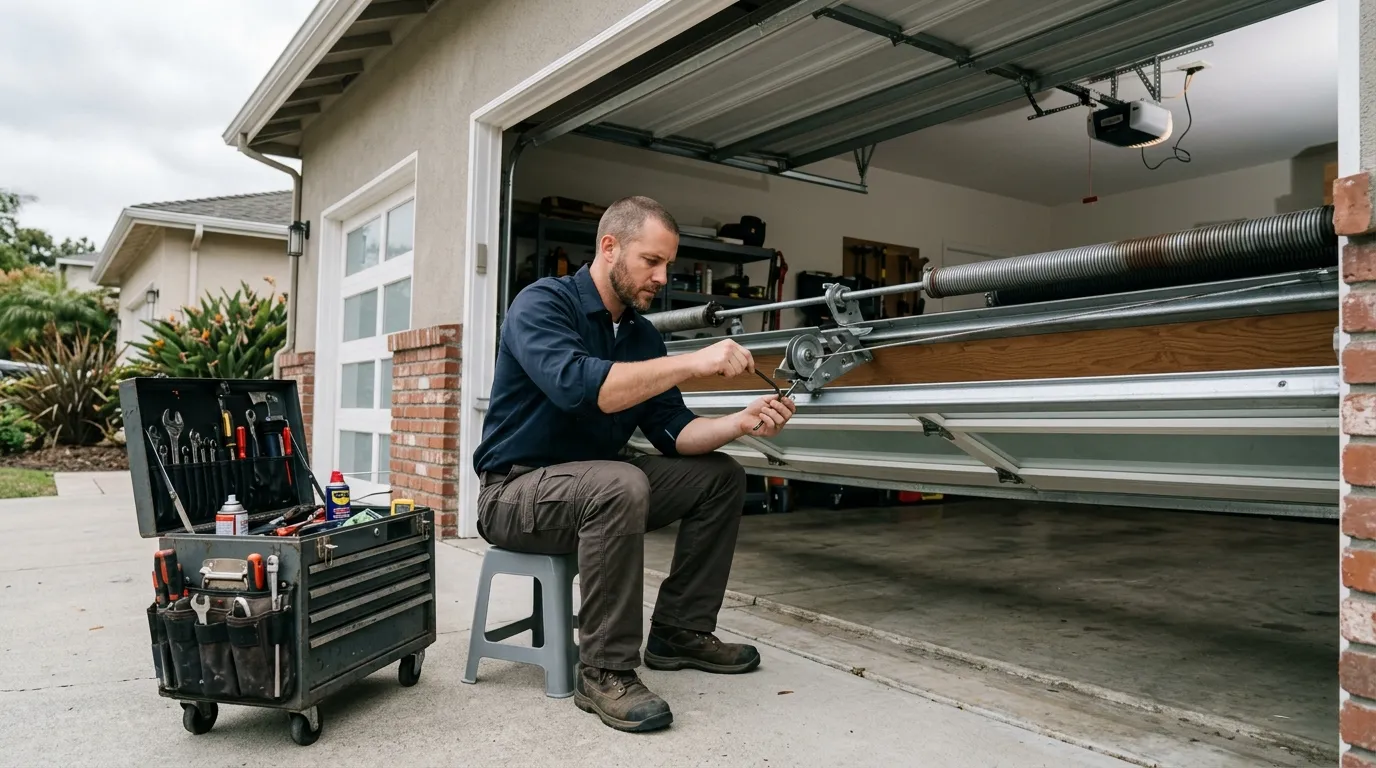
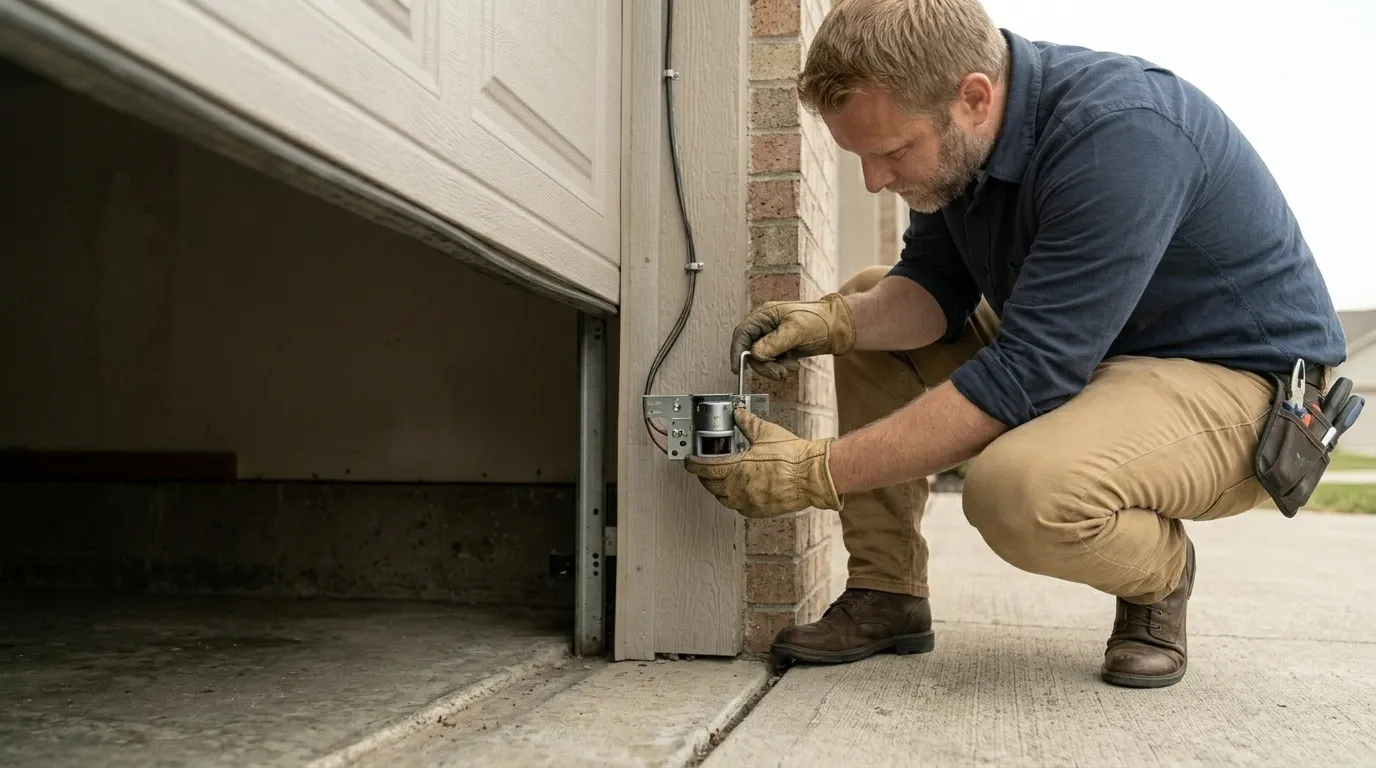
For a broken torsion spring, the job is: unwind and remove the old spring under controlled tension, measure the drum and shaft to confirm the replacement spring matches the door's weight and wind direction, install and wind the new spring to the correct number of turns, then test the door's balance by hand before handing the opener back the load. On a door with mismatched hardware from a past repair, we address that mismatch first - there's no point setting a new spring against a drum that doesn't fit it.
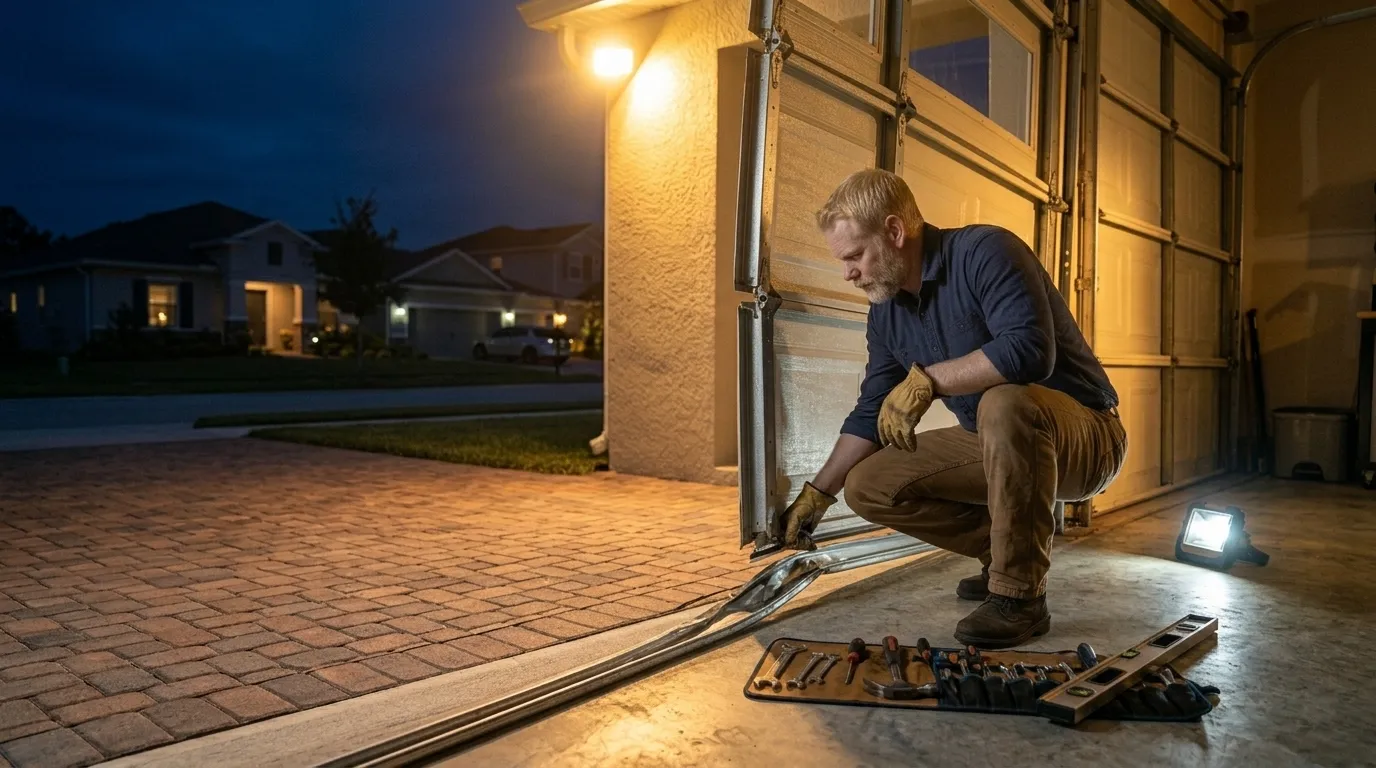
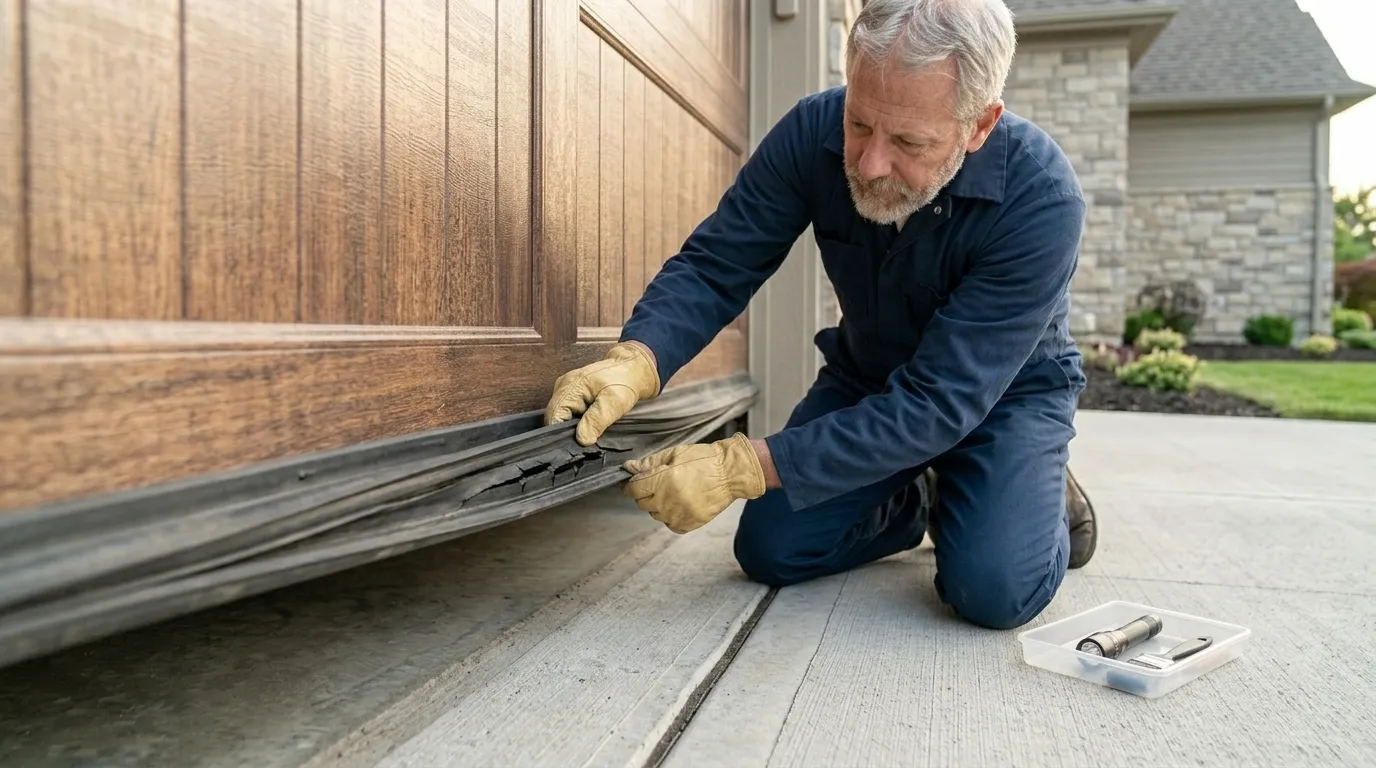
For a cable or roller failure, it's a more contained job: replace the cable, check the drum for wear grooves, swap any rollers that are cracked or flat-spotted, and re-tension.
We carry standard sizes on the truck for same-visit repair in most cases. If the door needs a discontinued panel or a track width that doesn't match anything we stock, we'll say so and give you a timeline rather than force a part that's close but not right. That's the one thing we won't do - fit a part that's almost right just to finish faster.