The Complications
A house built in 1956 was built for the door that shipped with it, not for what's sold today. Original openings on Levittown's postwar stock were sized for lighter panels - wood or thin steel, no insulation - and the torsion or extension hardware on the wall was matched to that weight. Drop in a heavier insulated steel door without checking the spring rating and you get a door that slams down hard or an opener straining every cycle, which burns out the motor faster than it should.
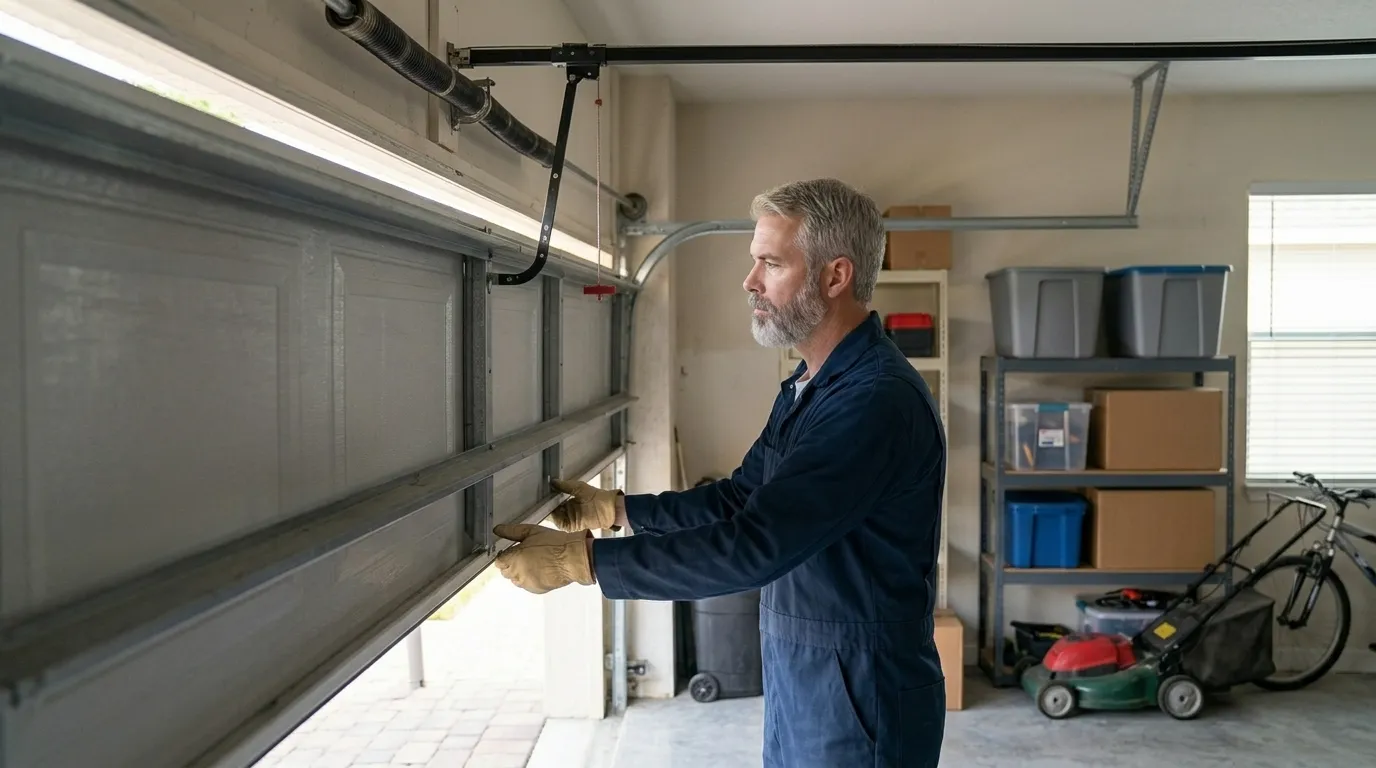
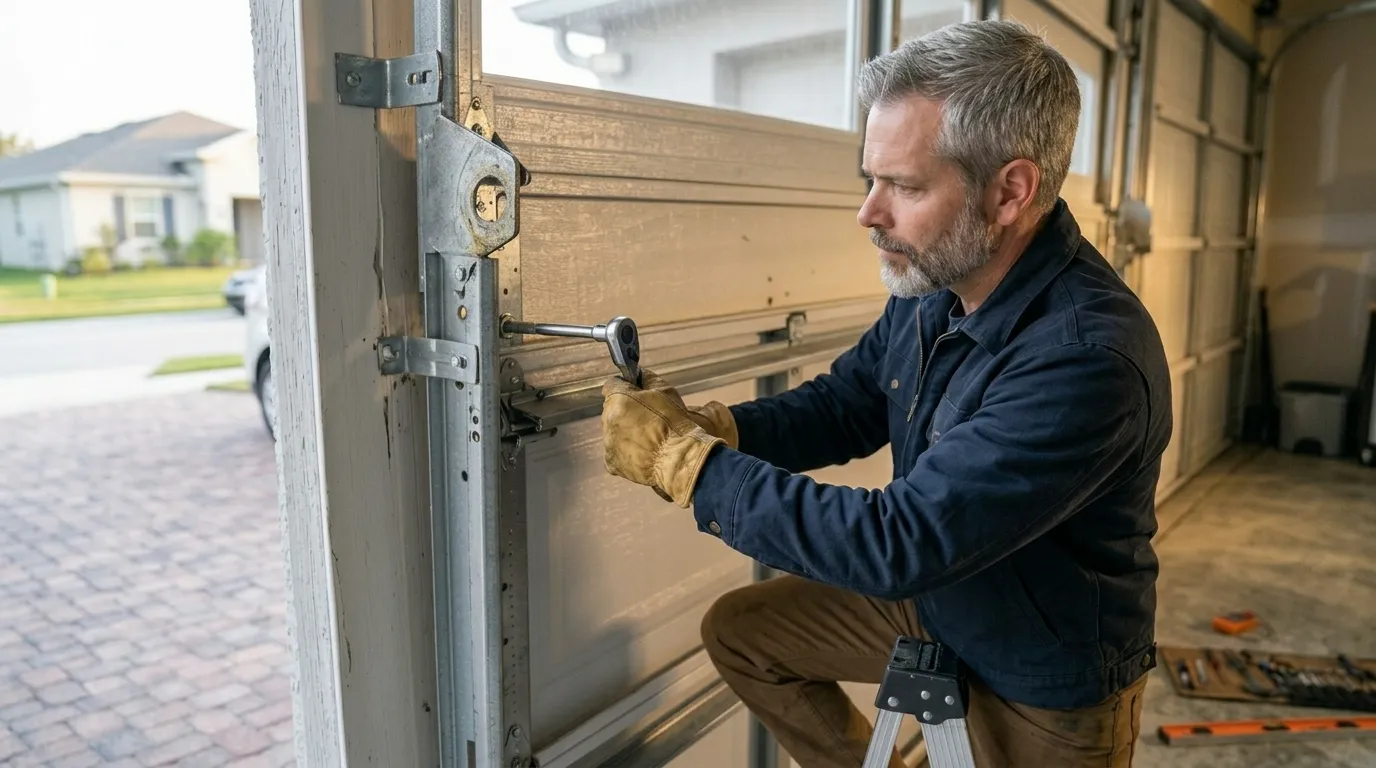
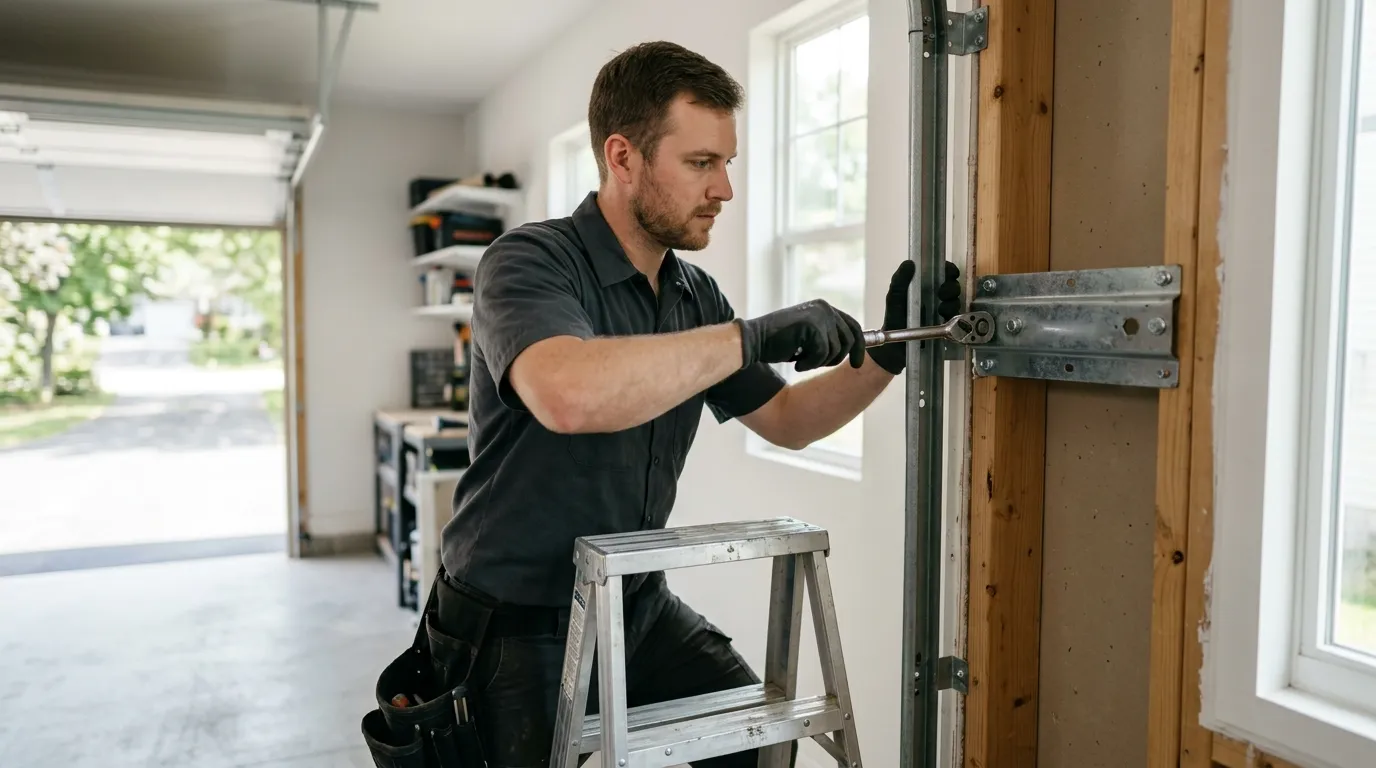
Seventy years of winters add to it. This area sits in a cold-climate band, and metal track and hardware that's flexed through that many freeze-thaw cycles doesn't move the way it did when it was new. Rollers seize, hinges crack, and cables that look fine can be down to a few strands. None of that shows up until the door is under load - which is exactly when you don't want a failure. On these older houses we also run into openings that were never squared up right to begin with, so a straightforward spring swap sometimes turns into an afternoon of shimming track before the door will travel straight.
How Long It Takes
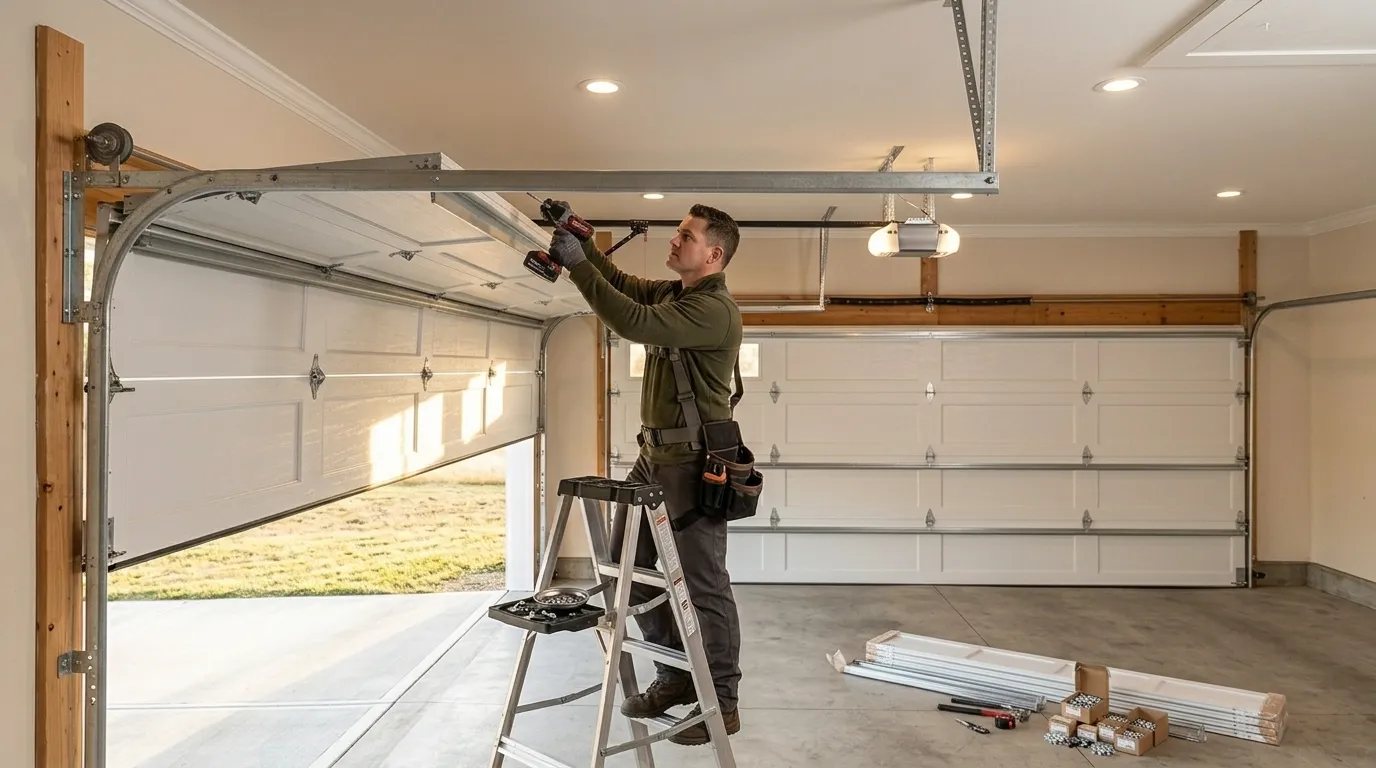
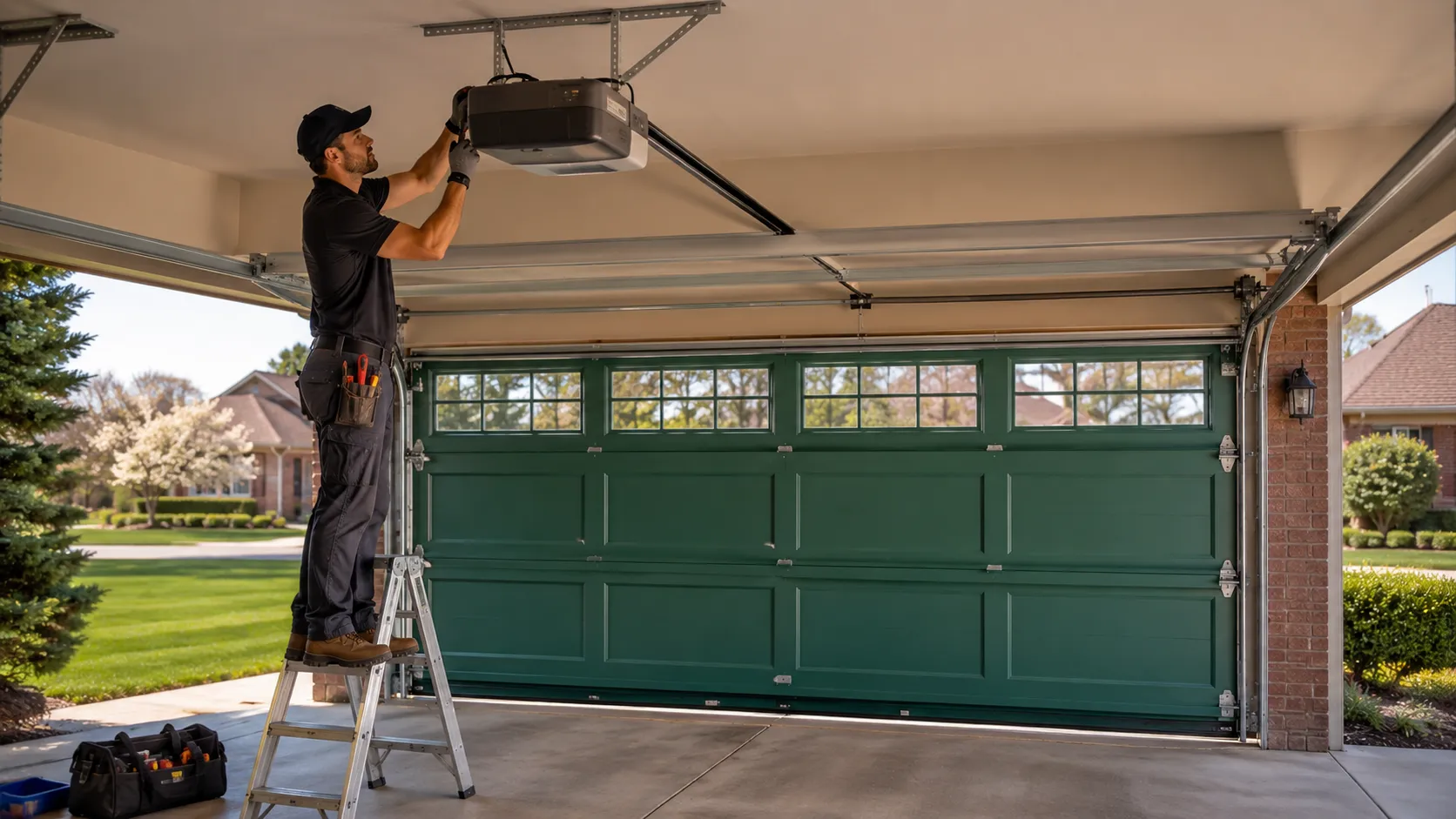
A spring replacement or cable job on a single door is usually a same-visit repair once the technician is on site with the right parts - most of what fails on a house this age is a known part, not a custom order. Where the timeline stretches is parts availability: hardware built to fit a 1950s opening isn't always something a supplier carries on the truck, and a discontinued panel size can mean a short wait for a special order rather than a same-day fix.
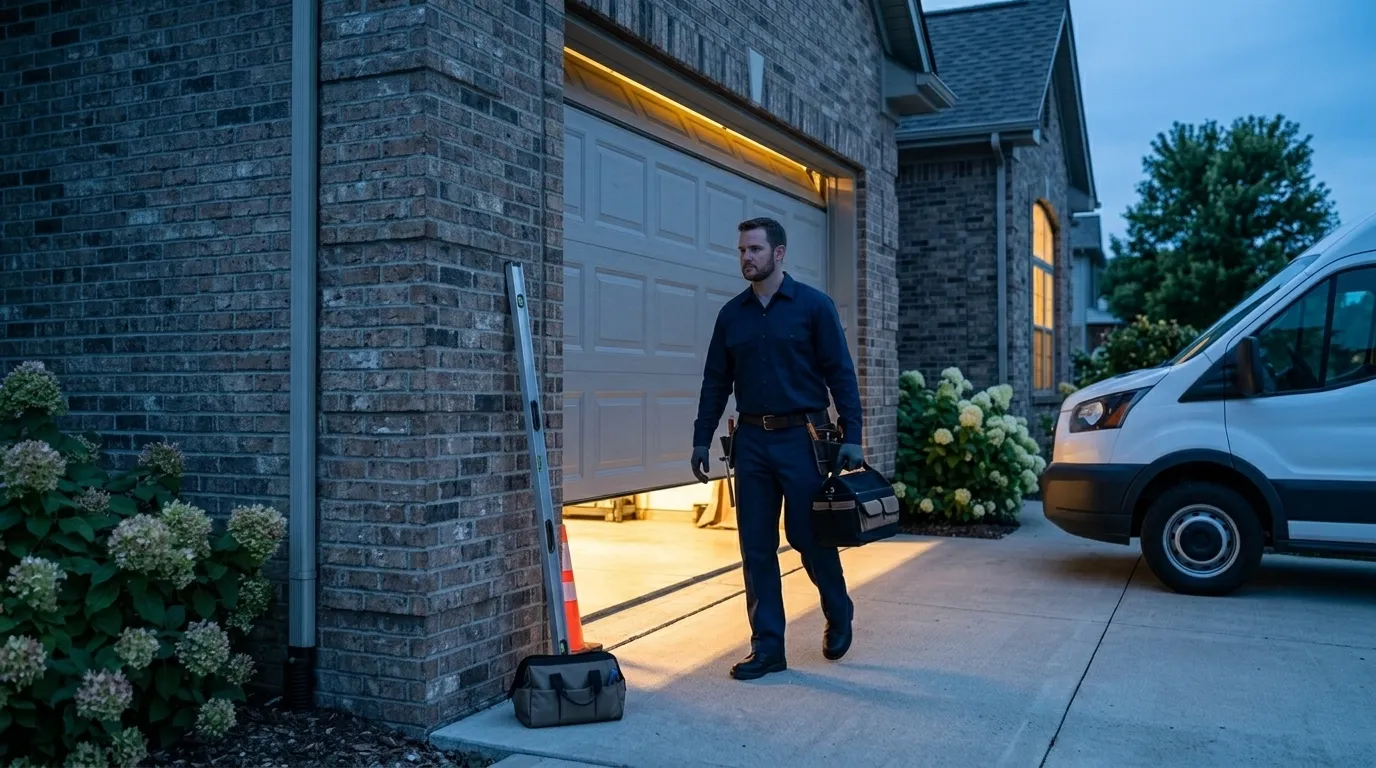
We cover Levittown from Philadelphia, about 18 miles out, so a job here means factoring drive time into the appointment window the same way any trip that distance would. That's not a local complication so much as a scheduling one - worth mentioning because it's part of what to expect when you book, rather than something that shows up as a surprise on the invoice.
Can You Do This Yourself
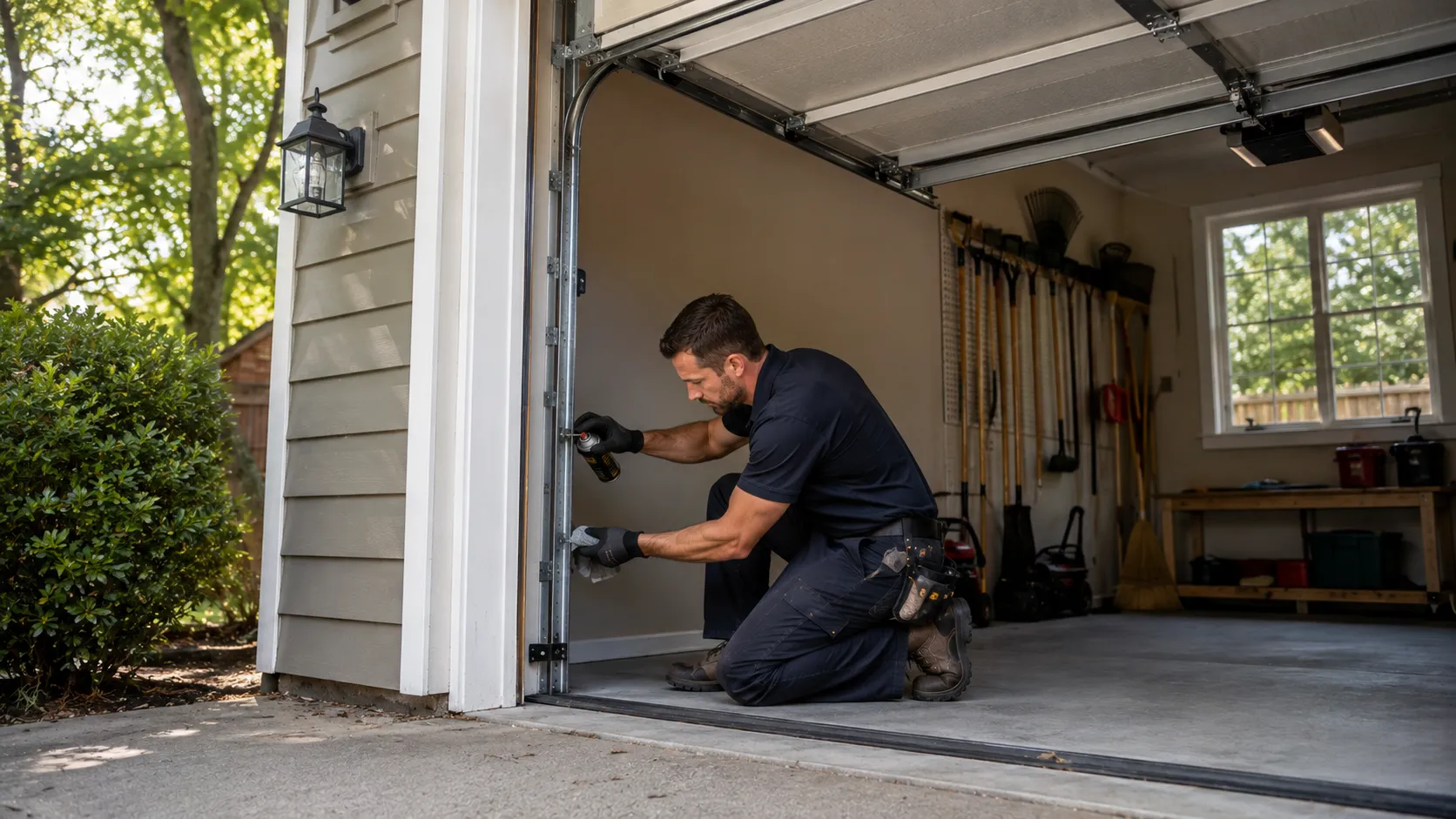
A loose bracket, a dirty track, or a sensor that needs realigning - those are reasonable weekend jobs if you're comfortable with a ladder and a screwdriver. A broken torsion spring is not. The spring on a standard door holds enough stored tension to break bones or worse if it lets go while you're working near it, and that risk doesn't go down because the house is older or the door looks small.
Here's the honest limit on our side: if a part for an original 1950s-era door has been out of production for decades and no supplier stocks a match, repair isn't always possible, and replacement becomes the only real option regardless of what the homeowner would prefer to spend. We'll tell you that up front rather than stringing a repair along on parts that won't hold.