Serving Philadelphia, PA & nearby
(267) 430-8692
Philadelphia, PA

New Garage Door Installation for Levittown's Postwar Tract Houses

Levittown's houses went up fast between 1952 and 1958, so the openings are more uniform than Philadelphia's. See what that means for a new door installed here.

New Garage Door Installation for Levittown's Postwar Tract Houses
Philadelphia, PA
8 services
7 service areas
Diagnosis first, then the fix

The Symptom

In Philadelphia proper, the housing stock runs from 1938 all the way to 1994, so no two blocks have quite the same garage opening or hardware. Levittown is a different animal. The tract houses here went up in a tight window, and the local median build year sits at 1956 - decades tighter than the citywide spread. That means when a homeowner calls about a door that's rattling loose on its track, sagging at one corner, or simply too heavy to lift by hand anymore, the fix usually isn't a mystery. The garages were framed to a handful of standard widths, and the original doors and openers were installed in a short burst of construction, so a lot of them are wearing out around the same age, on the same hardware, at the same time as the neighbor's.

That uniformity cuts both ways. It makes sourcing a same-size replacement panel or track more predictable than it would be in a city block full of one-off additions and altered openings. But it also means if your door's springs or track are original to a 1956 build, they've had close to seventy years of cold-weather cycling, and there's a good chance the opening itself has settled slightly out of square over that time - something we check before quoting a new install, not after.

The Complications

The service area runs cold-winter climate conditions, and that matters more for a new install than most people expect. A door that isn't sized and weighted right for the opening will bind in freezing temperatures as the track contracts, then bind again in summer heat as it expands. On houses built to Levittown's era, we're also watching for openings framed slightly undersized by today's standard door widths - not every original opening matches a modern 16-foot double exactly, and forcing a stock size into a non-stock opening is how you get a door that never seals flush at the bottom.

The other complication is electrical. A lot of these houses were wired for a single garage circuit decades before openers needed a dedicated outlet, a safety-reversal sensor pair, and sometimes a battery backup. We won't run new circuit work ourselves, but we'll tell you plainly if your panel or outlet needs an electrician before we hang the opener, rather than installing around a shortcut that fails a home inspection later.

How Long It Takes

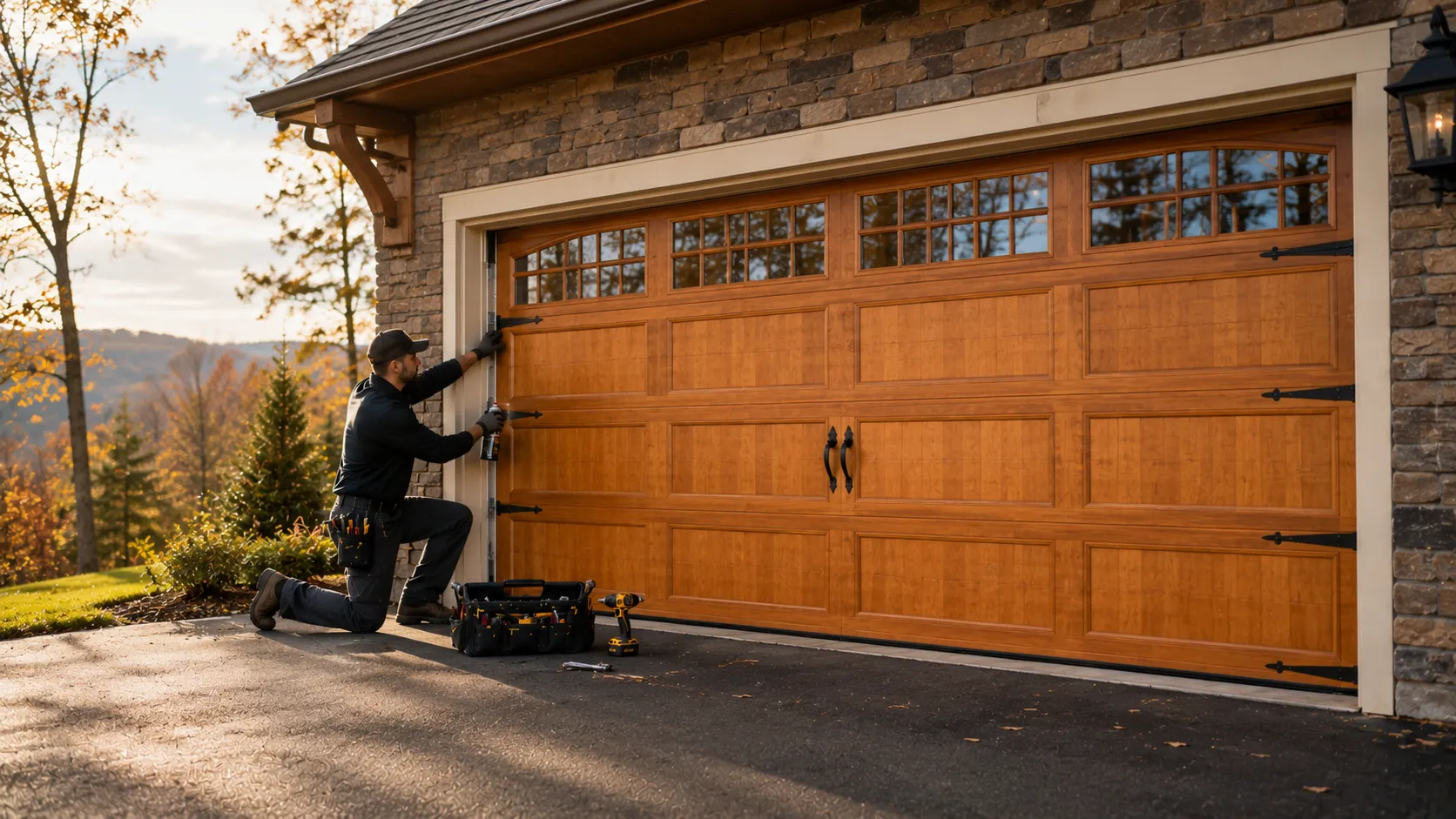
A straight swap - matching size, matching mount, no reframing - is a same-visit job. Where it stretches out is when the opening needs correction: shimming a settled frame, replacing rotted jamb wood on an original 1956-era frame, or swapping a non-standard track configuration for one that takes a modern door. None of that is a Levittown-specific delay so much as an age-of-house delay, and it's more common here than in newer construction because so much of the stock is original-frame.

We travel out to Levittown from Philadelphia, about 18 miles each way, so scheduling accounts for that drive rather than a same-day walk-in. We'll give you a real window once we've seen the opening, not a generic estimate.

What the Fix Involves

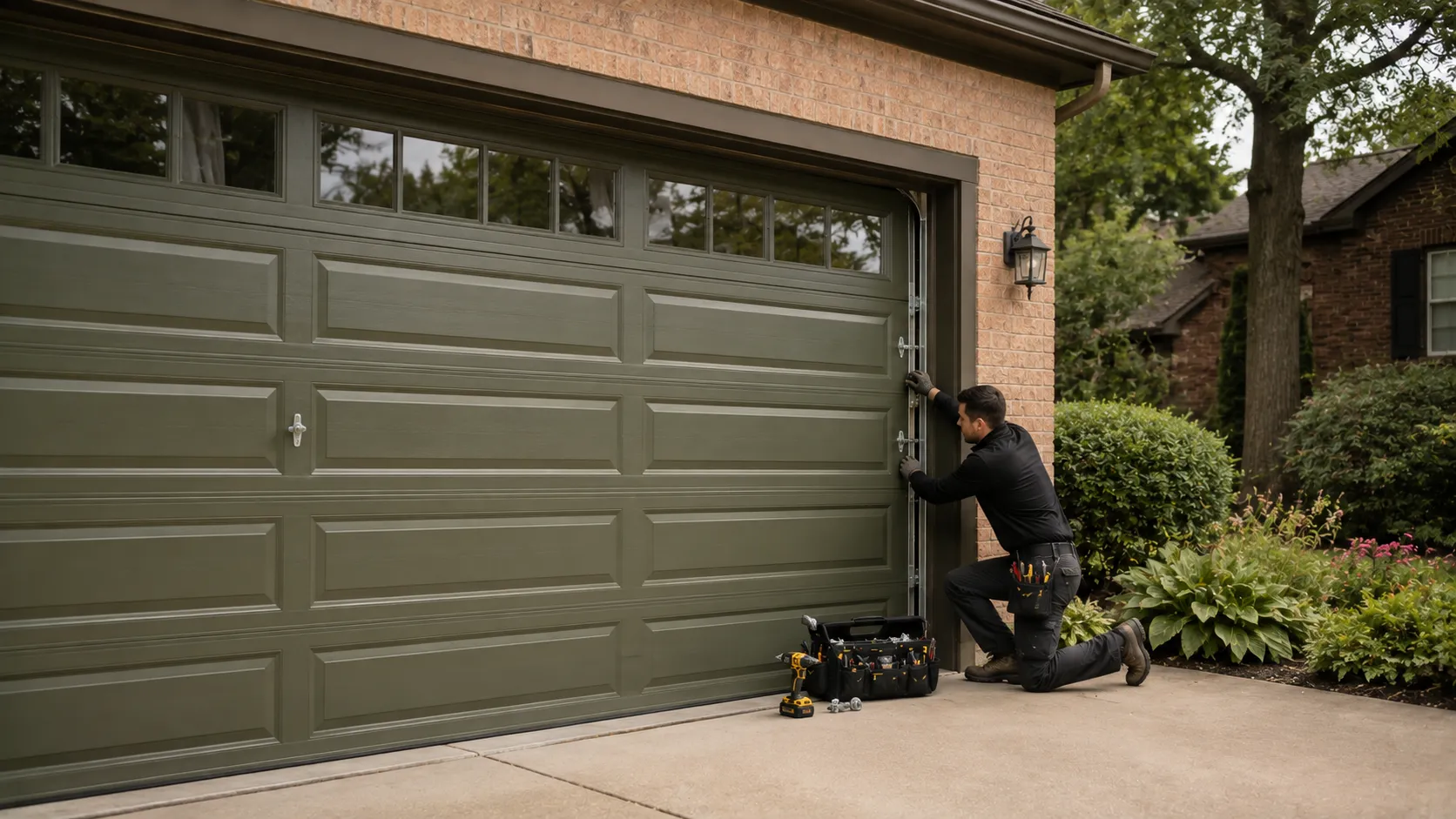
For most houses in this part of the county, a new installation means pulling the old door and track, checking the framing for square and rot, and setting a properly sized torsion spring system rated for the door's actual weight - not a universal spring that's close enough. Given the cold-severe climate rating for this area, we spec hardware that tolerates the seasonal swing rather than the cheapest stock option, and we insulate the panel choice around what the garage is actually used for: storage versus a converted living space needs different R-values.

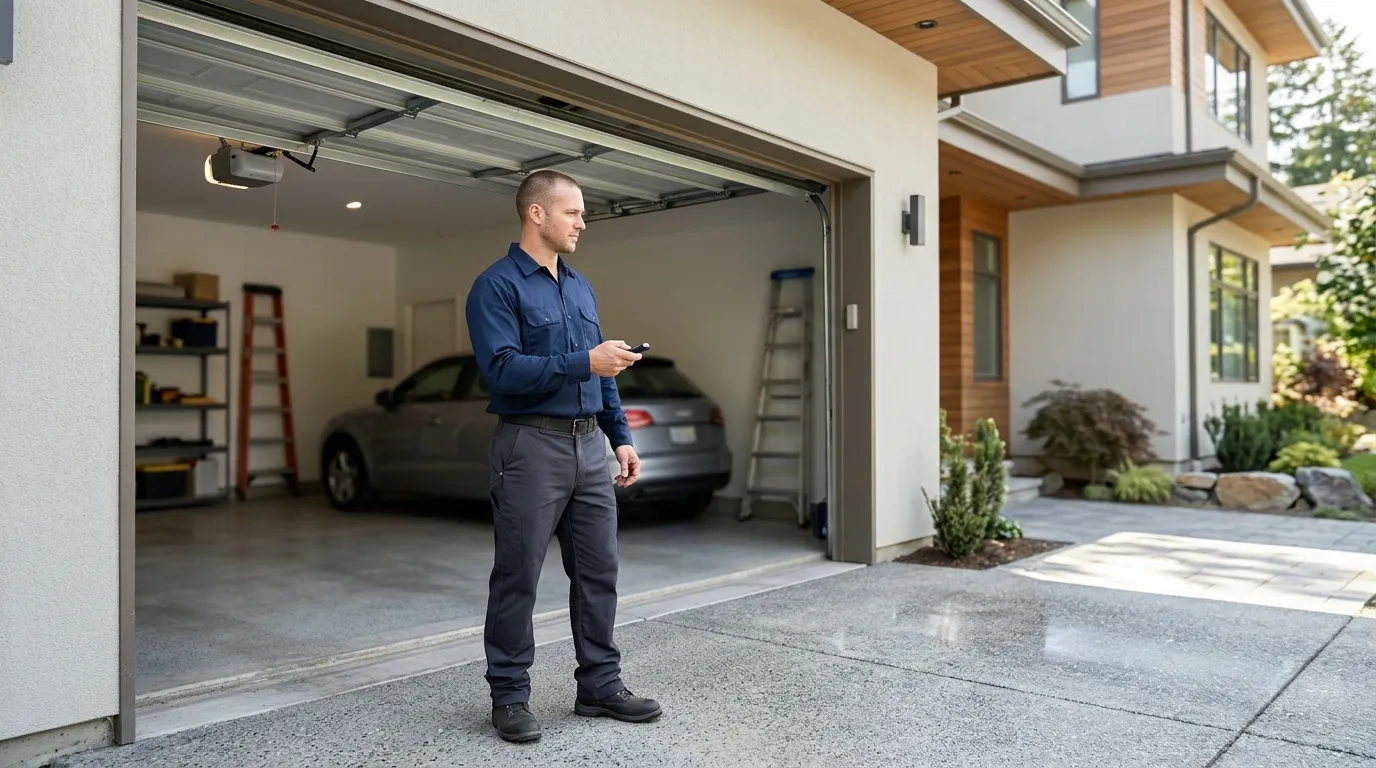
We also test the opener's force settings against the door once it's hung, not just out of the box. On original 1950s framing that's shifted even slightly over seventy years, factory defaults can pinch or fail to reverse properly, and that's a safety issue we won't leave unchecked.

Can You Do This Yourself

Some of this is doable if you're handy: swapping weatherstripping, tightening loose hardware, replacing rollers. A full door and spring installation is not something we'd recommend as a DIY project, particularly on a torsion system - the springs are under enough tension to cause serious injury, and getting the cable drums even a turn off balance will wreck a new door fast. If your opening is original to a 1950s frame and even slightly out of square, a stock door kit bought off a shelf may not fit without adjustments that aren't obvious until the door's already hung crooked. That's the point where a misjudged DIY install costs more to undo than it would have cost to do right the first time.
How it works

From “it’s stuck” to “it’s fixed”

Tell us what’s wrong - Philadelphia garage door service

Tell us what’s wrong

Describe the symptom - won’t open, loud bang, opener runs but the door won’t move.

On-site diagnosis - Philadelphia garage door service

On-site diagnosis

A technician tests the door under power and by hand and finds what actually failed.

Clear, up-front plan - Philadelphia garage door service

Clear, up-front plan

You get the fix that’s needed and what drives the cost - before any work starts.

Repaired & tested - Philadelphia garage door service

Repaired & tested

The repair is done, the door is set true and tested, and the work area left clean.

Serving Philadelphia, PA - tell us what your door’s doing and we’ll take it from there.

How we work

What to expect

Diagnosis first

Every visit starts by finding what actually failed - not a pre-written parts list.

The right part for the door

Springs and openers matched to the door’s weight and age, so the fix holds up.

Straight answers

When a repair makes more sense than a replacement - or the reverse - you hear it plainly.

Clean, careful work

Tension released safely, hardware set true, the door tested under power before we leave.

1,573,916Residents in Philadelphia
8Garage door services
7Neighborhoods & suburbs
PAServing Philadelphia, PA
Questions

Frequently asked

Straight answers about garage door repair in Philadelphia. Still unsure? Ask us directly.

Are Levittown garage openings a standard size?

Many are, since the houses went up in a short building period with a handful of repeated house plans. That said, some openings have settled or been altered over nearly seventy years, so we measure on site rather than assuming a stock size will drop straight in.

Do you have a branch in Levittown?

No. We're based in Philadelphia and drive out to Levittown, about 18 miles, for installs and repairs. That's factored into scheduling rather than promised as a same-hour response.

Will cold weather affect my new door?

This area sits in a cold-severe climate band, so we size springs, weatherstripping, and track tolerances for winter contraction and summer expansion rather than installing a door spec'd for a milder region.

My house is original to the 1950s build - does that change the install?

Often, yes. Original framing can be slightly out of square after decades of settling, and older electrical setups sometimes lack the dedicated circuit modern openers want. We check both before quoting, and flag electrical work for an electrician rather than working around it.

Ready to get your garage door sorted?

Tell us what it’s doing and where you are in Philadelphia - we’ll take it from there.

Request a QuoteCall