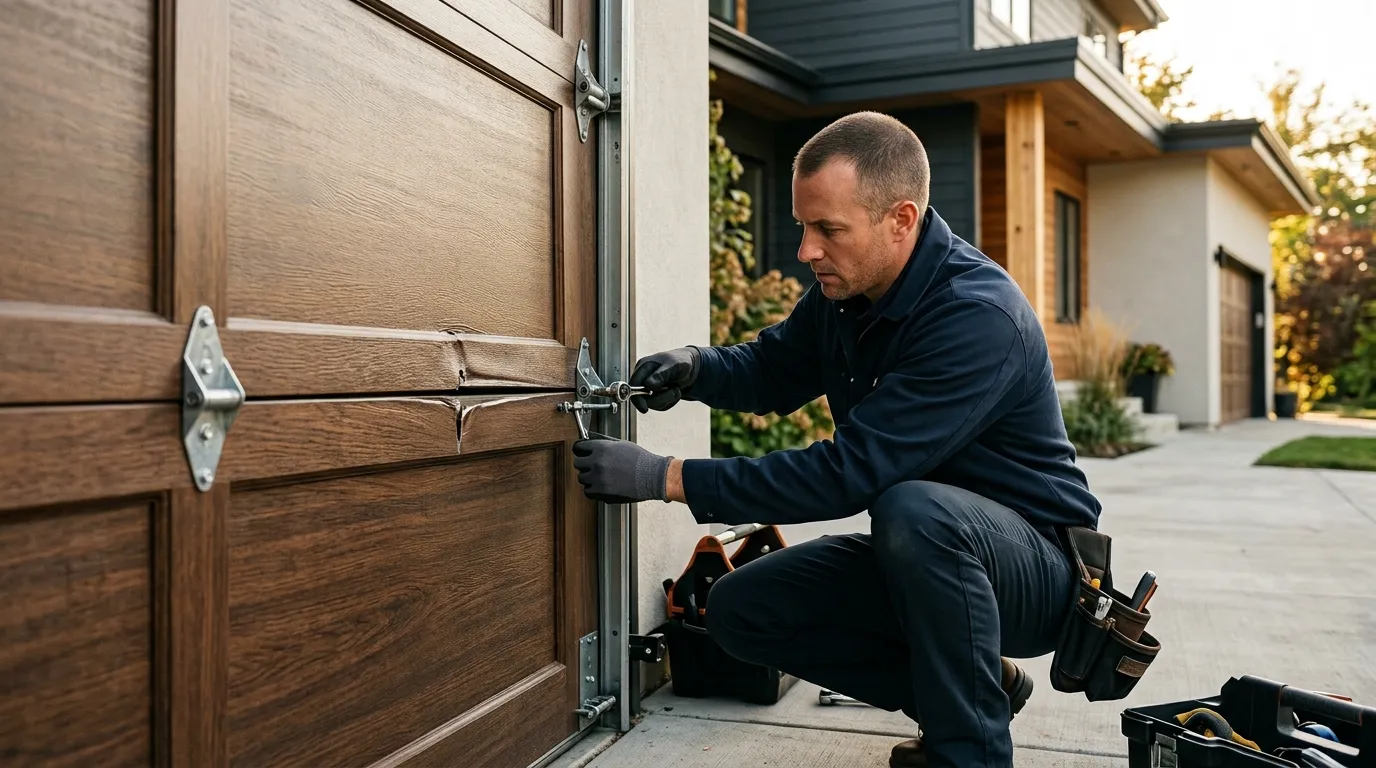

The Complications
Winters here sit in a cold-severe climate band, and that has a direct effect on opener hardware. Steel rail and gear housings contract in cold, which is part of why an opener that runs fine in October can bind or grind by January - grease stiffens, chain tension changes, and a marginal gear set that was already worn from years of lifting an undersized door finally gives out.
The other complication is age stacking on age. A house built around 1956 has likely had at least one opener swap already, sometimes two, and each swap doesn't always update the mounting hardware or the travel limits to match. We find brackets shimmed with whatever was on hand thirty years ago, and safety sensors added later as a retrofit rather than built in. None of that is unusual for Levittown's housing stock - it's just what happens when equipment gets layered onto a garage that was never remodeled to take it.
With roughly 18,140 households in town and a median income of $101,619, most of what we see here isn't neglect - it's a working opener that's simply outlived the door geometry it was matched to decades ago.
How Long It Takes
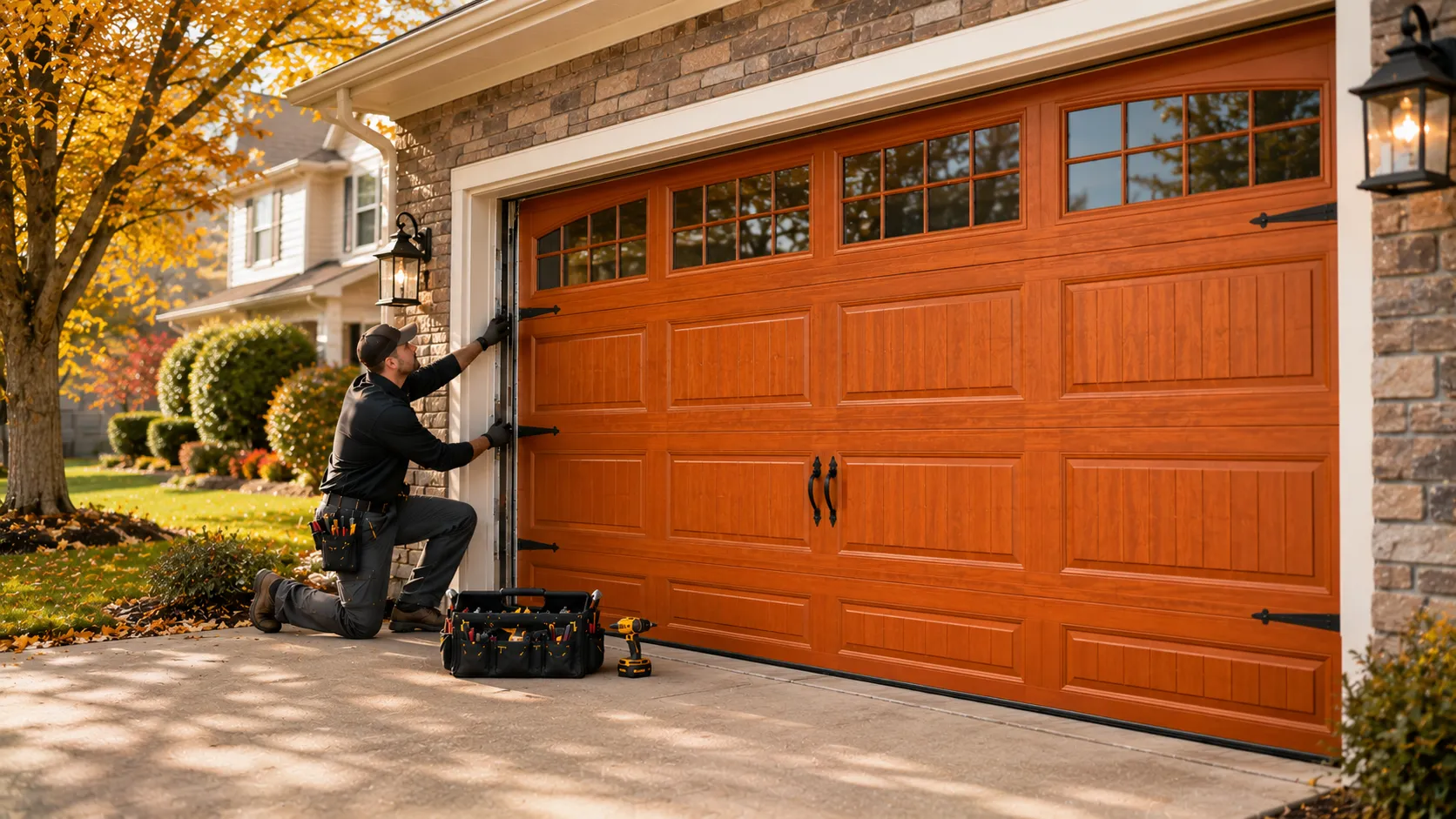
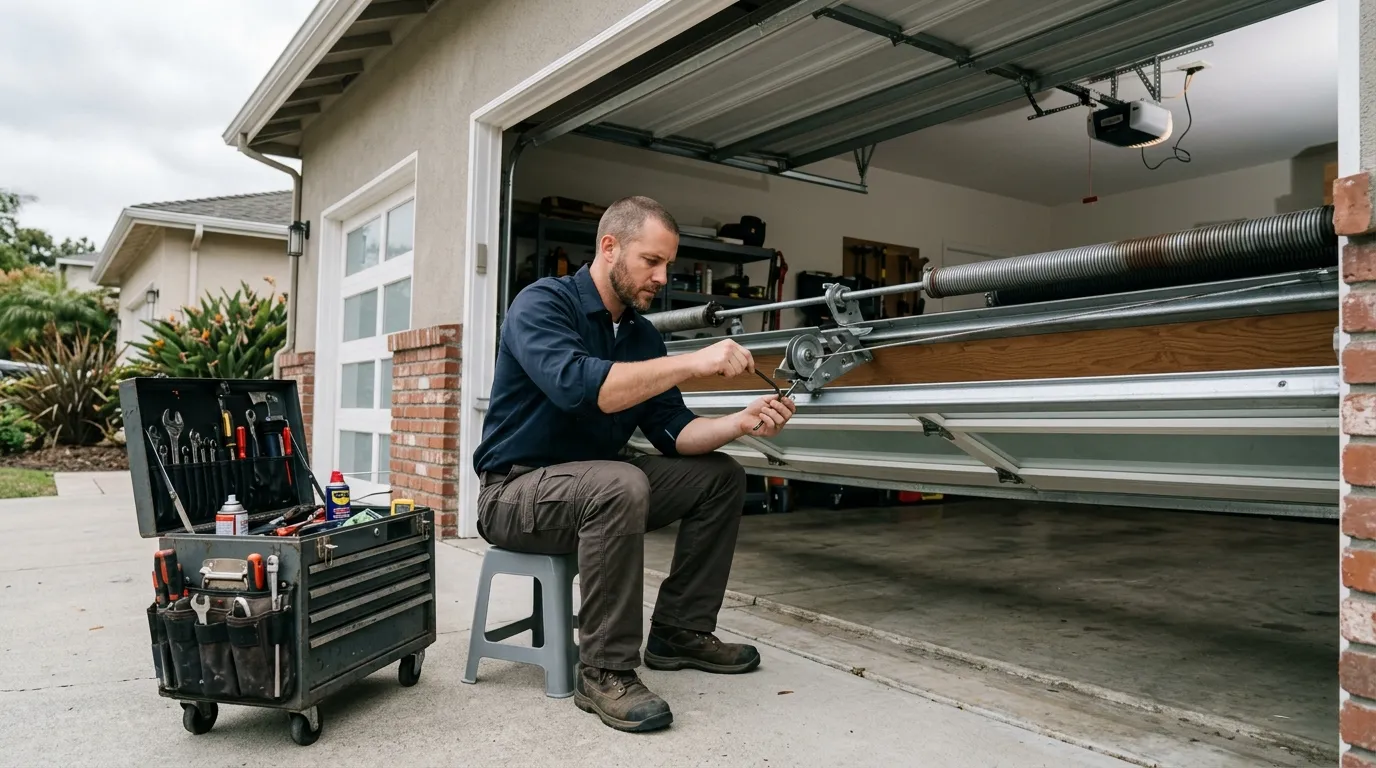
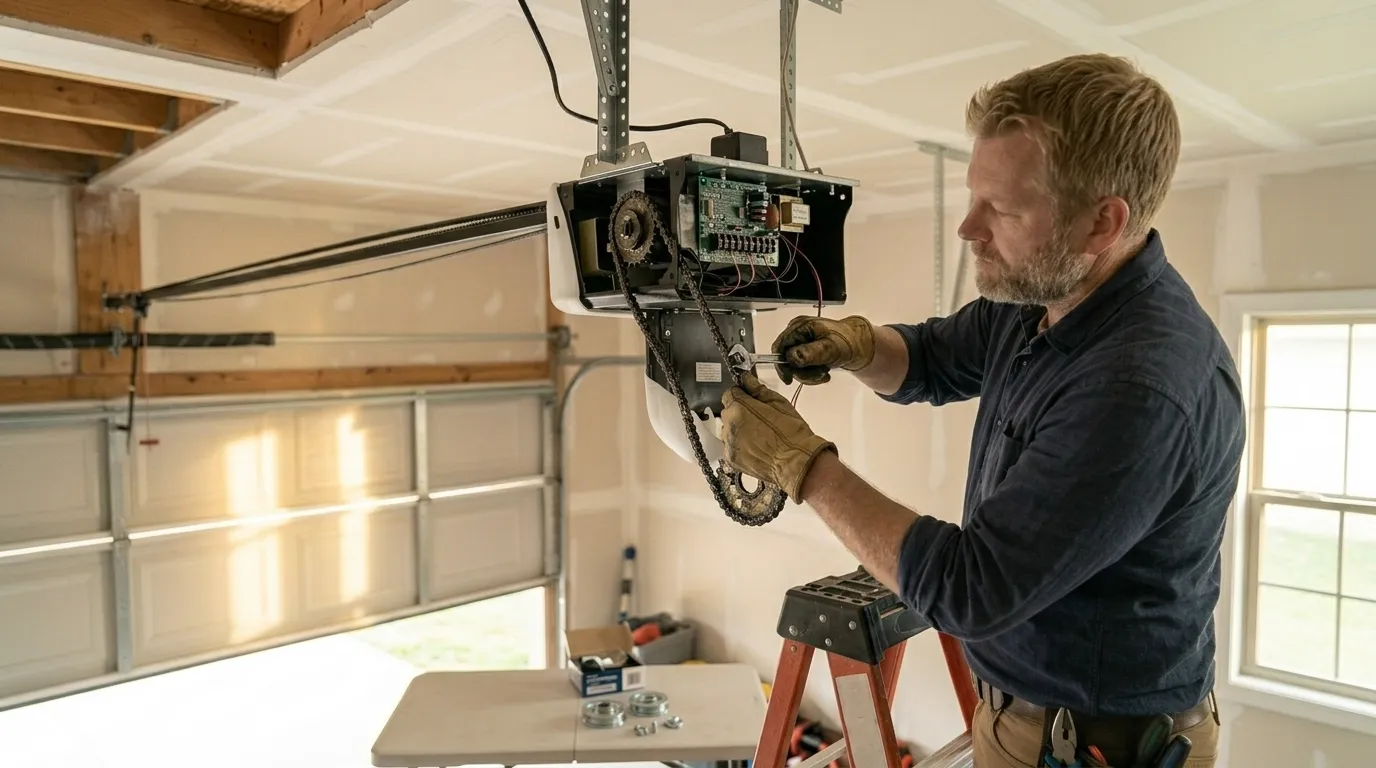
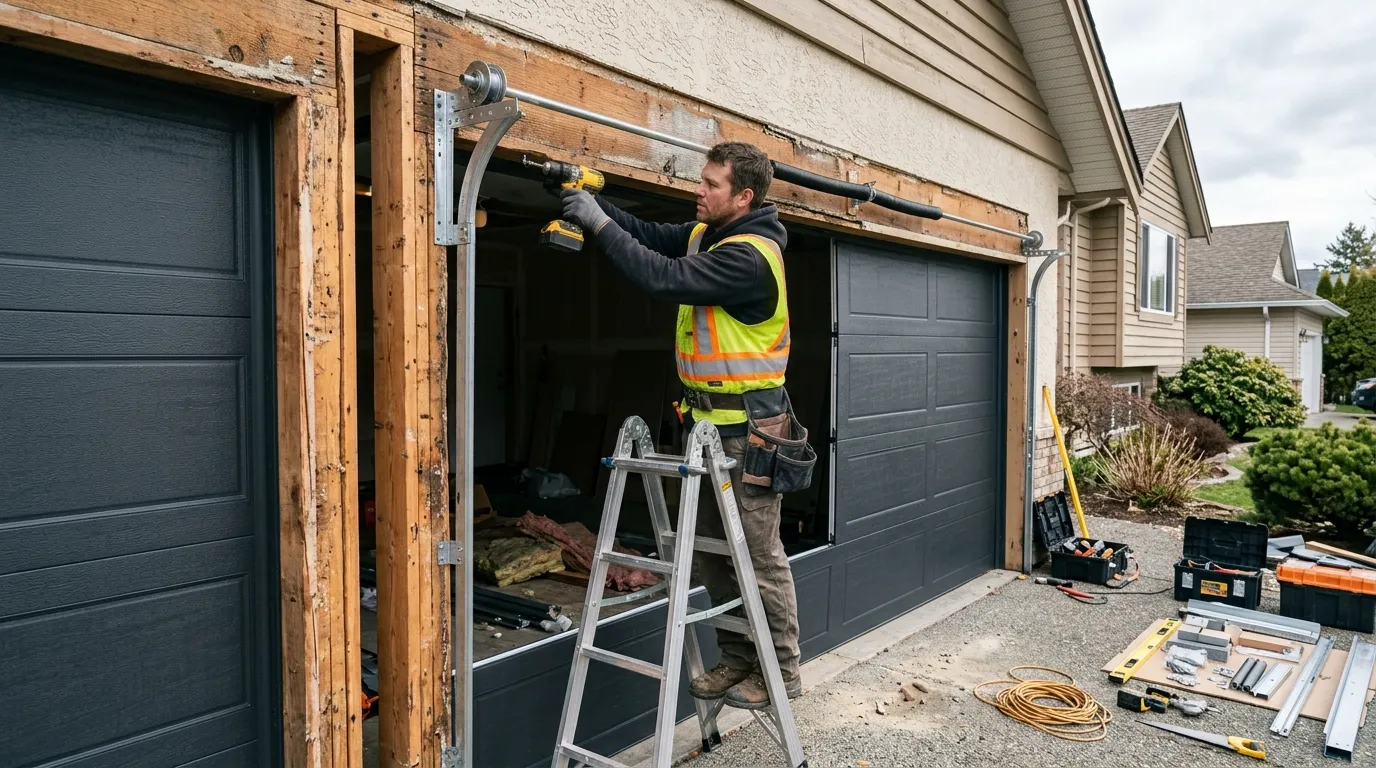
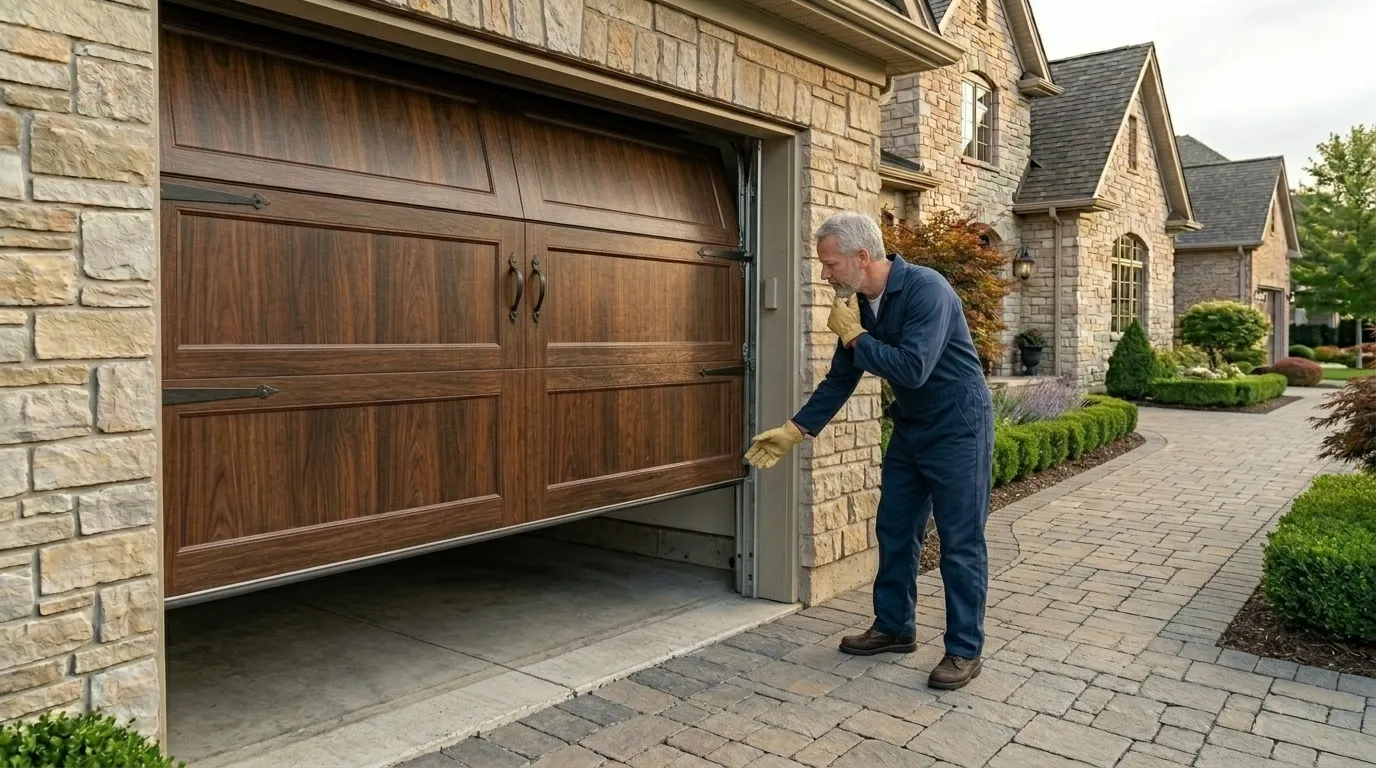
A straightforward opener repair - logic board, sensor alignment, a worn sprocket - is usually a single visit. What extends the job in a town like this is diagnosing whether the opener is the actual problem or just the part failing first because the door and track are original 1950s dimensions the opener was never sized for. We check that before quoting a fix, because replacing a motor on a door that's still fighting its own weight just buys you another failure in a year.
We travel to Levittown from Philadelphia, about 18 miles out, so we schedule the visit rather than promise a same-hour arrival. Once we're on site, most opener repairs wrap in one appointment.
Can You Do This Yourself
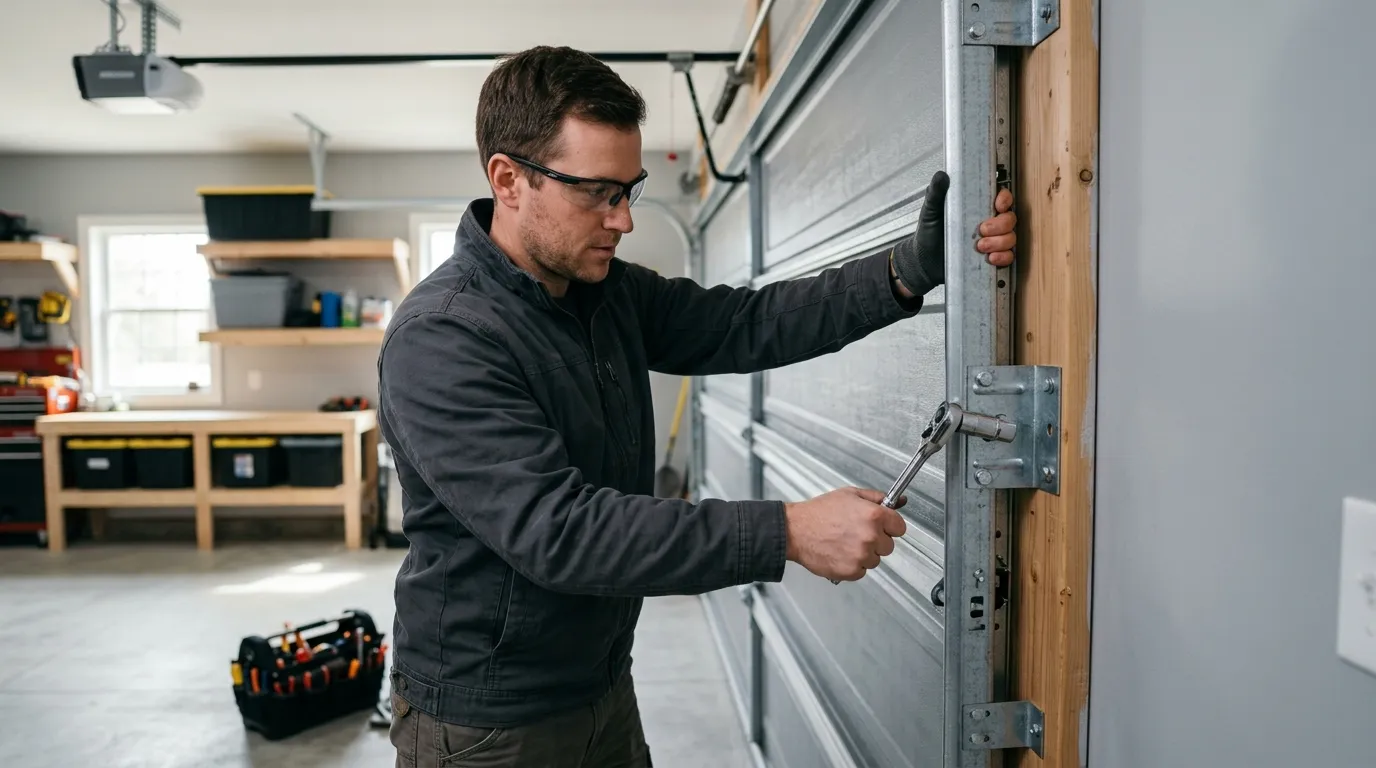
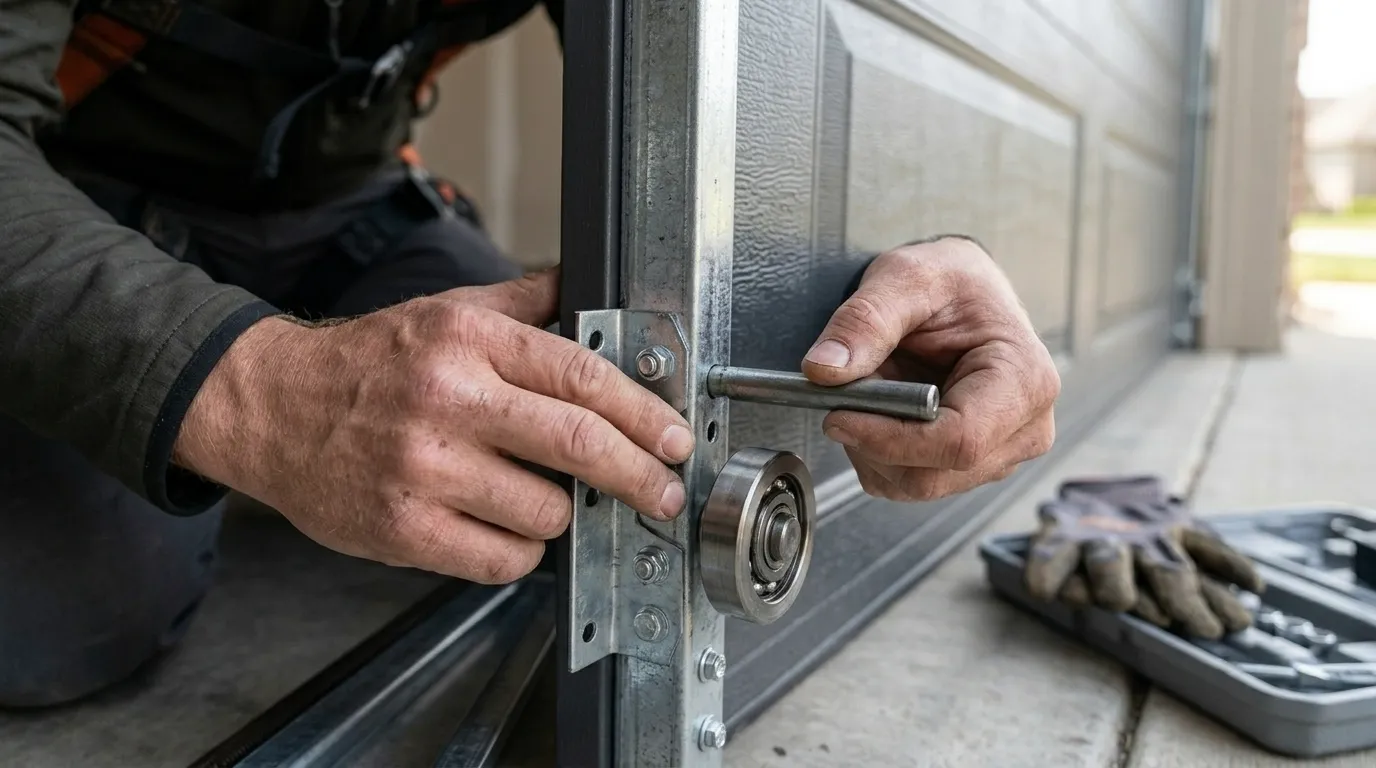
Resetting travel limits or replacing a sensor eye is within reach for most owners with the manual in hand. Swapping a burned motor or a stripped gear set on an opener that's driving an oversized load for its age is a different job - you're working overhead with a spring-loaded door and a motor that can still carry current even when it looks dead. If the opener is original to a retrofit installation with no clear model documentation, we'd rather look at it in person than talk you through it blind.