What the Fix Involves
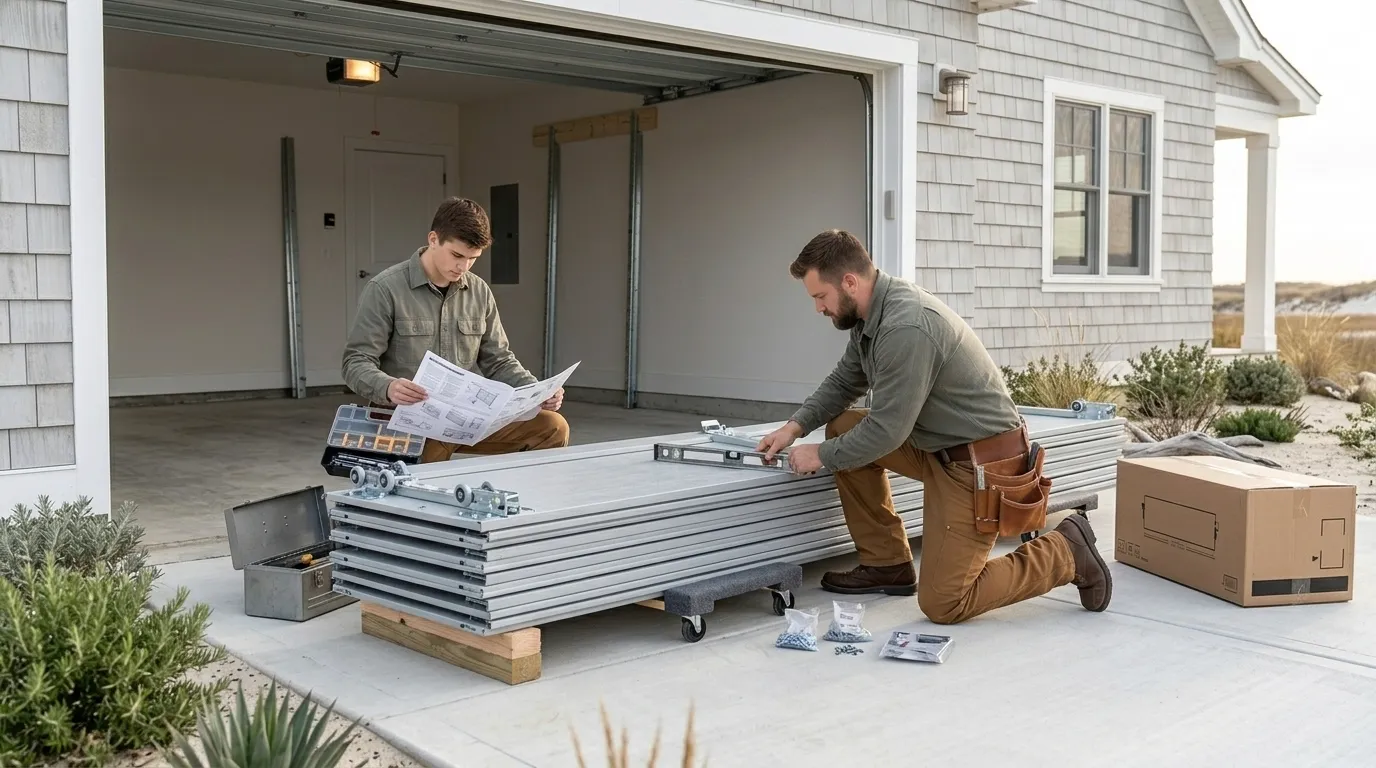
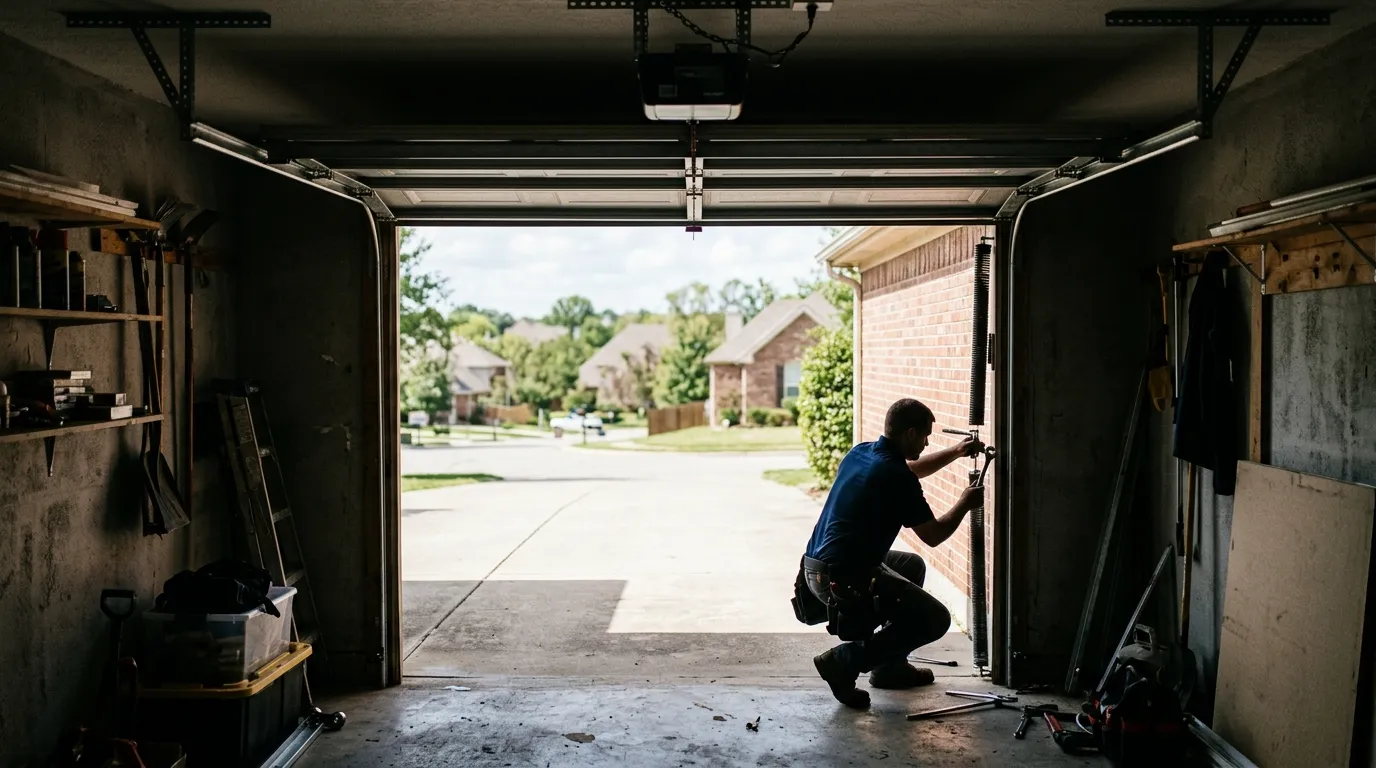
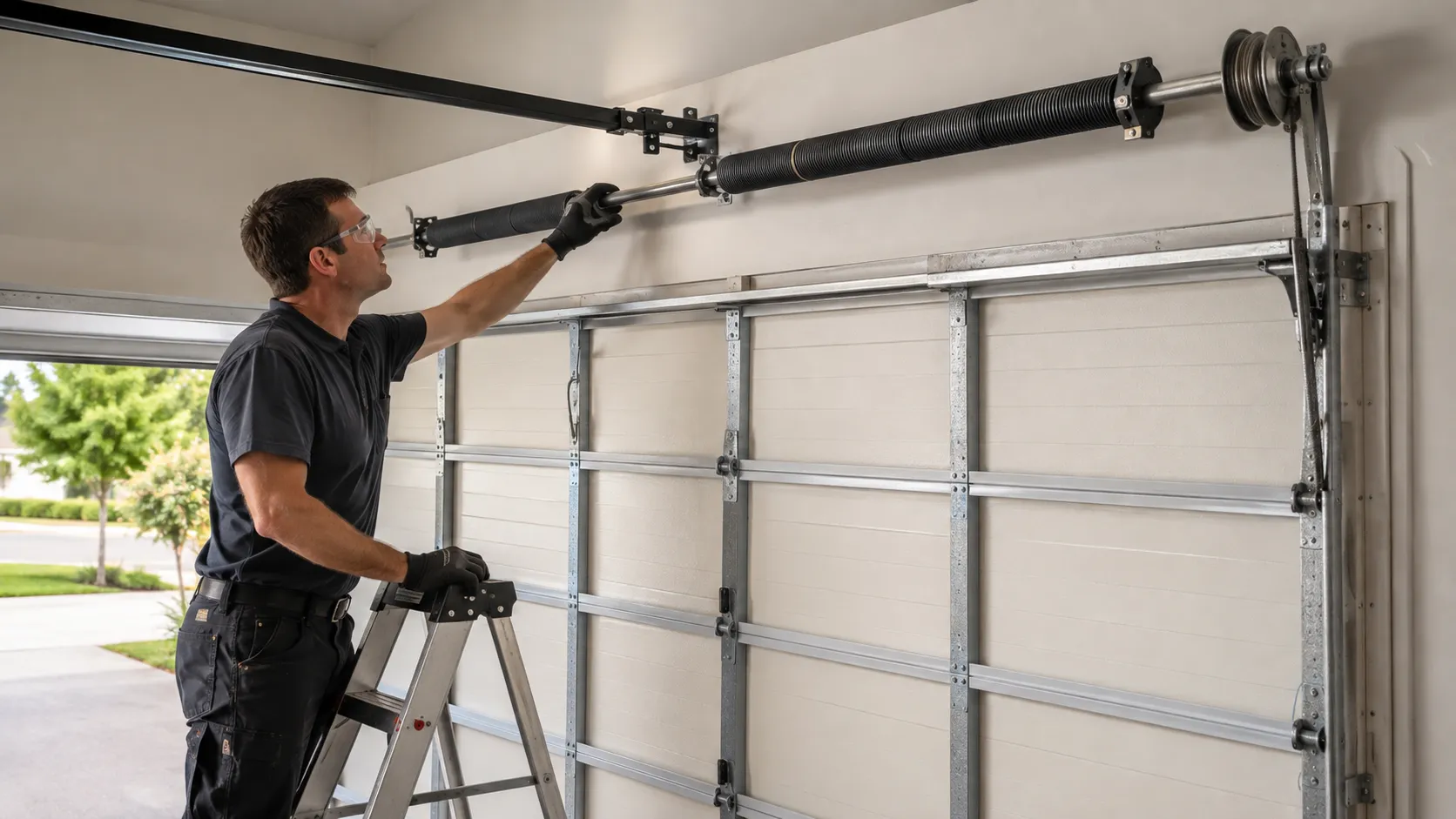
Darby's homes cluster around a median build year of 1949, a decade earlier than the wider service area's 1957 median. A door original to a house from that stretch is usually a heavy one-piece slab on side hinges and a horizontal track, not the sectional panel doors most people picture now. The spring setup on those is different too - often a single extension spring mounted along the track rather than the torsion springs standard on newer doors.
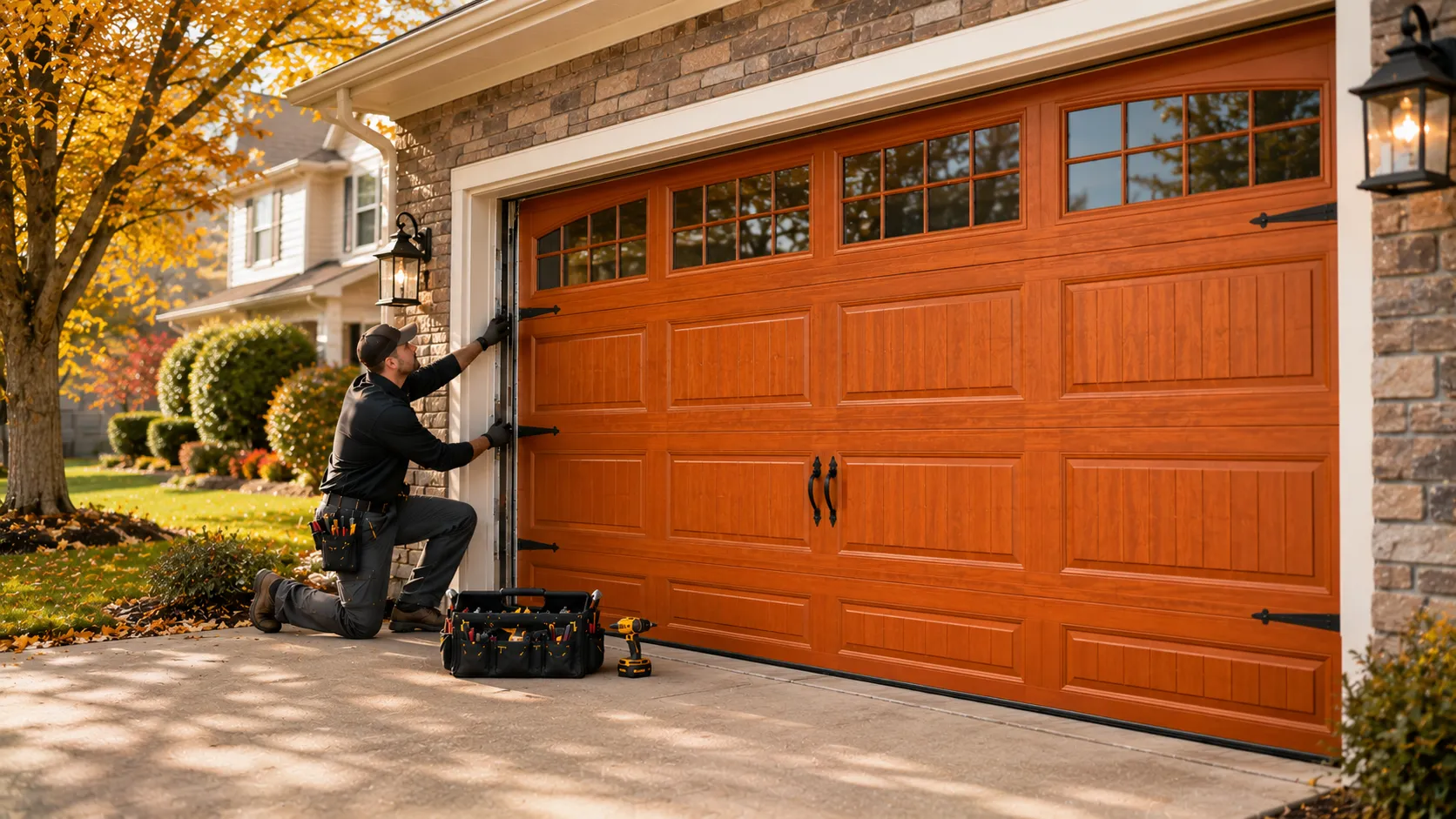
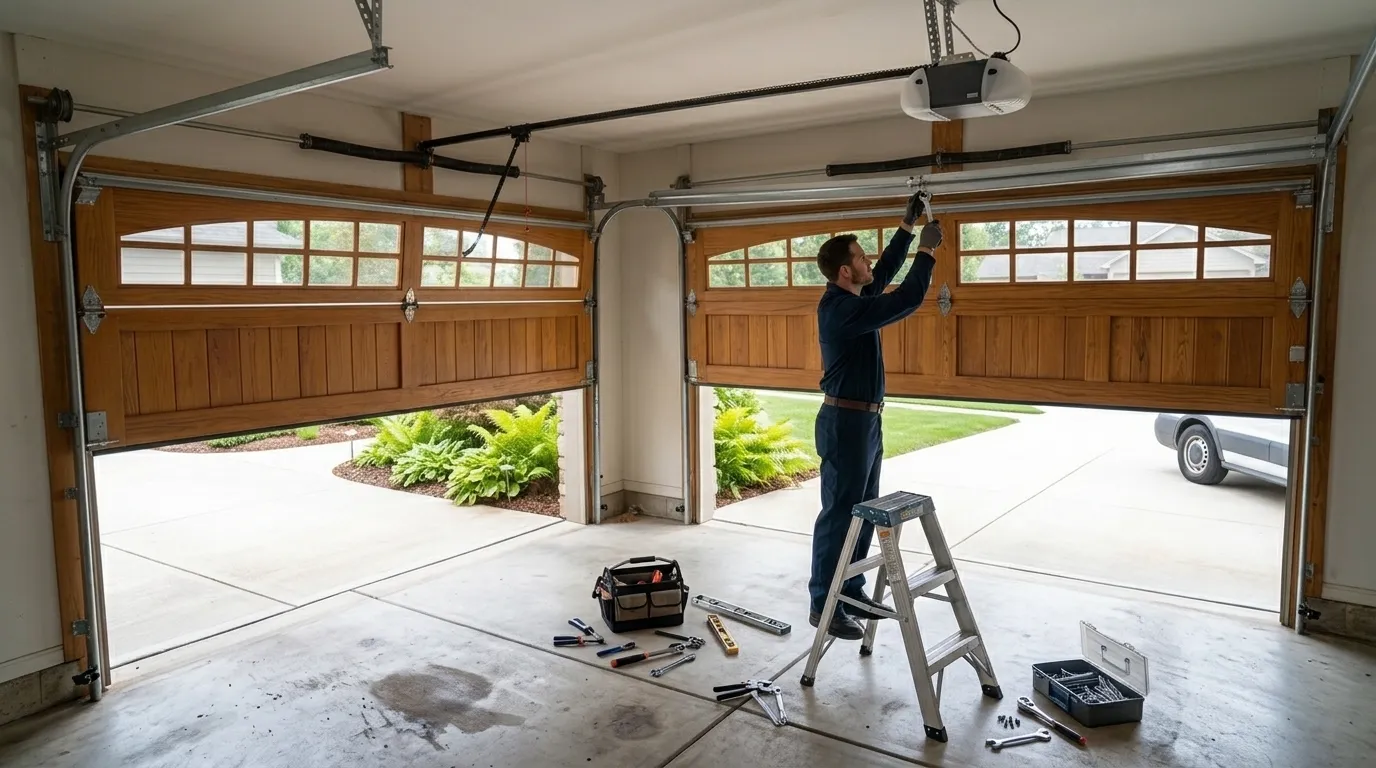
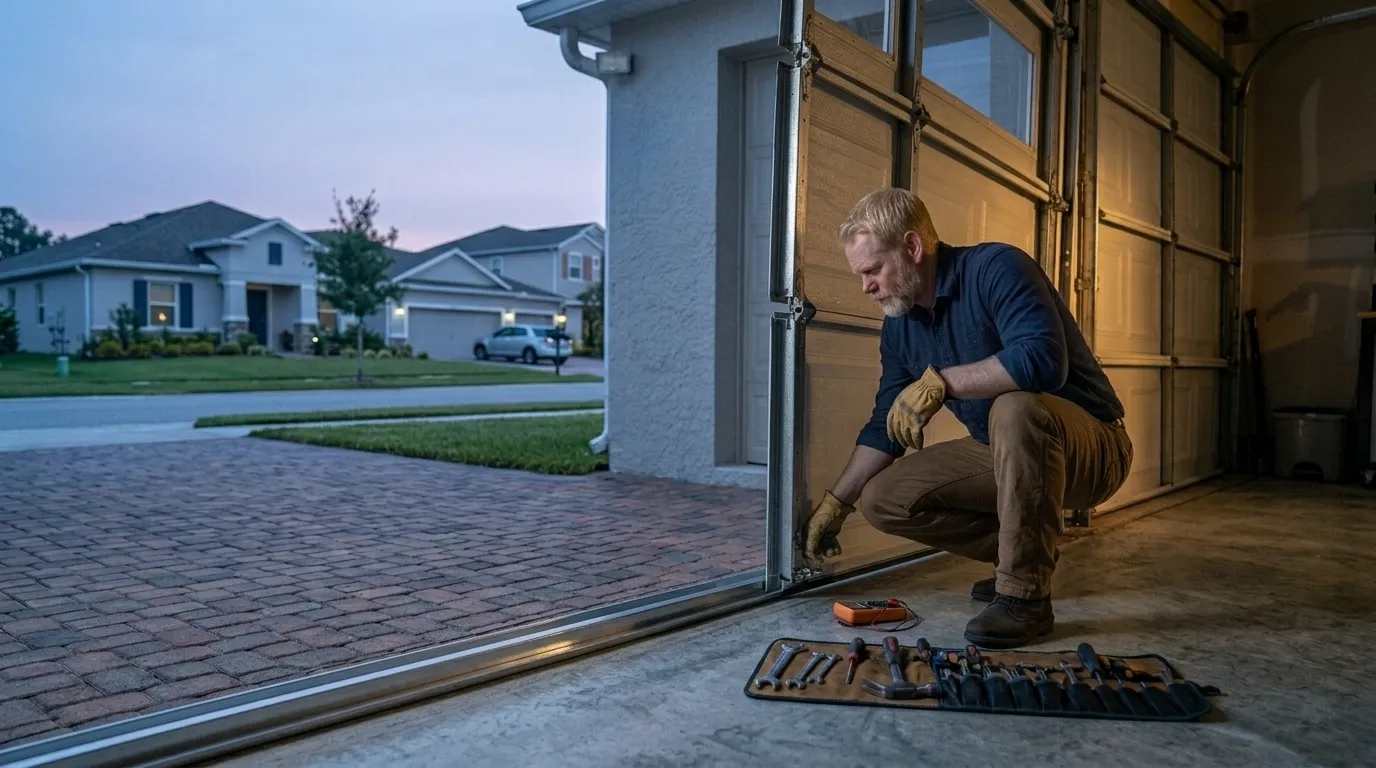
The fix, when it's a fix and not a full swap, usually means matching an extension spring to a slab door's weight, freeing up rollers that have been running dry for years, or straightening horizontal track that's taken a hit from a car bumper. On houses that got a sectional retrofit at some point, the repair looks more like standard torsion work - but you can't assume which one you've got until someone's looked at the actual hardware, because Darby has both generations sitting on the same block.
What You Pay
We don't publish a flat price list here, because a slab door repair and a torsion spring swap on a retrofitted sectional door aren't priced the same, and neither should be quoted sight unseen. What we can tell you is what tends to drive the number: whether the part is still a common stock item or something that has to be sourced for an older slab door, and whether the fix is a spring or roller job versus something that touches the opener or the track itself.
Darby's median household income is $45,128, well under half the $109,706 median across the broader service area. That gap is real, and it's worth saying plainly: if a repair estimate comes in high, ask what's driving it - parts availability on an older door often costs more than the labor. We'd rather tell you a repair isn't worth it against a full replacement than run up a bill on a door that's on its last legs anyway.
The Complications
With roughly 3,915 households in Darby, the town is a small slice of the 409,216 households across the full service area, and that scale matters for parts. A common torsion spring or roller is stocked on the truck without a second thought. Hardware for an original 1949 slab door - the horizontal track brackets, the specific spring length, sometimes the hinges - isn't something every supplier carries, and finding it can add a day or two to a job that would otherwise be same-visit.
The other complication is mixed ages on one block. Because Darby's stock spans decades even within that pre-1960 core, one house might have an untouched original door and the next might have a sectional retrofit from twenty years later. That means a tech can't assume anything about your setup based on the neighbor's job, and quoting over the phone without seeing the door is a good way to get the estimate wrong.
Can You Do This Yourself
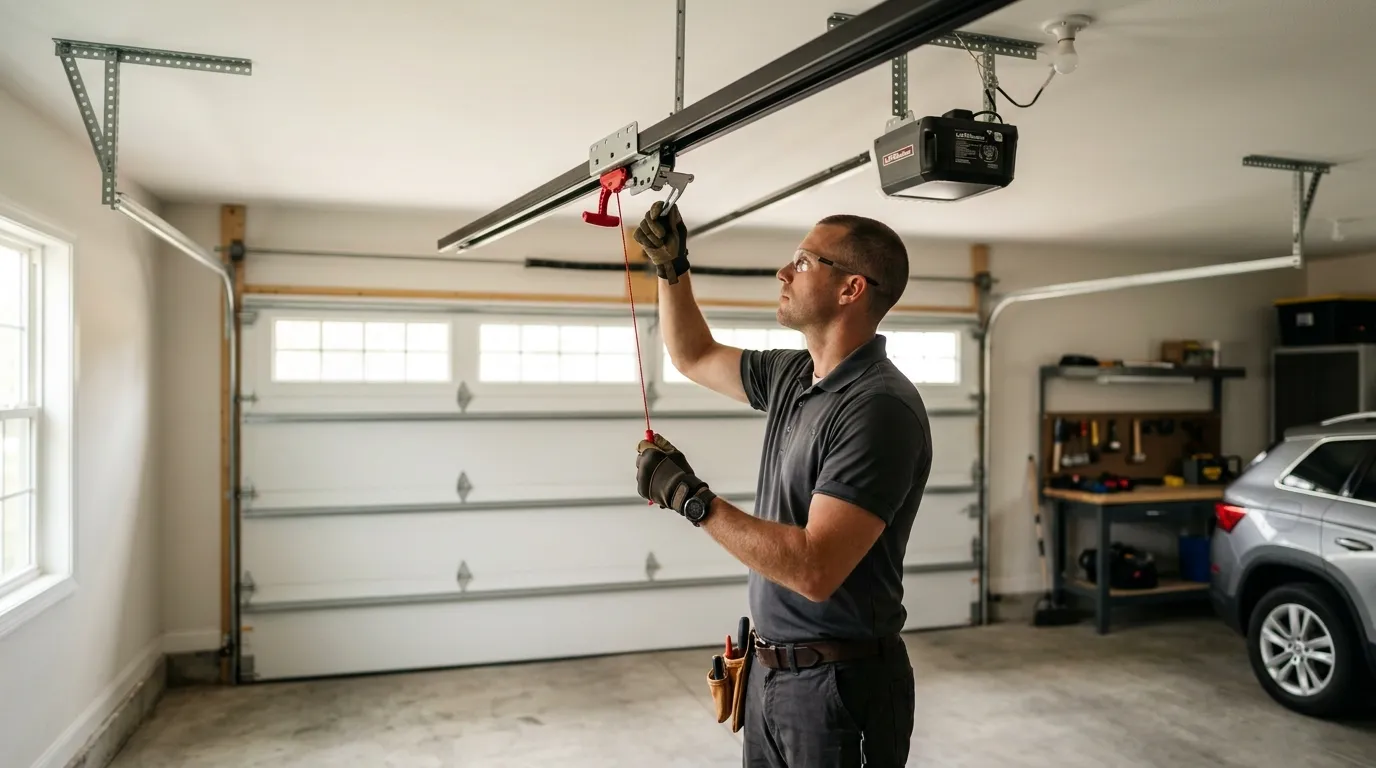
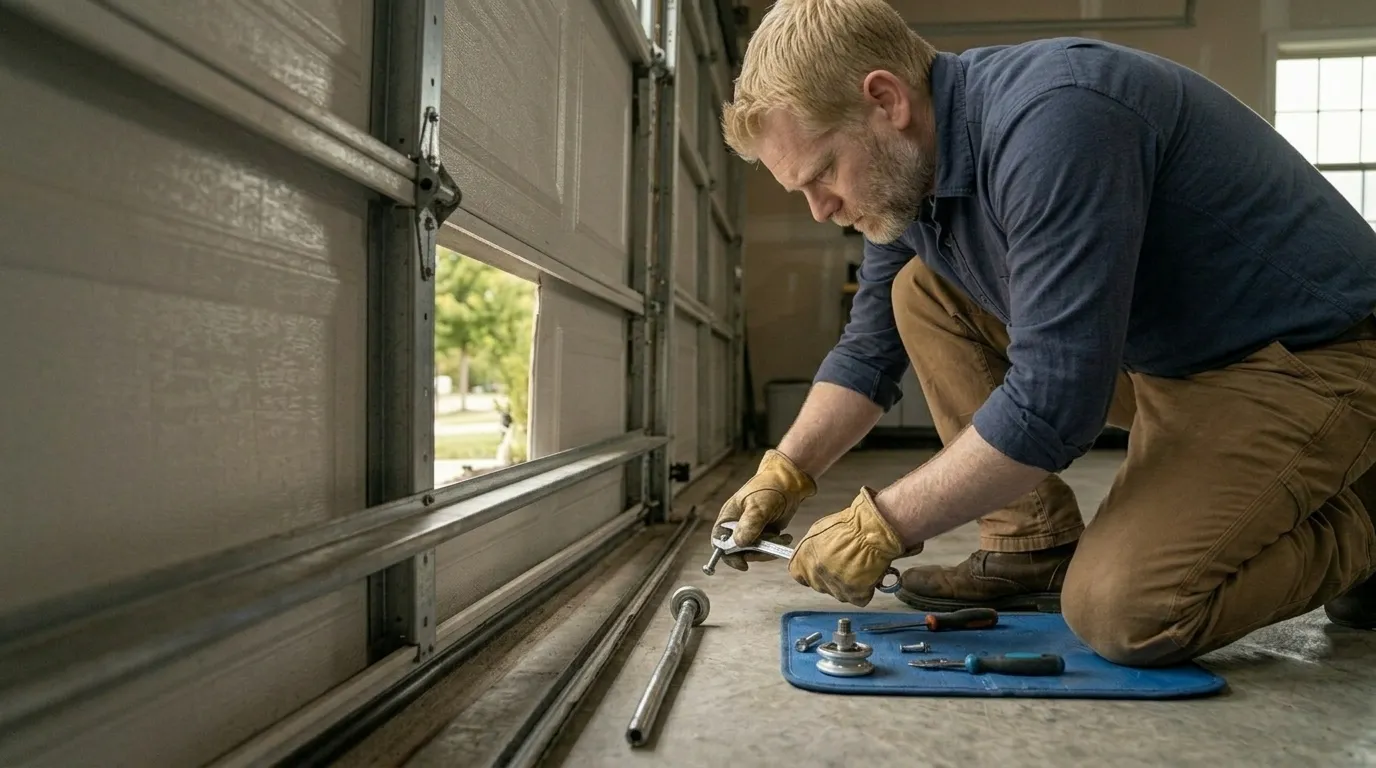
Some of it, yes. Lubricating rollers and hinges, tightening loose bolts on the track, clearing debris from the horizontal rail on a slab door - that's reasonable weekend work with basic tools. Replacing a spring is not, on either door type. Extension springs on old slab doors and torsion springs on retrofitted sectionals both store enough force to break a hand or worse if the wind-up or release goes wrong, and that risk doesn't shrink because the door is old and simple-looking.
Our honest limit here: we don't do cosmetic work, like refinishing an original wood slab door to keep its look. That's a job for a carpenter or painter, not a garage door call. If the wood's structurally sound and just tired-looking, we'll say so and point you toward the right kind of help instead of taking a job outside what we do.